


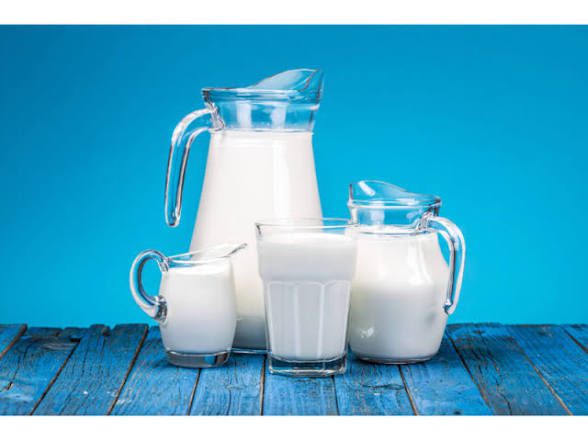
The landscape of indirect taxation in Botswana is undergoing its most significant realignment in recent years. Under the freshly implemented Value Added Tax Act of 2026, the Botswana Unified Revenue Service (BURS) has tightened the criteria for zero-rated commodities. Most notably, milk has been removed from the zero-rated commodities schedule and placed under the standard 14 percent VAT bracket. We will analyse this matter in detail below. In this article, words importing the masculine shall be deemed to include the feminine.
According to the official Value Added Tax Act, 2026, which became legally effective on July 1, 2026, any commodity not explicitly mentioned on Schedule 1, Part 3, paragraph 1 (b) of the Act automatically triggers the default tax bracket, the standard rate of 14 percent. This rate is now applicable to regular liquid, powdered, or flavoured milk because these items were left off the revised zero-rated schedule by the Botswana Unified Revenue Service. Because regular milk is heavily consumed at a macro level, standard-rating it allows the government to maximize state revenue collection.
Initially, when milk was zero-rated, dairy processors and packers paid standard VAT on their electricity, packaging, and machinery, but charged 0 percent on the final product. This forced them to claim massive VAT refunds from the Botswana Unified Revenue Service (BURS). Zero-rating milk was intended to shield low-income households. High-income households, however, purchase significantly more premium dairy products (such as imported milk or flavoured milk varieties).
Standard-rating these products stops the state from unintentionally subsidizing the shopping baskets of affluent households who do not require financial relief. Enforcing a uniform 14 percent consumer tax ensures that both imported and locally processed general dairy products face an identical tax burden at the retail level, stabilizing market competition.
Only infant formula milk remains zero-rated according to Schedule 1 part 3, paragraph 1 (ix). Infant formula is an absolute dietary necessity for babies who cannot breastfeed, rather than an optional grocery choice. Charging a 14 percent tax on infant formula would directly threaten food security and basic health outcomes for the country’s youngest population.
Conclusion
From this article, we hope you have appreciated that Milk (fresh cattle, sheep, or goat) in its natural state has now transitioned from zero-rate to standard rate as at the 1st of July 2026, and as a result, we could see a rise in retail prices of milk. Infant Formula, on the other hand, remains zero-rated.
Tax hint: If you have never had a tax audit/review conducted by a tax consultancy firm to check whether you are tax compliant, or should it be apparent that you are not certain that your tax affairs are good order, then don’t wait for the taxman to pounce on you, as that can be very costly. Contact us today so we can help you fix your tax affairs whilst you still have time.
Contacts: You may contact us at +267 75 933 630 or +267 686 0117 or jhore@aupracontax.co.bw or www.opracon.co.bw. This article is general, and tax advice is recommended if decisions are to be made. If you need to join our free Tax WhatsApp groups or to know more about our 9 Tax e-books, please send us a text/WhatsApp on the number above.


