


Letshego Africa Holdings has applied for a commercial banking licence in Botswana, reviving an ambition abandoned seven years ago as the listed financial services group seeks to rely more heavily on deposits to fund its business.
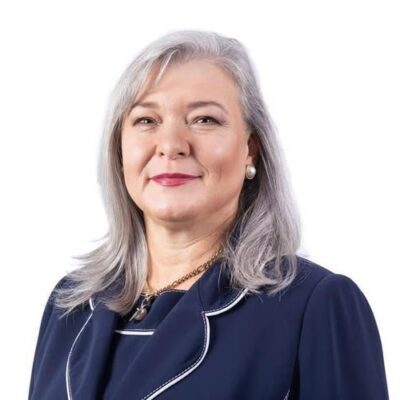
Group Chief Executive Officer Reinette van der Merwe disclosed the application at Letshego’s interim results presentation this week, placing commercial banking alongside a wider push into deposits, payments, and digital financial services.
“We are accelerating deposits through disruptive transactional accounts and savings offerings so that more of our growth can be funded locally,” van der Merwe said.
The application revives an ambition that was put on hold in December 2018, with the group at the time stating that it needed to concentrate on integrating acquisitions and introducing products across what was then an 11-market African operation.
The Bank of Botswana confirmed the following month that Letshego Botswana Limited had formally withdrawn the application, which had been published in the Government Gazette in October 2018.
Seven years later, the direction has changed. Letshego is now cutting its footprint from eleven countries to six, following shareholder approval for the sale of businesses in Ghana, Tanzania, Nigeria, Rwanda, and Uganda.
Van der Merwe said the withdrawal is intended to concentrate capital and management attention on markets where the group believes it can operate at greater scale and earn better risk-adjusted returns.
The banking application sits within that narrower strategy. Van der Merwe said Letshego is deepening its deposits and payments business, with deposit-taking already operating in some markets and new digital banking products planned. In Botswana, the group is also expanding its LetsGo wallet pilot to include interbank and mobile-wallet payments.
The aim is to move more of Letshego’s funding closer to the customers and markets in which it lends.
Deposits across the businesses Letshego intends to retain increased by 56 percent during the first six months of the year to P2.5 billion, while net advances grew by only 1 percent.
Still at the results presentation, Interim Group Chief Financial Officer Poelo Mkpayah said Letshego’s local loan book expanded by 8 percent during the first half; however, the benefit of that growth was offset by a 21 percent increase in interest expense.
Botswana profit after tax consequently remained at P104 million, broadly unchanged from a year earlier.
Management has made funding costs and liquidity two of its main priorities for the local operation, alongside defending market share and improving collections and recoveries.
Across the wider group, the move towards deposits has been accompanied by a reduction in leverage, as cash and similar instruments increased by 27 percent to P2.7 billion, while borrowings fell to P8.2 billion from P9.6 billion a year earlier.
Van der Merwe said customers across Letshego’s markets are facing pressure from tighter government budgets, high borrowing costs, and weaker disposable incomes, leading to more cautious demand for credit and greater sensitivity in repayments.
Against that background, she said Letshego would put credit quality and risk-adjusted returns ahead of simply growing lending volumes.
The restraint is already visible in the income statement, as net interest income from continuing operations slipped 1 percent to P764 million, while total operating income fell 8 percent to P957 million.
Profit nevertheless increased, with profit after tax from continuing operations rising 5 percent to P179 million.
The five businesses being sold contributed another P47.1 million, taking consolidated profit after tax to P226 million – 25 percent above the same period last year.
Letshego’s renewed banking application therefore comes as the group reshapes its African business around fewer markets and a more deposit-led funding model. The earlier bid was withdrawn during a period of regional expansion; now, the latest attempt follows a decision to exit five markets, reduce borrowings, and concentrate capital on the businesses it intends to retain.


