


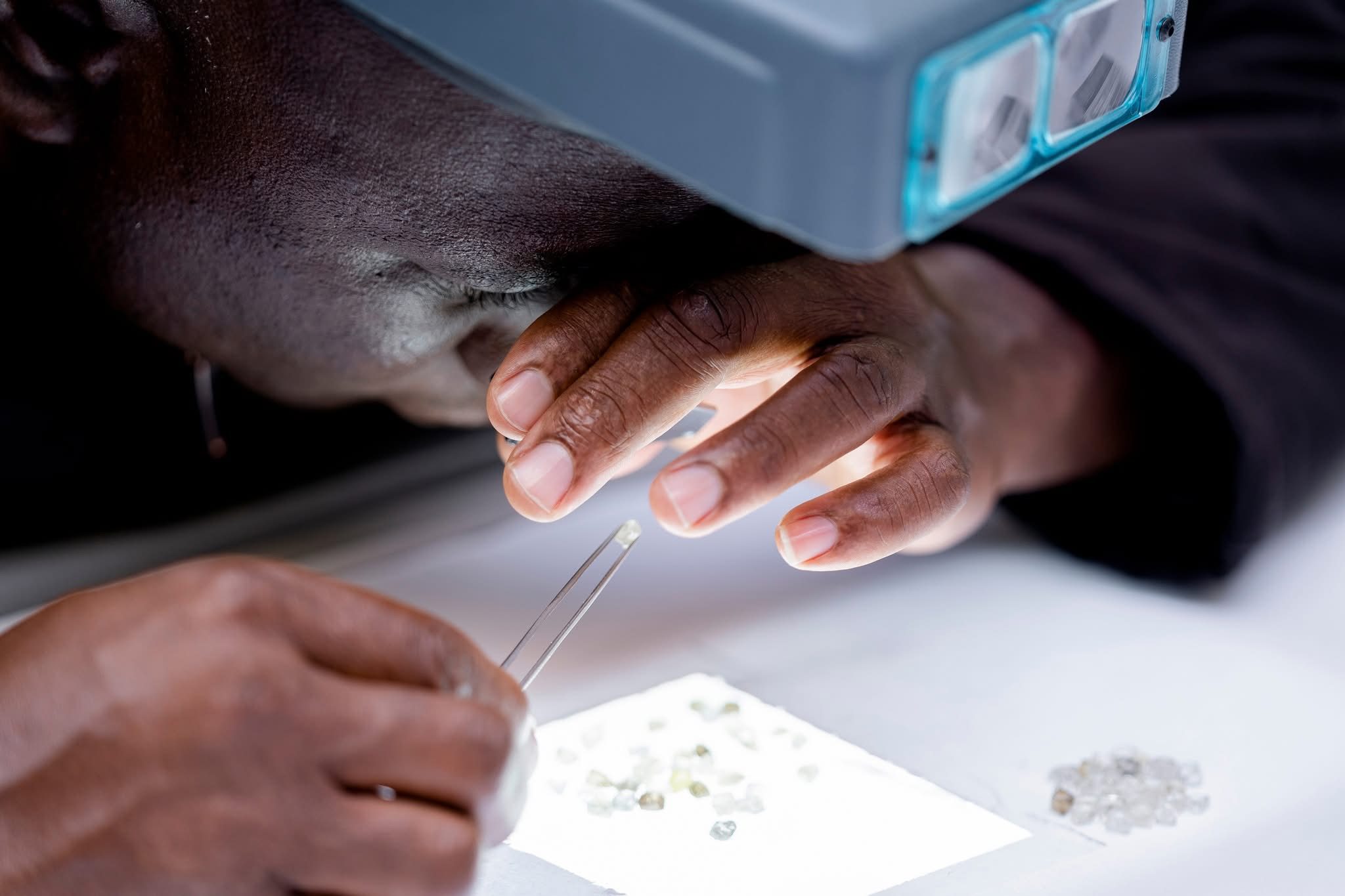
Stargems Diamond Training Institute has expanded its training offering through a partnership with the Harry Oppenheimer Diamond Training School, a move aimed at strengthening Gaborone’s position as a regional centre for diamond skills development and beneficiation.
The expansion introduces practical, industry-aligned training in diamond polishing, grading and rough diamond evaluation, alongside the institute’s existing bursary-supported foundational programmes for Batswana.
The development comes as Botswana intensifies efforts to deepen local beneficiation, reduce reliance on rough diamond exports and build technical capacity to support a more diversified diamond value chain.
The institute says Botswana’s long-standing diamond sector, regulatory stability and established beneficiation infrastructure position Gaborone to become a leading destination for specialised diamond training.
“Botswana has already earned global recognition as one of the world’s most important diamond-producing nations. The next chapter is about becoming equally respected for diamond expertise,” said Stargems operations manager Neil Rademeyer.
“Our ambition is to position Gaborone as Africa’s diamond knowledge capital — a place where local, regional and international students can acquire practical skills that prepare them to participate meaningfully in the global diamond economy.”
The expanded programme includes training in rough diamond evaluation, diamond grading and diamond polishing, delivered using natural diamonds and industry-standard equipment. The courses are designed to provide hands-on experience across the value chain, including polishing factories, grading laboratories, jewellery retail, rough diamond trading and entrepreneurial ventures.
The institute emphasised that the introduction of paid practical laboratory classes does not replace its citizen empowerment programme. Since its inception, the Stargems Diamond Training Institute says it has trained more than 1,300 Batswana through bursary-supported foundational courses, many of whom entered the sector with no prior industry experience.
Those foundational programmes will continue and serve as a prerequisite for advanced practical training in rough diamond evaluation, polishing and grading.
“The bursary programme remains the foundation of what we do. Inclusivity and empowerment remain non-negotiable,” Rademeyer said. “The expansion simply creates a structured pathway from foundational exposure to advanced technical competence, while also opening Botswana to regional and international participation.”
Students from across the Southern African Development Community (SADC), including Zimbabwe, Angola, Namibia, Sierra Leone and the Democratic Republic of Congo, are expected to join future intakes, alongside international participants seeking specialised diamond training in a leading producing country.
The institute says broader participation is expected to generate economic spillovers in accommodation, transport, tourism and related services, while also supporting long-term trade and investment linkages within Botswana’s diamond sector.
Industry observers have increasingly stressed the importance of skills development in unlocking downstream value in the diamond industry. While mining remains central, much of the sector’s value lies in polishing, grading, certification, trading and retail — areas that require specialised technical expertise.
By building a pipeline of skilled professionals, Stargems says the institute is helping to strengthen the human capital base needed to support a more integrated and competitive domestic diamond ecosystem.
Looking ahead, the institute envisions expanding into diamond education tourism, research collaboration, guest lecturing and international industry partnerships, positioning Gaborone not only as a diamond production hub, but also as a centre for diamond knowledge.


