


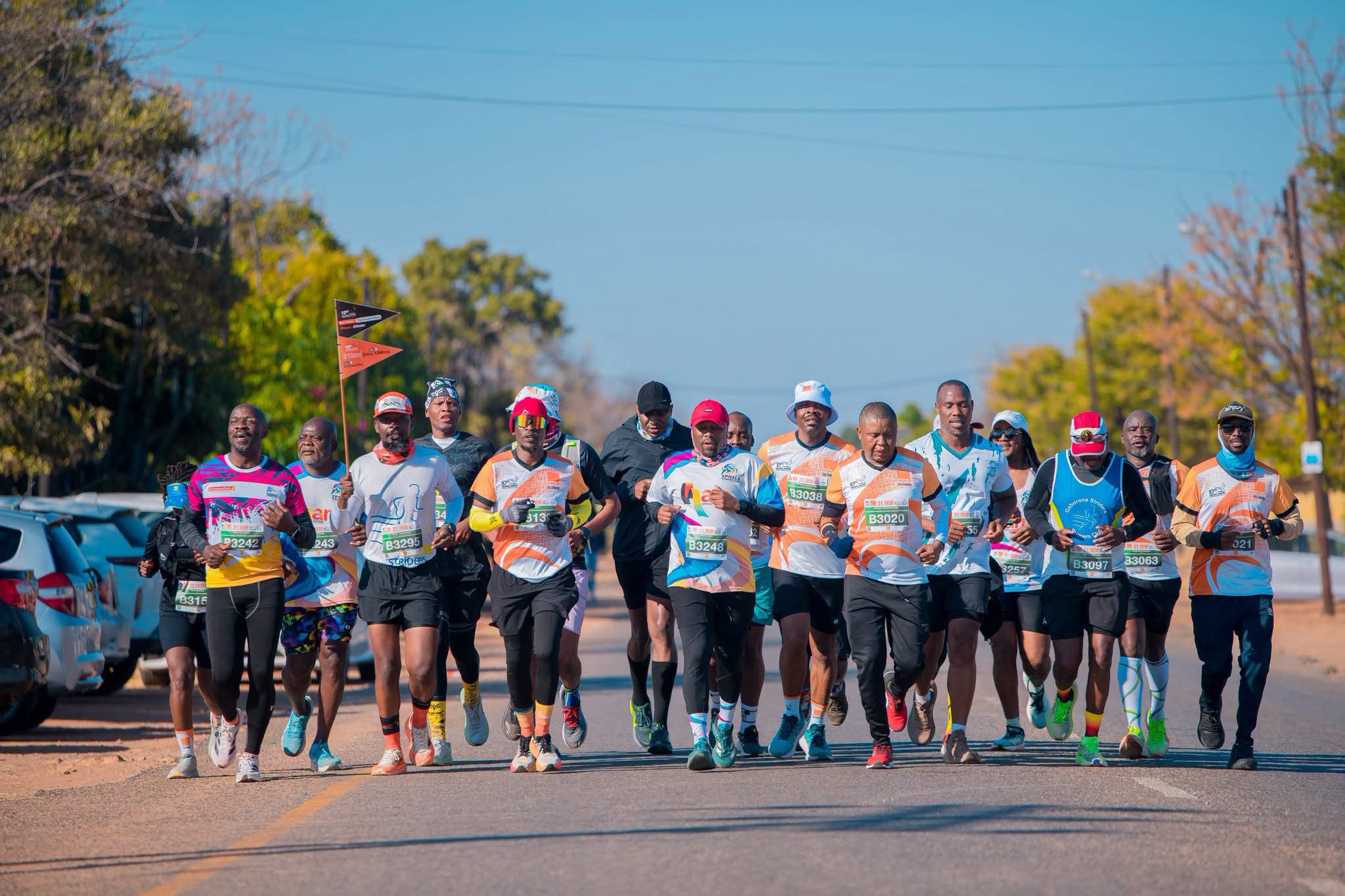
For one weekend every year, Selebi Phikwe becomes a town transformed.
Hotel vacancy signs disappear, queues grow at filling stations, shopping centres fill with visitors dressed in orange, and roadside vendors work long into the day trying to keep pace with demand. What begins as a marathon evolves into something much larger: a celebration of resilience, commerce and community in a town still rebuilding its economic identity a decade after the closure of the BCL Mine.
This year’s Orange Phikwe Marathon, which took place this past weekend, attracted more than 2,700 runners, but the impact stretched far beyond those competing on the road. The athletes arrived with families, support teams and spectators, creating an economic ripple effect that spread across accommodation providers, retailers, fuel stations and small businesses.
According to Orange Botswana Communications and Public Relations Manager Tebogo Nadisah, the marathon has grown into more than a sporting spectacle, becoming an important contributor to Selebi Phikwe’s economy.
“We have had a great weekend as we have seen Phikwe turn literally orange,” Nadisah said. “We have had over 2,700 runners and the great thing about it is that we have people who are not only running but who are bringing an economic boost to Phikwe.”
She said businesses across the town benefited from the influx of visitors, with hotels reaching full capacity and shopping centres experiencing increased activity.
“All hotels are booked, malls are busy and SMMEs have had a way of benefiting from this marathon, and this is exactly how we want to see economic empowerment being done,” she said.
For Selebi Phikwe Mayor Oageng Makgosa, the marathon represents more than an annual sporting event. It has become one of the town’s most visible symbols of economic recovery since the closure of the BCL Mine in 2016 forced the community to search for new sources of growth.
“The economic impact of this marathon is so immense given that when the mine closed in 2016, we took a nose dive economically, which meant that we didn’t have anywhere to go, but Orange has been there,” Makgosa said.
He estimated that around P6 million circulates through Selebi Phikwe during marathon weekend, benefiting various sectors of the local economy.
“Hotel rooms are booked, petrol is bought, and the estimation shows that P6 million circulates in Phikwe during the marathon weekend,” he said.
Makgosa said the event continues to create opportunities for ordinary residents, particularly young people running small businesses.
“We can see that our kids are benefiting, those who are selling food and so on. People of Phikwe are benefiting greatly. That’s what we want — for people to benefit. We don’t have time to cry but rather to see how we can diversify,” he said.
While the town celebrated the economic boost, athletes were engaged in a different battle — one against distance, fatigue and difficult conditions.
Botswana’s national record holder Kefilwe Galeitsiwe produced a determined performance to win the women’s 42.2km race in 2:50:22, finishing ahead of Kitsiso Joseph, who crossed the line in 2:52:19, while Rudo Mohunderwa took third place in 2:52:43.
The victory was far from straightforward. Galeitsiwe controlled the early stages of the race before struggling after the 30km mark, when the physical demands of the marathon began to take their toll.
“The race was quite hectic,” she said. “I would say in the first half of it I was cruising nicely and towards 30km I shut down a bit.”
The Molepolole-based athlete admitted she feared losing control of the race after being overtaken before the final kilometres. But she refused to surrender.
“I told myself that I can’t give up at the last half of the race when I came all the way from Molepolole to Phikwe. That’s when I fought myself back into the race,” she said.
Galeitsiwe said the strong winds around the 35km mark added another layer of difficulty to an already demanding course.
“The running course was challenging because of the wind,” she said.
Having set a national record during her first marathon in April, Galeitsiwe returned to Selebi Phikwe looking to improve her performance. Instead, she secured another major victory built on resilience and mental strength.
In the men’s race, Kenya’s Lazarus Too successfully defended his Orange Phikwe Marathon title, winning in 2:20:09 after a closely fought contest. Amos Kipchirchir finished second in 2:20:13, while Israel Mudimba completed the podium in 2:22:16.
Too’s victory came after a difficult year in which injuries disrupted his preparations.
“The race was tough. I was struggling because I had injuries this year because I didn’t perform well this year, but I thank God I managed to defend my title,” he said.
The Kenyan runner made his decisive move around the 31km mark after sensing that his rival could no longer respond.
“I realized my competitor couldn’t respond after I increased the pace,” he said.
Like Galeitsiwe, Too identified the wind as the biggest challenge of the race.
“The running course was okay; the only thing that made it difficult was the wind,” he said.
The marathon champions each walked away with P30,000 for their victories, but the significance of the weekend extended beyond prize money.
As runners crossed the finish line, businesses counted their gains and visitors departed, Selebi Phikwe once again demonstrated the wider power of sport. The Orange Phikwe Marathon has become more than a race — it is a reminder that major events can help towns reinvent themselves, creating economic opportunities long after the final runner has gone home.


