


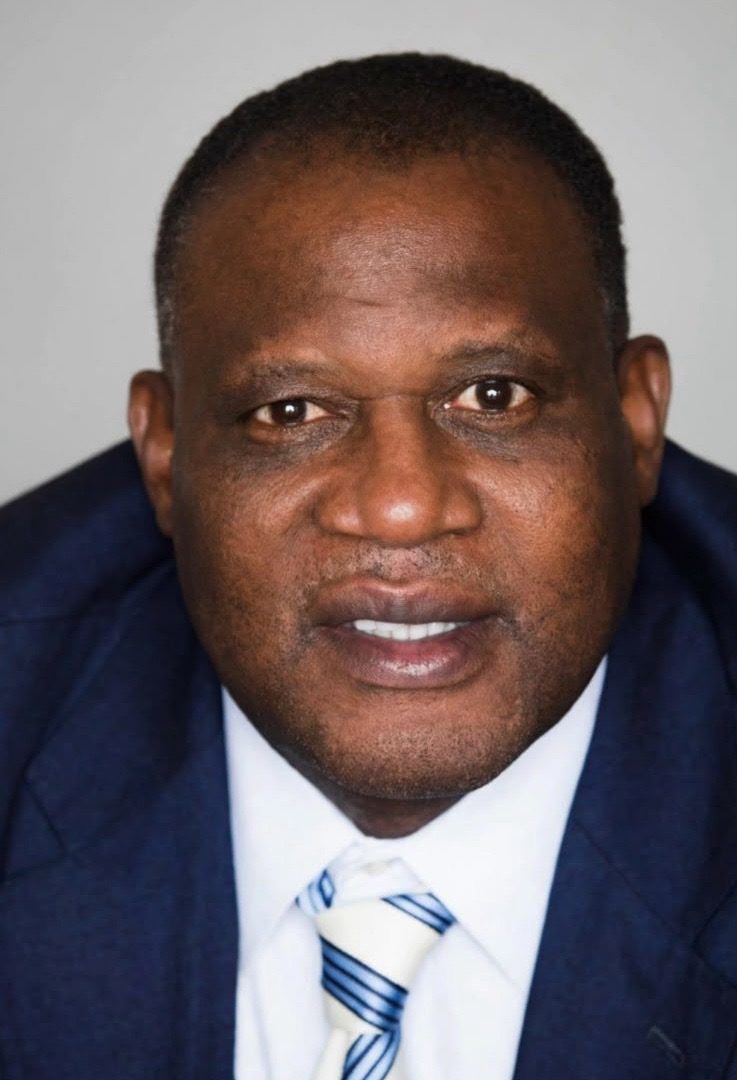
Andrew Lunga
Ntokoto Holdings (Former CEO of Botswana Rail)
Botswana is a bulk-mineral economy trying to move bulk exports mainly by road. The country has more than 200 billion tons of coal, significant manganese deposits around Kanye, copper along the Kalahari Copper Belt, as well as soda ash, iron ore and other base metals. Yet a national rail system designed to carry about 4 million tons a year now moves less than 1 million tons annually.
This is not only a railway problem. It is a diversification problem, a competitiveness problem and a jobs problem. If Botswana is serious about using its minerals to power the next phase of national growth, we must ask why rail is trapped in a value-destroying cycle and how we can break that cycle.
The Harsh Economics of Rail and Why BR Cannot Do It Alone
As we explain in Transforming Botswana’s Rail Logistics Landscape, railways are brutally capital intensive by design. Track rehabilitation can cost about P1 million per kilometre of single track. Diesel locomotives can cost around P50 million to P60 million each, depending on specifications and market conditions. Wagons can cost about P2 million each to replace. These figures exclude the equally critical costs of bridges, culverts, marshalling yards, workshops, signalling, telecommunications and other supporting infrastructure. Across Africa, railways have suffered from long periods of under-investment. Many rail systems are now distressed, impaired or degraded. The investment required to restore rail networks is enormous, and no government, including Botswana’s, can meet that burden alone while also funding health, education, roads and other national priorities.
The Paradox
Botswana Railways faces rising operating costs, declining market share and revenue, ageing assets, and growing pressure to maintain, refurbish and replace its fleet. Unlike truck operators, rail must also invest directly in its own infrastructure. Trucking benefits from public road infrastructure, while rail must fund the track, the trains and, in many cases, loss-making passenger services.
Put simply: trucks do not pay the full cost of the road, while trains must pay for the track. Until that financing imbalance is addressed, rail will continue to decline. Rail can still deliver a powerful economic advantage. A standard freight train can move 1,000 to 2,000 tons per trip, the equivalent of 100 to 200 trucks. That scale can translate into a 40 percent to 60 percent logistics cost advantage, but only if trains run reliably, assets are available, and operations are efficient. With ageing and constrained assets, that advantage cannot be fully realised.
The Global Fix: Private Capital Is Back in Rail
Botswana’s rail challenge is not unique. Around the world, governments are rethinking how rail is financed, operated and governed. Traditional government bailouts and multilateral funding are no longer sufficient on their own. The new model is deeper private-sector participation through leasing, concessions, operating partnerships and asset-backed finance.
Rail rolling stock has a long useful life, often extending over 40 to 50 years. That makes locomotives and wagons attractive assets for specialist operators, leasing companies, original equipment manufacturers, development finance institutions and private equity investors. Increasingly, investors are willing to supply rolling stock and recover their capital through long-term operating arrangements. The clearest signal for Botswana is coming from next door. South Africa is moving through major rail reform. Transnet Freight Rail is being separated into an infrastructure owner and train operators, with private operators expected to own rolling stock and run services on the network. South Africa has also invited private operators to participate in marshalling yards, intermodal hubs and port-rail infrastructure. Eleven private operators have already been provisionally appointed for access to the South African network.
For Botswana, this shift is both a threat and an opportunity. The North-South Corridor from Durban through Gaborone to Zambia and the DRC is being liberalised. If Botswana does not build its own capable, privately funded rail ecosystem, private operators from South Africa will simply run through the country. If Botswana acts decisively, it can become a logistics hub for SADC.
Botswana Railways has already shown a glimpse of this future by approving a Strategic Partnership Model to invite private capital into the industry. That approach sits alongside other options, including service contracts, outsourcing, leasing, concessions, public-private partnerships, and build-operate-transfer or build-own-operate models.
Ntokoto is honoured to have been appointed as one such Strategic Partner. Our work has been to assemble the kind of solution the asset finance paper calls for: a workable, efficient railway transport system funded off-balance sheet, structured under a long-term concession model, and designed to give investors enough time to recover their capital while creating a stronger rail system for Botswana.
One partnership, however, will not be enough. Botswana needs a five-stakeholder compact.
Five Roles to Rebuild the Logistics Landscape
1. Big Mining Companies: From Customers to Anchors
Large mining companies must move from short-term trucking arrangements to long-term rail offtake commitments. Asset renewal and recapitalisation become bankable when backed by high-volume contracts for commodities such as coal, iron ore and fuel. A mine that guarantees 2 million tons per year for 10 years can make a billion-pula locomotive and wagon fleet financeable. Global miners do not merely use rail; they anchor it.
2. Banks and Financial Institutions: From Lenders to Partners
Botswana’s banks and financial institutions must develop the confidence and capability to finance rail assets. A locomotive or wagon should not be seen only as a depreciating asset; when linked to a long-term coal, soda ash or fuel contract, it becomes a 25-year cash-flow instrument. Botswana needs more innovative financing models, including long-term leasing, joint ventures with major customers, partnerships with cargo owners and shipping lines, and private-investor capitalisation of new rolling stock. Development finance institutions are already supporting private rail access elsewhere in the region. Botswana’s pension funds, development institutions and commercial banks should follow.
3. Academic Institutions: The Skills Factory
Botswana cannot run a modern railway on imported skills alone. BIUST, the University of Botswana and technical colleges should partner with the private sector to establish a Centre of Logistics Excellence and a dedicated School of Rail. These institutions must urgently develop rail-specific programmes in operations, rail engineering, asset management, signalling, telecommunications and heavy-haul logistics.
A revitalised rail industry, together with its supporting sectors, will require a deep skills pipeline. Botswana will need technicians, operators, engineers, digital specialists and asset managers capable of supporting a larger locomotive fleet and thousands of wagons over the long term. A Centre of Logistics Excellence and School of Rail can help align Botswana’s logistics system with international standards, support applied research, guide policy and build local expertise.
4. Government and Enabling Institutions: From Operator to Enabler
Government’s most effective role is not to recapitalise Botswana Railways indefinitely, but to create the conditions for others to invest. Relieving government of the full burden of funding infrastructure, rolling stock and working capital would accelerate revival. Government should fast-track an Integrated Transport Review to determine the best modal choices for different commodities and to reduce the heavy cost and risk of excessive regional truck traffic on Botswana’s roads. It should also strengthen regulatory oversight of rail operations, safety, performance and environmental compliance, while establishing a rail economic regulator to ensure transparent tariffs and access charges. Botswana Railways can then be protected as infrastructure manager while private operators compete above rail.
Why This Is Strategic for Botswana
This is not simply about trains. It is about aligning government, industry, financiers, skills institutions and private operators behind a shared national logistics agenda.
§ Diversification: Lower logistics costs can make Kanye manganese, Kalahari copper and other bulk commodities more globally competitive. That is real diversification.
§ Fiscal sustainability: Every train can remove the equivalent of many trucks from the A1 and other arterial roads, reducing road maintenance costs, accidents and emissions. A stronger rail system also reduces repeated calls on the fiscus to fund railway losses.
§ Regional hub status: An efficient Botswana Railways, connected to a reformed Transnet system, can position Botswana as a natural gateway for cargo moving between Zambia, the DRC, Zimbabwe, Durban and Walvis Bay. That is how Botswana builds a services economy beyond diamonds. Botswana has the minerals. What it now needs is a more deliberate reform of Botswana Railways and the wider logistics landscape. Private capital is ready to participate, but investors need long-term contracts, regulatory certainty and commercially viable terms.
The Role of Private Capital
New private players can bring fresh capital, technology, operating discipline and skills into Botswana’s rail system. Their participation can improve business performance, reduce public-sector support requirements and unlock wider economic benefits.
The North-South Corridor will be revived with or without Botswana. The choice is whether Botswana drives the revival and captures the value, or watches from the side of the road.
It is time to put Botswana back on rail.


