


The tax landscape for educational institutions in Botswana is on the verge of a significant change with the introduction of the Reverse VAT requirement, mandated by the VAT Amendment Bill 2025.
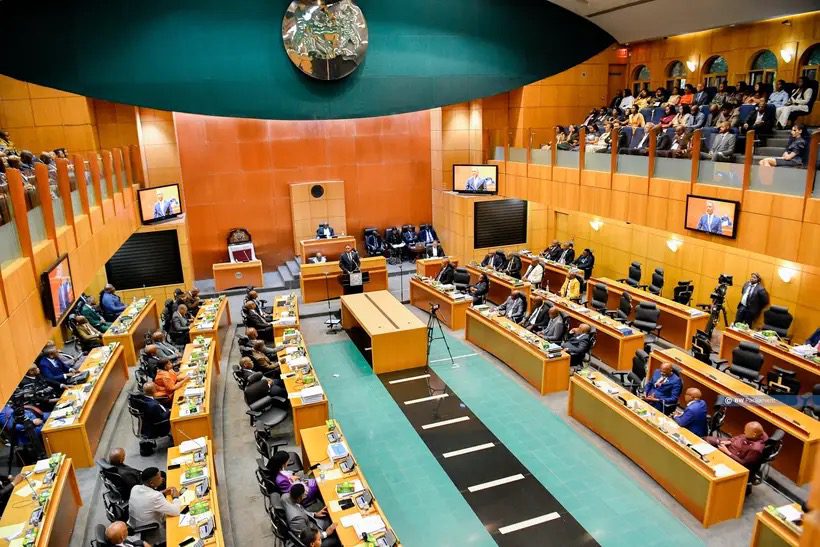
The said Bill was gazetted on 8 August 2025 and it was passed by Parliament in the week ending on 16 August 2025 and once law, it will introduce the Reverse VAT discussed in this article.
This legislative shift reclassifies certain institutions whose sales are exempt from VAT, compelling them to register and account for VAT on imported services, a move that demands strategic action from institutional leadership. Whilst this Reverse VAT affects a number of other businesses and NGOs currently not registered for VAT, we will only focus on educational institutions such as universities, schools, colleges and preschools.
Reclassification
Educational institutions now fall under the category of what the Bill calls a “large unregistered person,” described as one whose annual revenue is a minimum of P1million and they supply exempt supplies. Educational institutions that offer educational services to students are exempt from normal VAT, being one where the supplier charges to clients. This re-classification imposes on them the liability of accounting for the Reverse Value Added Tax at the rate of 14 percent on reverse charged supplies, the latter of which may simply be referred to as imported services. This change amends Section 7 of the VAT Act, specifically by introducing a new paragraph to levy tax on a “reverse charged supply made to a registered person, Government entity, or a large, unregistered person.’’
Impacted services
The following are examples of services which will be subject to Reverse VAT upon importation by the educational institutions: legal advice, accounting, audit, or tax consultancy, management consultancy, software development, installation, repair or maintenance, construction & project related, construction supervision, design and feasibility studies, employee training, seminars, workshops, photography or video production.
Implications
The implementation of Reverse VAT introduces specific financial and administrative demands for affected institutions. Such institutions will first be required to register for Reverse VAT with BURS (different from Normal VAT). Secondly, they will be required to file their VAT returns on reverse charged supplies in 2 months’ intervals. Even in the absence of imported services, they must submit nil returns. Crucially, the educational institutions are not allowed to claim any input VAT on these reverse-charged supplies. They are only liable to remit the VAT on the imported services. As exempt organisations, they cannot claim input tax on any supplies, including reverse-charged supplies. The stated institutions will not pay any training levy on the reverse charged supply, as such levy only applies to those registered for normal VAT. As an example, if a university which is currently not registered for VAT imports commercial royalty fees worth P1m, it pays VAT of P140,000.
Conclusion
The introduction of reverse charged supply VAT represents a fundamental shift in the tax obligations of Botswana’s educational sector. Failure to register for the tax attracts penalties of up to 200 percent of the Reverse VAT, whilst non-submission of VAT returns will also attract additional penalties. Interest will also be levied on late payment of VAT at the monthly compounded rate of 1.5 percent, resulting in roughly 20 percent per annum. The time for strategic preparation and seeking tax consultancy is now.
Tax hint: If you have never had a tax audit/review conducted by a tax consultancy firm to check whether you are tax compliant or should it be apparent that you are not certain that your tax affairs are in good order, then don’t wait for the taxman to pounce on you, as that can be very costly. Contact us today so we can help you fix your tax affairs whilst you still have time.
Contacts: You may contact us at +267 7181 5836 or +267 393 9435 or jhore@aupracontax.co.bw or www.aupracontax.co.bw. This article is general, and tax advice is recommended if decisions are to be made. If you require to join our free Tax WhatsApp groups or to know more about our 9 Tax e-books, please send us a text/whatsappon the number above.
Article by Olla Murinda, reviewed by Jonathan Hore and Gavin Mashiri


