


There is a persistent image of a stock exchange that refuses to fade, a crowded floor, men in jackets shouting orders, paper flying.
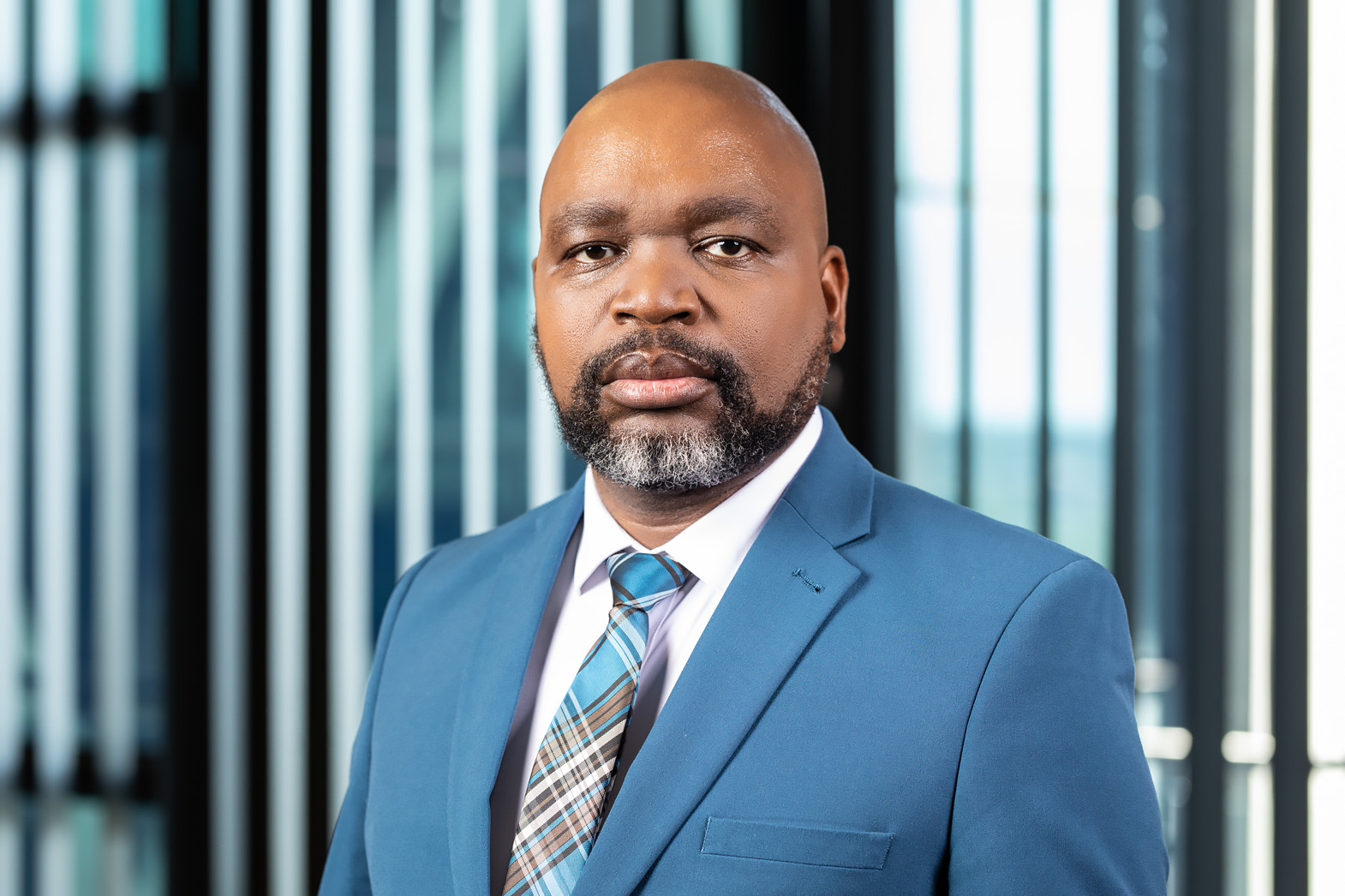
Kopano Mogorosi, Head of IT at the Botswana Stock Exchange, smiles at the anachronism. He says most people still picture a stock exchange as a trading floor full of people shouting. The reality, however, is that a modern exchange is a technology company that runs a market.
The market itself is software.
Every order placed, every trade matched, every share moved into an investor’s name happens inside systems his team builds, runs and protects. When the BSE describes itself as capital markets infrastructure, Mogorosi argues, it is describing precisely that: the infrastructure, systems and services that power an automated market.
His mandate sits squarely within the technology modernisation pillar of the BSE’s 10X by 2030 strategy. He sums it up with disarming simplicity: “My job is to make sure the other four pillars have a road to drive on.”
That road is being built in four parts. Architecture defines one design for the business, its applications, its data and its artificial intelligence. Infrastructure and cloud bring that architecture to life. The operating model runs it, with an internal team working alongside a global network of specialist partners. Then, the platform powers it all, making it real and tangible for the whole market.
“We are modernising these foundations now so that whenever a new product comes along, we can simply plug it in,” Mogorosi says.
The model also redefines what IT means at the BSE. It is moving from a department that supports the business to a function that creates value and makes innovation possible across the Group.
Why should an ordinary Motswana care? Because technology, in Mogorosi’s telling, democratises financial inclusion. He states that it is what lets you invest from your phone, with one account and small amounts, in a market you can trust.
“It is also what lets us scale, reaching investors and issuers well beyond Botswana’s borders and helping to turn the BSE into a premier capital-raising hub in Africa. That is how 10X happens. Technology drives the scale that amplifies the impact of everything BSE does on the economy,” he explains
Paying for an Investment Should Feel Like Paying a Bill
If inclusion is the destination, payments are the first mile.
Mogorosi is careful about boundaries. He says payments are the home turf of banks and the retail payments world. The BSE has no intention of becoming a payments company – Mogorosi says its job is to connect the exchange’s infrastructure to that world, so that paying for an investment is as easy as paying for anything else.
Consider what investing requires today: a broker account, a Central Securities Depository (CSD) account and a bank transfer, a process that can take days. Compare that with buying airtime or paying a bill on a phone.
“Where we want to get to is that you fund an investment from the same phone you already use for banking or mobile money, in minutes,” Mogorosi says.
To get there, he says the BSE is building an API platform. In simple terms, it is a plug socket that banks, mobile-money operators and fintechs can plug into to reach CSD services. It is being built on global standards such as ISO 20022, so that systems speak the same language from day one.
The appetite is already visible. The Botswana Telecommunications Corporation Limited (BTCL) Initial Public Offering (IPO) brought tens of thousands of Batswana into the market for the first time. This year, interest from market participants in connecting their systems directly to the BSE has grown tremendously, prompting an upgrade of the integration platform, says Mogorosi.
“It is a natural evolution, in line with our newly approved technology architecture, and the end goal is simple: more retail investors taking part in the capital markets,” he notes.
The same philosophy, build the rails, let the market decide, shapes the BSE’s approach to digital currency.
Mogorosi says they are building infrastructure that will be ready for whatever form of digital money the Bank of Botswana and the market adopt.
Every trade, he explains, has two legs: the thing you buy, and the money you pay for it. Tokenised shares or bonds would digitise the first leg. A central bank digital currency, or a stablecoin, could digitise the second. Instant settlement needs both legs to be digital at the same moment.
The BSE views the two somewhat differently. A CBDC would be a payment currency issued by the Bank of Botswana, and so is the natural candidate for the money leg. Stablecoins, issued by players in the wider market, are seen more as instruments that could trade on a regulated digital exchange, much the way currencies trade today. Both would be welcome. But this is a whole-market initiative, not something the BSE can decide alone. The Bank of Botswana leads on digital currency, and the Virtual Assets Act, 2025, administered by NBFIRA, already provides the regulatory framework. Anything the BSE does will sit inside that Act and be coordinated with the central bank.
For now, Mogorosi says the market settles against Pula central bank money through BISS, the Bank of Botswana’s RTGS. Instant settlement is the future the BSE is heading toward; it is not there yet.
“Our part in the present moment is to make sure that when the market is ready, the rails are already in place,” he professes.
Tokenising the Real Economy
Nowhere is that preparation more tangible than in the Botswana Mercantile Exchange (BMX).
Picture a farmer who delivers sorghum to a certified warehouse. An independent inspector checks grade and weight, and the warehouse issues a receipt. That receipt is the financial instrument that trades on BMX. A token, Mogorosi says, is simply a digital version of that receipt, one that can be split into smaller pieces.
So, when people talk about tokenising real-world assets, Mogorosi says the BSE already runs a market built on exactly that idea: a physical asset, verified, and represented by a document that can change hands.
From grains, the same logic extends to other commodities, to beef in the next phase of BMX, and over time to assets like property. That is where it becomes exciting for ordinary investors. Something that needs tens of thousands of pula to buy today could one day be bought in pieces of P50 or P100, according to Mogorosi.
On the technology side, he states that the depository system can already record a tokenised asset as a new type of instrument on its register. That is a matter of configuration, not new software.
He adds that what still has to be put in place is the digital custody and settlement layer, the next stage in building a digital exchange with instant settlement.
“We are preparing our infrastructure, our systems and our people to build and run it. We will move when the regulator, the demand and the safeguards are all in place,” he says.
Carbon, Counted Once
Carbon credits, he argues, are a special kind of digital market, one whose main purpose is to drive and reward sustainability.
A carbon credit is a certificate showing that one tonne of carbon dioxide was kept out of, or removed from, the atmosphere. It is created by a project, an Okavango Delta preservation initiative or a solar farm, independently verified, issued into a registry, traded, and finally retired when a company uses it to offset emissions. Think of a bus ticket being punched so it cannot be used again. Technology’s job is to ensure every credit is real, counted only once, and its retirement is visible to everyone.
That last part is where the BSE comes in. Mogorosi says the biggest risk in carbon markets worldwide is double counting. He says keeping a register that ensures ownership is never counted twice is exactly what a central securities depository does every day for shares and bonds. “It’s our core business,” he says.
Carbon credits are already one of the four commodity classes in the BMX design, alongside hard commodities, soft commodities and energy. The BSE approaches it with a global lens, having become a Partner Exchange of the UN Sustainable Stock Exchanges initiative in April 2016 and using frameworks such as the UN Sustainable Development Goals to shape how a carbon market should work.
Bridging Two Worlds
At its heart, the Automated Trading System (ATS) is a matching engine, an auctioneer that pairs buyers with sellers fairly and in strict order. Digital-asset markets also run on matching engines at their core. The skill of running a fair, reliable matching engine, which the BSE has honed for years, is exactly the skill a digital-assets exchange needs.
What connects the two worlds is an integration bridge within the BSE’s own technology infrastructure. Mogorosi says the idea is that if you already invest on the BSE, you could also take part in a blockchain-based digital market run by the BSE, at the same time, without opening additional accounts, with the two markets sharing data in real time.
Standards make that bridge work. The FIX Protocol is the language of trading. ISO 15022, still used for corporate actions, and its successor ISO 20022 carry settlement and payment messages. Moreover, ISO 24165, the Digital Token Identifier, is effectively the ISIN for tokens: a unique code for every digital asset, the same way every listed share has its own International Security Identification Number today.
There are real differences to design for. Mogorosi says Crypto markets never close, while the depository runs on business days, so any bridge must handle that difference in operating hours. Further, any digital-assets market the BSE runs would be licensed by NBFIRA under the Virtual Assets Act. “That is not negotiable for us,” he cautions.
Security as a System
Security for digital assets, Mogorosi insists, starts with security for the whole exchange.
The BSE is setting up two control rooms with specialist partners. The first is a Network Operations Centre, which keeps the lights on: it watches systems around the clock so they are available when investors want to trade. The second is a Security Operations Centre, a 24/7 security control room. Inside it, a SIEM works like CCTV that records everything happening across systems, and managed detection and response is the armed response that acts the moment an alarm goes off.
Beyond that, Mogorosi says the BSE is augmenting its own IT team with experts from across the globe. Cyber threats do not respect borders, and no exchange should try to defend itself alone. He says the BSE is also introducing policy as code;security rules written into systems themselves, so they enforce themselves automatically instead of sitting in a binder on a shelf.
Underneath it all is modernisation of architecture and systems, because a modern, well-designed platform is far easier to secure than an old one.
Whether it is a share, a bond or one day a digital token, investors need to know that what they own is safe.
That approach extends to smart contracts. Mogorosi says it rests on four things: artificial intelligence, which gives far better visibility, spots issues early and fixes routine problems automatically, with a human in the loop at strategic points; circuit breakers, which pause activity when something abnormal happens, so a problem in one place is contained quickly; identity, with strengthened identity and access management so every user has one digital identity and one key for every BSE service; and the investor himself.
“As we move towards a digital exchange, our investor education will include cybersecurity, because even the strongest systems cannot protect someone who gives away their password. Security is a shared responsibility,” he states.
Resilience, Compliance and Scale
Disaster recovery, Mogorosi says, comes down to one promise: if something goes wrong, the market keeps running. Think of it as having a second, fully furnished house you can move into the moment the first has a problem.
Improved disaster recovery facilities are being developed now. He further states that the design goal is high availability with real-time failover: if one site has a problem, services move automatically, with minimal disruption.
The BSE is also using a combination of cloud and colocation, placing systems in specialised data centres, to bring services closer to markets and investors wherever they are. Investor data remains protected under Botswana’s Data Protection Act.
Mogorosi says compliance, too, is being built into software. The principle is simple: you prove who you are once, and then you can use any BSE service. Once verified, he says that verification follows an investor across everything the BSE offers, instead of repeated forms. AML/CFT checks will be automated, as will reporting. On the trading side, he notes that automated market surveillance will use machine learning and generative AI to detect manipulation.
“Picture a referee with instant replay who never blinks: every order and every trade is watched. Routine cases will be handled automatically, but a human will decide anything that affects an investor,” he explains.
This matters beyond the BSE. Botswana successfully addressed its action plan and was removed from the FATF grey list in October 2021. That was a national achievement, and the BSE’s controls are part of protecting it. Mogorosi says a clean, well-supervised market that local and international investors can trust is the foundation of transforming our economy.
On blockchain itself, he is deliberately agnostic. He says the BSE has not selected a framework, and that is intentional. Blockchain is just one type of distributed ledger technology. Singapore’s Project Guardian, the SIX Digital Exchange in Switzerland and Hong Kong’s tokenised green bonds are all instructive, but every DLT has strengths and weaknesses.
“We are designing to be chain-agnostic, so that we are not locked into any single platform. Think of a phone that works on any network,” he states.
“The platform’s performance is already proven. The trading system can handle 5,000 orders per second and match 1,000 trades per second, headroom many times greater than the busiest day. Each part of the infrastructure is designed to scale easily. The moments that truly test this are big listings, when retail demand spikes, as with the BTCL IPO and, globally, the SpaceX IPO this year. The cloud lets the BSE scale up for the day and back down afterwards. A busy day on the market should feel exactly like a quiet one.”
People Before Platforms
None of this works without people. Mogorosi says the IT team has been reshaped with new specialist roles in automation, cloud, data analytics and IT operations. He adds that staff have access to world-class learning platforms and global research and advisory expertise, and international partners support the team as it takes on new capabilities.
He adds that an AI Policy is in place, with awareness training and AI used to make people more productive.


