


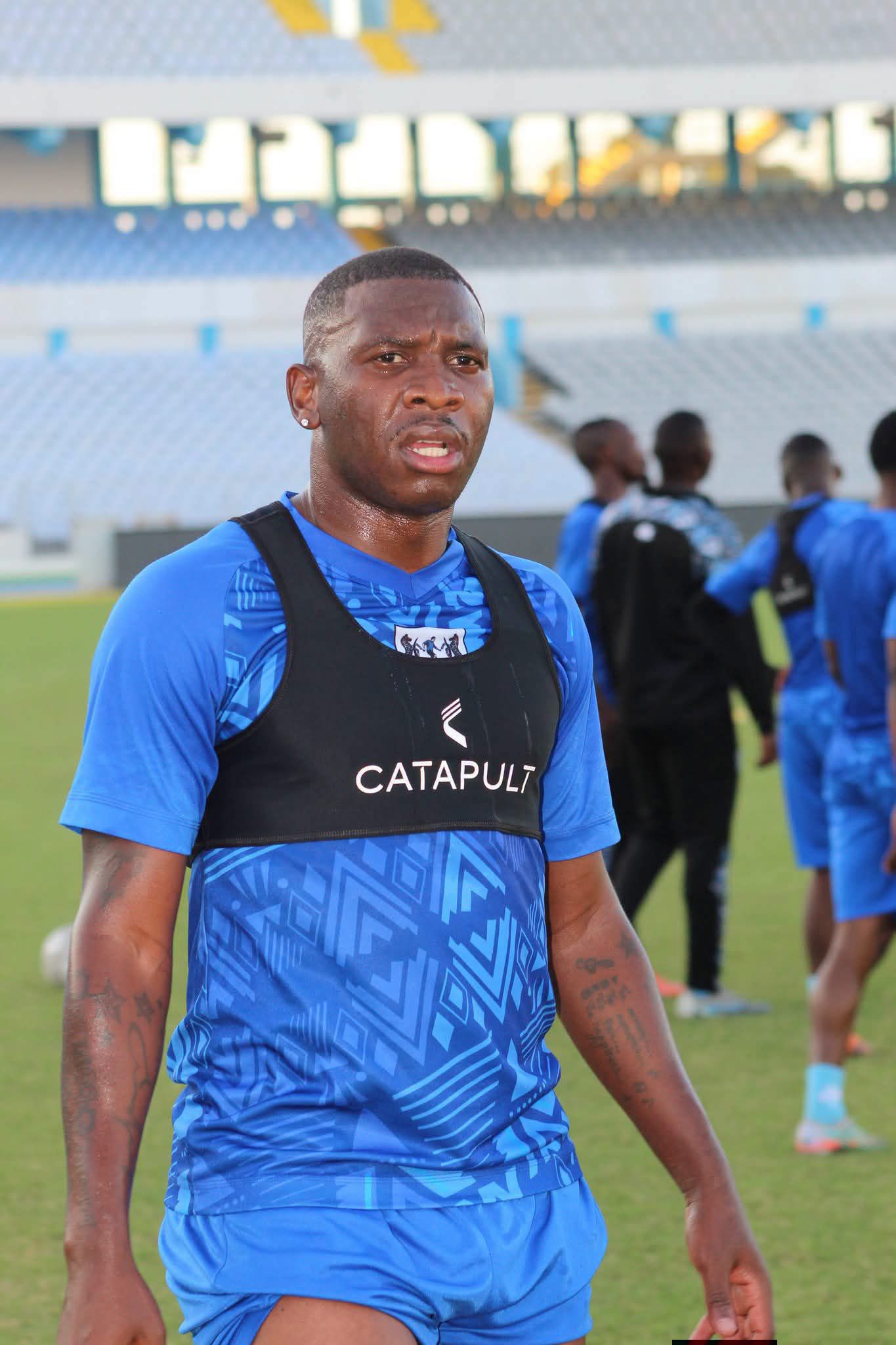
Tumisang “Teenage” Orebonye is seeking to establish himself at Hassania Union Sport d’Agadir after beginning a new chapter in Moroccan football, having featured in two matches since joining the club in early September.
The 30-year-old striker has played more than 70 minutes in each appearance, giving him an early opportunity to settle into the squad and compete for a regular place in Morocco’s top division, the Botola Pro.
His move to Hassania coincided with a strong showing on the international stage. On 24 September, Orebonyescored twice in the first half as Botswana defeated Libya 2–1 in an Africa Cup of Nations 2027 qualifier, underlining his importance to the Zebras.
His club campaign, however, presents a different challenge. Despite the encouraging start, Orebonye is yet to score for Hassania, leaving him with the task of turning his playing time into a tangible attacking contribution.
The move follows several years of professional football across North Africa, where he has played in Morocco, Algeria and Libya. His experience in these leagues could prove valuable as he seeks a more settled spell at his new club.
Another Moroccan chapter
Orebonye joined Hassania Agadir as a free agent after ending his relationship with Wydad Casablanca by mutual consent in September. He signed a one-year contract with an option to extend, giving him an opportunity to rebuild momentum after a period of movement between clubs.
“I want to settle in as quickly as possible, understand what the coach expects from me and contribute to the team’s objectives,” Orebonye said.
His departure from Wydad ended a relationship that began during the 2025/26 season, when he joined the Casablanca club from Libyan side Al Ittihad on a three-year deal.
His time at Wydad included temporary moves, among them a loan spell at Olympic Safi for the remainder of the 2025/26 campaign. He also spent part of his time away from the club at Libyan side Al Shamooa.
The moves prevented his spell at Wydad from developing into the extended run he might have anticipated when signing his contract. Hassania offers a new setting in which to pursue regular football and demonstrate his value.
For a player who has spent much of his professional career outside Botswana, the challenge is familiar. Each transfer brings a new dressing room, different tactical expectations and the need to compete for playing time.
His first two appearances at Hassania have given him a foothold, but his longer-term success will depend on how consistently he contributes to the team’s performances.
Experience across leagues
Orebonye’s career abroad began about six years ago when he left Township Rollers for Moroccan club Olympique Khouribga.
The move took the Botswana forward into an unfamiliar football environment, where he had to adjust to a different level of competition and a new way of life.
He subsequently moved to Algeria, where he became the first Botswana player to win the CAF Confederation Cup with USM Alger. A spell at AS FAR Rabat followed before he joined Al Ittihad in Libya.
His journey has exposed him to different playing styles and competitive environments across North Africa, making adaptability an important part of his professional life.
“I have played in different countries, and every move teaches you something new. You have to remain focused, work hard and be ready to adapt because every club has its own demands,” he said.
That experience could serve him well at Hassania as he works to understand his teammates and the expectations of the coaching staff. His international responsibilities with Botswana add another dimension to his season, although consistent performances at club level remain essential.
At 30, Orebonye brings considerable experience to the assignment. The challenge is to translate that experience into sustained performances and a more settled period at one club.
Room for improvement
Hassania Agadir enters the campaign looking to improve on a disappointing previous season. The club finished 12th among 16 teams in the 2025/26 Botola Pro standings, collecting 33 points from 30 matches.
Eight wins, nine draws and 13 defeats left the team clear of relegation but short of the consistency required to challenge higher up the table.
The previous campaign also exposed difficulties in front of goal towards its conclusion. Hassania scored three goals in its final five league matches while conceding an average of 0.8 goals per game over the same period.
These figures relate to the previous season and do not, on their own, establish the team’s current form. They nevertheless provide context for the demands facing its attacking players as the club seeks better results.
Orebonye will be expected to compete for opportunities in attack. His experience as a forward and his recent international goals make him a player to watch, but he will need to deliver consistently at club level to strengthen his position.
Playing more than 70 minutes in each of his first two appearances suggests he has already been given meaningful opportunities to integrate into the side. The next step is to make those minutes count through his movement, link-up play and contribution in front of goal.
“The most important thing is to help the team. Whether it is scoring, creating chances or working for my teammates, I want to make a positive difference whenever I am on the pitch,” he said.
A test of consistency
For Orebonye, Hassania represents another opportunity to bring stability to a career that has taken him across several football markets.
His one-year contract, with an option to extend, gives him a defined period in which to establish himself and demonstrate that he can make a sustained contribution to the club’s ambitions.
His brace against Libya in September showed what he can deliver on the international stage. At Hassania, however, the challenge is to translate that ability into performances that help the club achieve its objectives over a demanding league campaign.
Two appearances offer only an early indication of his place in the team’s plans. They are not enough to determine how his season will unfold, particularly as he continues to adapt to a new environment.
For Botswana football, his continued presence in North Africa reflects both the opportunities and challenges facing local players who pursue professional careers abroad. Moving between clubs can open new doors, but securing a lasting place in competitive teams requires consistency and the ability to respond to changing circumstances.
Orebonye now has another opportunity to shape his career in Morocco. Having moved from Wydad to Hassania, he will be looking to establish himself, secure a regular role and turn his early involvement into a productive spell.


