


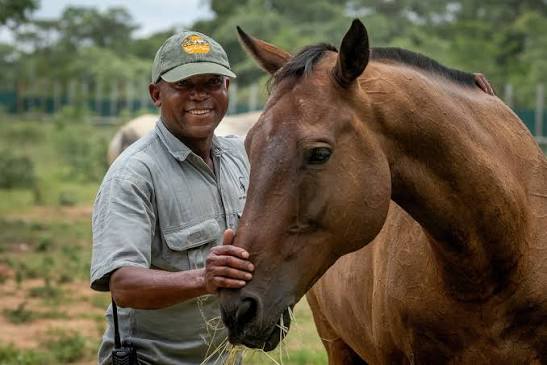
Botswana is looking to transform horse racing from a growing sporting activity into a structured and commercially viable industry, with government identifying its potential to create jobs, stimulate local businesses and contribute to economic diversification.
Speaking at the recent Ghanzi Derby, Minister of Sport and Arts Jacob Kelebeng said government remained committed to creating an environment conducive to the development and commercialisation of sport, describing horse racing as one of the country’s fastest-growing sporting disciplines.
Kelebeng said the sport’s growing popularity presented opportunities that extend far beyond the racetrack, with breeding, training, betting, events, hospitality and other associated activities capable of supporting a wider network of businesses and livelihoods.
“Today is about more than horses,” was the message delivered at the event, which brought together breeders, jockeys, punters and families to celebrate a sport that is increasingly gaining traction across Botswana.
The minister said government was working with the Gambling Authority, Botswana National Sports Commission (BNSC) and Botswana Horse Racing Association (BHRA) to strengthen industry standards and promote professionalism, safety and integrity within the sector.
He also highlighted collaboration involving the National Anti-Doping Coordination Office, Ministry of Health and Department of Veterinary Services, saying a coordinated approach was necessary to protect participants, safeguard animal welfare and prevent doping-related incidents.
One of the most significant developments is the Gambling Authority’s work on Botswana’s first National Horse Racing Strategy, which Kelebeng said is being developed in consultation with the BHRA and other stakeholders.
The proposed strategy will provide direction on licensing, infrastructure standards, skills development, betting regulation and animal welfare. It is intended to create a framework through which horse racing can evolve from a developing sport into a regulated and sustainable economic sector.
Industry stakeholders increasingly view horse racing as part of the broader sports economy, with potential opportunities in breeding, veterinary services, hospitality, transport, betting, merchandising and tourism. A formal strategy could help unlock investment into these value chains while creating greater certainty for operators and investors.
Kelebeng called on the private sector to invest in the industry, arguing that its development would require partnerships extending beyond government support.
He thanked companies that had sponsored the Ghanzi Derby and urged other businesses to support organisers affiliated with the BHRA, as well as the association itself.
“Your involvement can unlock the full potential of this industry and build a modern, ethical and commercially viable horse racing ecosystem,” he said.
The minister also commended organisers for sustaining the sport and encouraged them to work collectively through the BHRA, arguing that a united industry would be better positioned to negotiate support and advance common interests.
He singled out the Ghanzi Show Trust and TT Horse Racing for their collaboration in delivering the derby, while calling on the Ghanzi community to build on the event’s momentum and position the township as a destination for sporting and arts activities.
Such initiatives, he said, could stimulate local economic activity, attract visitors and create employment opportunities.
The Gambling Authority, meanwhile, placed particular emphasis on the need to protect the credibility of the sport as it expands.
Addressing the gathering, Authority Chief Executive Moruntshi Kemorwale warned that the industry’s commercial prospects depended on strict adherence to rules, particularly those governing competition integrity and betting activity.
“No doping, no race-fixing, no underage betting,” he said, identifying the three as non-negotiable standards for everyone involved, including jockeys, trainers, horse owners and licensed bookmakers.
Kemorwale said the Authority would enforce compliance through integrity testing and surveillance, warning that misconduct could undermine public confidence and discourage investment.
“When the rules are respected, the punter trusts, the investor comes, and the sport grows,” he said.
However, beyond regulation, his address also addressed the risks associated with gambling, cautioning punters against treating betting as a source of income.
“Gambling is entertainment, not a get-rich-quick scheme,” Kemorwale said, urging participants to wager only what they could afford to lose and never use money intended for essential household expenses, school fees, rent or livestock feed.
He said betting odds were not a salary and warned against chasing losses, describing the behaviour as a clear indication that gambling was becoming difficult to control.
“Problem gambling is real, and it can affect anyone,” he said, adding that financial circumstances, education and social standing did not make people immune to gambling-related harm.
Kemorwale encouraged people experiencing stress, debt or family conflict linked to betting to seek assistance early, stressing that there should be no stigma attached to asking for help.
“There is no shame in asking for help,” he said, adding that the Authority wanted to be seen not only as an enforcement institution but also as a partner in protecting the welfare of communities.
He also called on breeders to prioritise horse welfare and urged punters to demonstrate responsible behaviour, particularly in front of younger spectators.
The two addresses highlighted the balancing act facing Botswana’s emerging horse racing industry: capitalising on its economic potential while putting in place the regulatory safeguards necessary to ensure its long-term sustainability.
For Ghanzi, the derby represented more than a day of racing. It demonstrated how sporting events can bring together communities, businesses and institutions around a shared economic and cultural ambition.
As government moves towards developing a national strategy, the challenge will be translating that ambition into an industry capable of attracting investment, creating jobs and earning public confidence without compromising fairness, responsible betting or animal welfare.


