


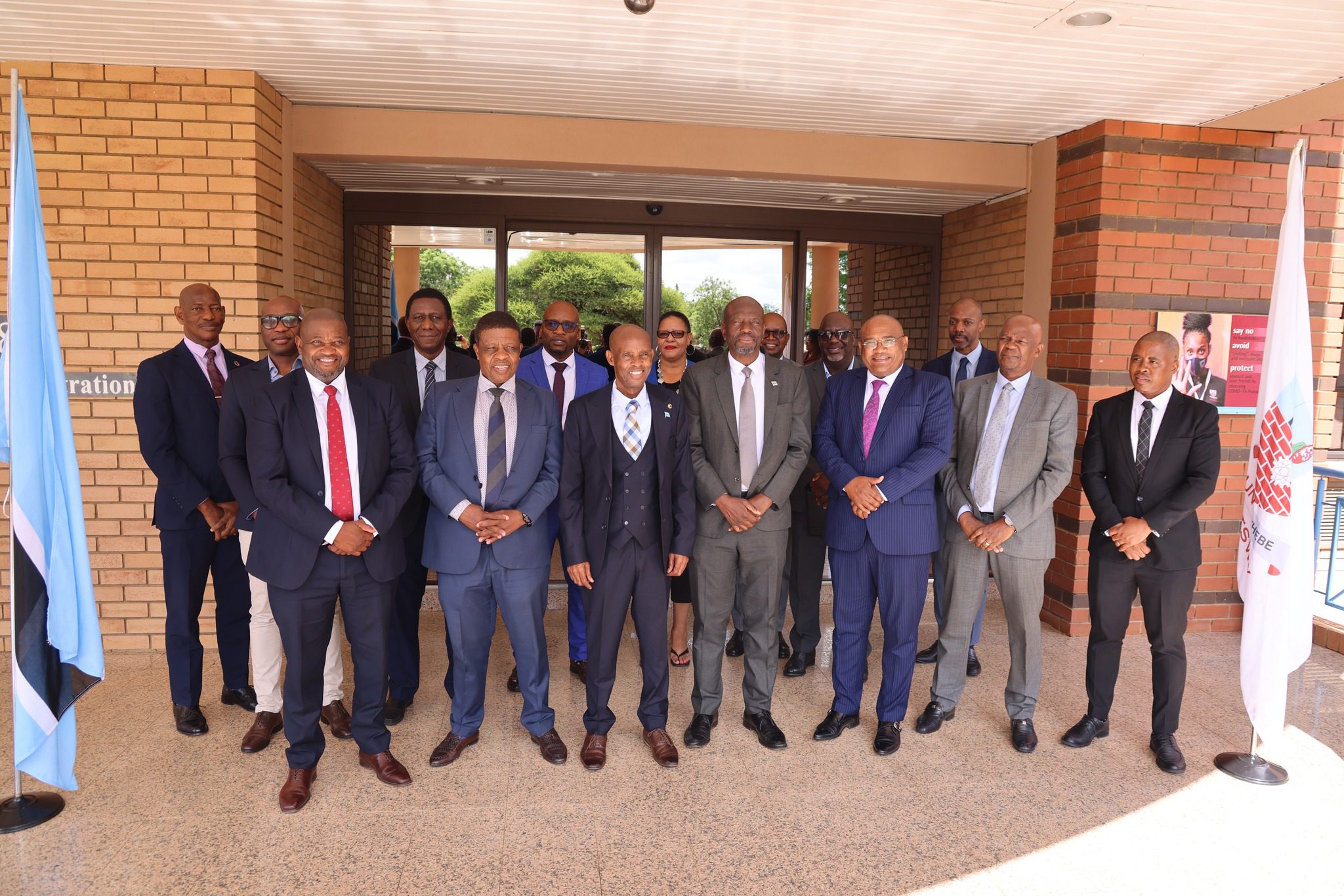
The University of Botswana Academic and Senior Support Staff Union (UBASSU) has expressed support for the appointment of new University of Botswana (UB) Council members and the ongoing restructuring process.
Speaking to Business Weekly and Review, UBASSU President Dr. Emmanuel Mongede said the union recently met with UB management to agree on a practical timeframe for completing the restructuring. “One of the critical issues we agreed on with management was the appointment of the University Council, whose key responsibility is to bring the restructuring to a conclusion,” he said. He noted that the council members were officially appointed this week by the Minister of Higher Education, Prince Maele.
The restructuring, initiated by UB executive management in 2020, is part of a broader transformation agenda aimed at repositioning the university as a high-performing institution contributing meaningfully to Botswana’s economic and social development. The new strategic direction prioritises research and innovation, with outputs expected to influence teaching and be translated into commercialisable products and services.
Vice-Chancellor Professor David Norris described the process as complex and far-reaching, involving a comprehensive review of the organisational structure, job profiles, and performance management systems to align with UB’s strategic priorities. The restructuring resulted in the consolidation of faculties to promote multidisciplinary research and reduce operational inefficiencies. Norris added that UB’s wage bill, which consumes about 90 percent of its funding, was a major driver of the reorganisation, leaving limited resources for development and investment.
UBASSU said staff initially welcomed the restructuring, anticipating a fully capacitated and well-resourced institution that would improve long-standing poor working conditions. However, Mongede said prolonged delays have eroded optimism, replacing it with “disillusionment, demoralisation and despair.” He added that the pain and frustration of UB staff are visible, yet executive management appeared oblivious to the impact of the drawn-out process.
Among the union’s key frustrations were management’s failure to adhere to agreed timelines and delays in appointing council members responsible for developing statutes to govern the university’s new organisational structure. “The restructuring must be guided by statutes. The appointment of deputy vice-chancellors, executive deans, and heads of schools—all depend on these statutes,” Mongede emphasised.
During the appointment of the new council, Minister Maele reportedly instructed members to prioritise completing the restructuring by March 2026, while also diversifying the university’s income streams and transforming UB into a high-performing institution. The newly appointed council will serve from January 2026 until December 2028.


