


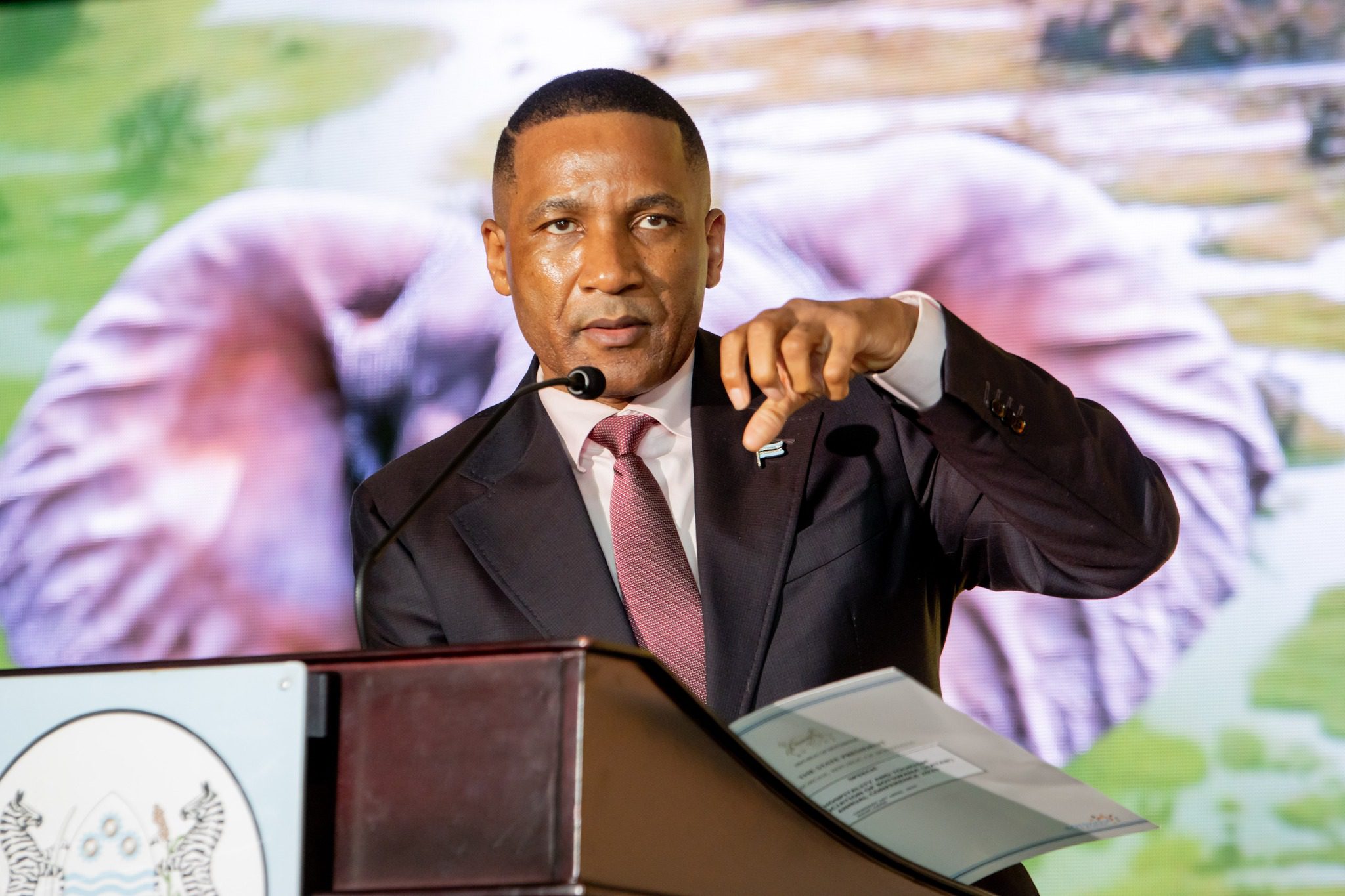
President Duma Boko has delivered a blunt assessment of government inefficiencies, admitting that Botswana’s biggest weakness has not been a lack of ideas or policy direction, but a failure to execute.
Speaking at the groundbreaking of the Maun 500MW solar project, Boko said delays in project implementation are often rooted in outdated systems, slow decision-making processes and institutional inertia, challenges he mentioned his administration is now moving aggressively to dismantle.
“Government has been miserable, has failed at execution, implementation. That’s the biggest challenge,” Boko said, drawing a clear distinction between policy pronouncements and actual delivery on the ground.
He pointed to “structural and attitudinal bottlenecks” within government, revealing that some laws, policies and administrative practices are “archaic” and not designed for speed. These include processes around land allocation, documentation and approvals, which he said take “an inordinate amount of time” due to systemic constraints.
Despite this, Boko insisted that such barriers would no longer be allowed to delay national projects.
“They will not stop us. They will not deter. They will not delay,” he said.
The President used the solar project as an example of a new approach to governance, where timelines are compressed and decisions accelerated. He revealed that what would typically take months, including board approvals and regulatory processes, was forced through in a matter of days.
When told that a board resolution would take a month, Boko said he rejected the timeline outright, demanding action overnight. Similarly, processes that were expected to take six months were pushed to be completed within days.
This change, he said, indicates a deliberate break from “the old mode of how things are done,” which he blamed for slowing down development.
Boko also acknowledged that public frustration over delays is justified, noting that there has long been a “contradiction between what government has pronounced and what government has delivered.” His administration, he said, is focused on eliminating that gap by ensuring that decisions are immediately followed by action.
“You speak, you do. The time between the spoken word and action ceases to exist,” he said.
Beyond administrative delays, Boko communicated broader policy reforms on the horizon, particularly in sectors such as land management, energy and mining. He indicated that laws will be reviewed and, where necessary, changed to align with the country’s development ambitions.
“The laws are going to have to change. It’s not negotiable,” he said.
The President also stressed that implementation speed is critical given his administration’s self-imposed timelines. Although elected for a five-year term, Boko said he aims to deliver key outcomes within three years, leaving no room for bureaucratic delays.
“We are in a race against time… The people of this country don’t have time to wait,” he said.
While acknowledging protests and public pressure as part of democratic accountability, Boko maintained that government must balance urgency with the practical constraints of operating within existing systems, even as those systems are being reformed.
The Maun solar project, he said, is only the beginning, with several more projects expected to be rolled out under this accelerated model of governance.


