


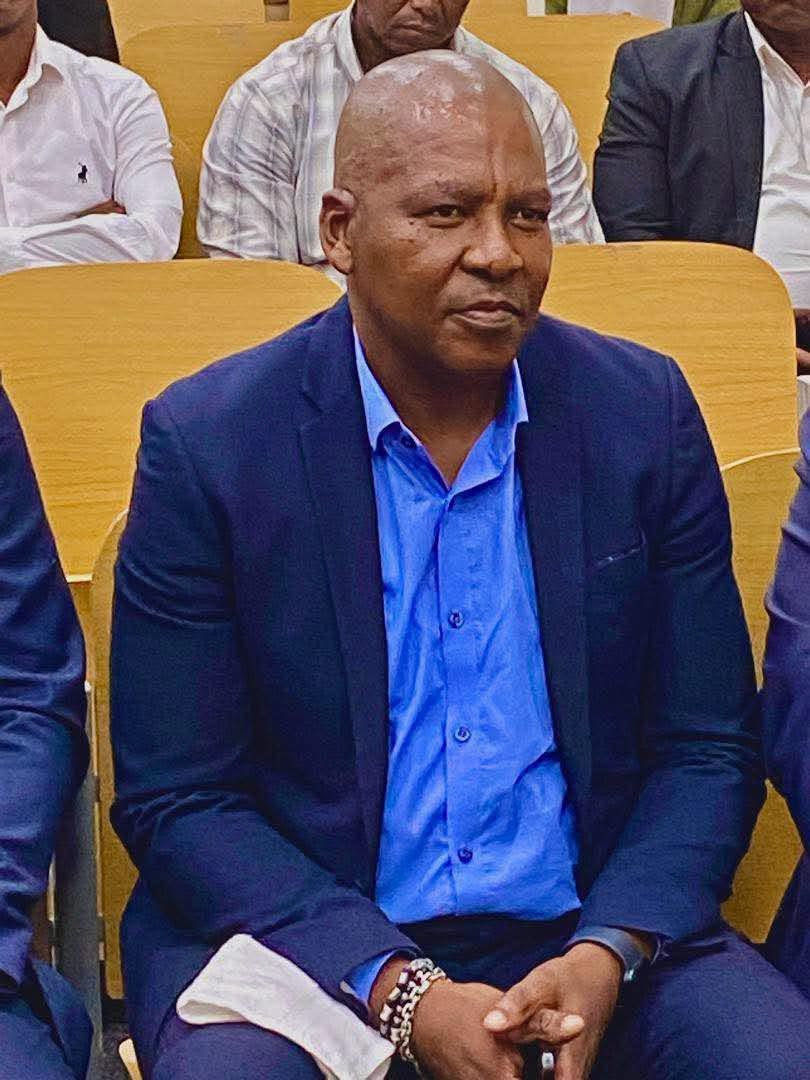
A key prosecution witness in the corruption case against former Minerals and Energy Minister Lefoko Moagi has told the Gaborone Regional Magistrate Court that he had no role in Botswana Power Corporation (BPC) tender processes, a development that significantly weakens allegations central to the state’s case.
BPC Procurement Manager Lerothodi Moshoeshoe testified that Moagi was not involved in the evaluation, adjudication or awarding of tenders at the utility, stating that procurement decisions were handled through established internal structures.
“With regard to the process I outlined, he was nowhere involved,” Moshoeshoe told the court, according to evidence presented during cross-examination by Moagi’s attorney, Tengo Rubadiri.
The testimony comes as Moagi faces multiple counts of money laundering and related financial offences linked to transactions involving BPC contracts. The witness further explained that, prior to the implementation of the new Public Procurement Act in April 2022, BPC operated its own procurement system outside the Public Procurement and Asset Disposal Board (PPADB), now the Public Procurement Regulatory Authority.
Under that framework, he said, tenders below P500,000 were approved by departmental committees, those below P5 million were handled by executive procurement committees, while higher-value contracts required board-level recommendations. Moshoeshoe also told the court that following the new legislation, the role of the BPC Board in procurement matters effectively ceased. The testimony has prompted renewed scrutiny of the state’s case, with observers warning that the developments could mirror previous high-profile prosecutions that collapsed due to evidentiary weaknesses.
A University of Botswana commercial law lecturer, speaking on condition of anonymity, said the case could take further turns depending on how the prosecution responds to the witness evidence. “There is a new twist in Moagi’s ongoing corruption case. All eyes are on the DPP going forward. Moagi has scored a small but important procedural victory based on the BPC testimony,” the lecturer said.
The case has also drawn comparisons to other controversial state prosecutions that were later withdrawn or dismissed for lack of evidence. Separately, Director of Public Prosecutions Kgosietsile Ngakaagae recently told Parliament’s Public Accounts Committee that the so-called “Butterfly” case involving allegations of P100 billion in losses at the Bank of Botswana lacked sufficient evidentiary basis.
The remarks have intensified political debate over the handling of complex financial crime investigations. Attorney General Dick Bayford has also confirmed that the government paid about P500,000 in legal and compensation costs linked to apologies issued to the South African Broadcasting Corporation and businesswoman Bridgette Motsepe, who were previously implicated in the matter.
Former president Ian Khama and Welheminah Maswabi, also known as “Butterfly,” were among those implicated in earlier public allegations during the previous administration. The developments have placed renewed pressure on the Directorate of Public Prosecutions as scrutiny intensifies over the strength of several high-profile corruption cases.


