


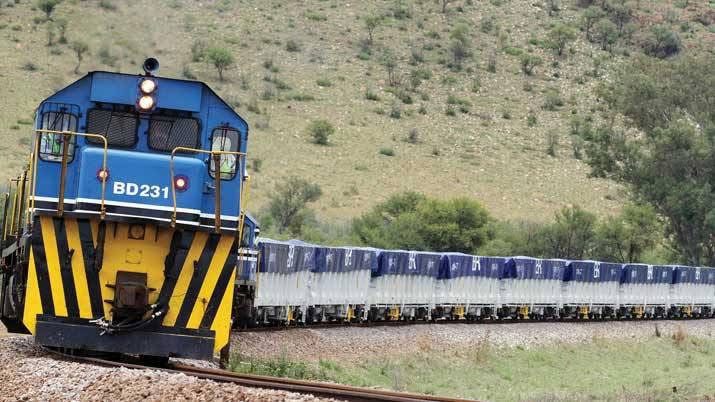
The volume of goods transported by rail increased by 4.9 percent to 171,715 net tonnes in the first quarter of 2026, up from 163,681 tonnes in the previous quarter, generating P42.9 million in revenue, according to Statistics Botswana.
Rail freight revenue increased by 7.5 percent from P39.9 million in the fourth quarter of 2025.
Exports accounted for the largest share of rail freight revenue at 29.8 percent, followed closely by local traffic at 29.6 percent. Transit traffic accounted for 24.6 percent, while imports contributed 16 percent.
The biggest movement was recorded in transit traffic, with revenue increasing by 107.3 percent compared with the fourth quarter of 2025.
In contrast, revenue from imports declined by 19.9 percent, while local traffic and exports fell by 3.4 percent and 2.2 percent, respectively.
RAIL POTENTIAL
Economist Lame Bothata said the figures demonstrate that rail transport still has significant potential to contribute to economic growth.
She said poor infrastructure development remained one of the main constraints facing the rail sector, making sustained investment in the country’s railway network critical.
“South Africa is a strategic market where Botswana Railways could carry goods such as coal, grain and soda ash that are in demand in the market either locally and abroad,” she said.
“Rail transport is one of the cheapest modes compared to road transport logistics aspect. Fuel is expensive in that area of logistics.”
Bothata said rail could provide a reliable and cost-effective transport alternative if adequate infrastructure was developed, with the planned Mmamabula-Lephalale railway line likely to play a key role.
“The project would be important for transportation of minerals and other exported commodities in bulk. Once completed, it would open up new business opportunities for Botswana Railways and that can also enable the railway authority to boost its railway fleet either servicing or buying new trains,” she said.
AIR PASSENGER TRAFFIC
Meanwhile, air passenger traffic declined sharply in the first quarter, with total passenger movements falling 19.8 percent to 189,845 compared with the previous quarter. International passenger movements stood at 119,371, accounting for 62.9 percent of the total, while domestic passenger movements amounted to 70,474, or 37.1 percent. Compared with the fourth quarter of 2025, international and domestic passenger volumes declined by 20.9 percent and 17.9 percent, respectively. Scheduled passengers accounted for 79.7 percent of total passenger movements, followed by non-scheduled passengers at 18.7 percent.
Private and scenic flights collectively accounted for 1.7 percent of passenger movements. Private passenger movements were the only category to record an increase, rising 38.1 percent from the previous quarter. Scenic passenger movements declined by 53.6 percent, while non-scheduled and scheduled passenger movements fell by 25.7 percent and 18.1 percent, respectively.
Sir Seretse Khama International Airport handled the largest share of passenger movements at 54 percent, followed by Maun Airport at 35.2 percent and Kasane Airport at 9.4 percent.


