


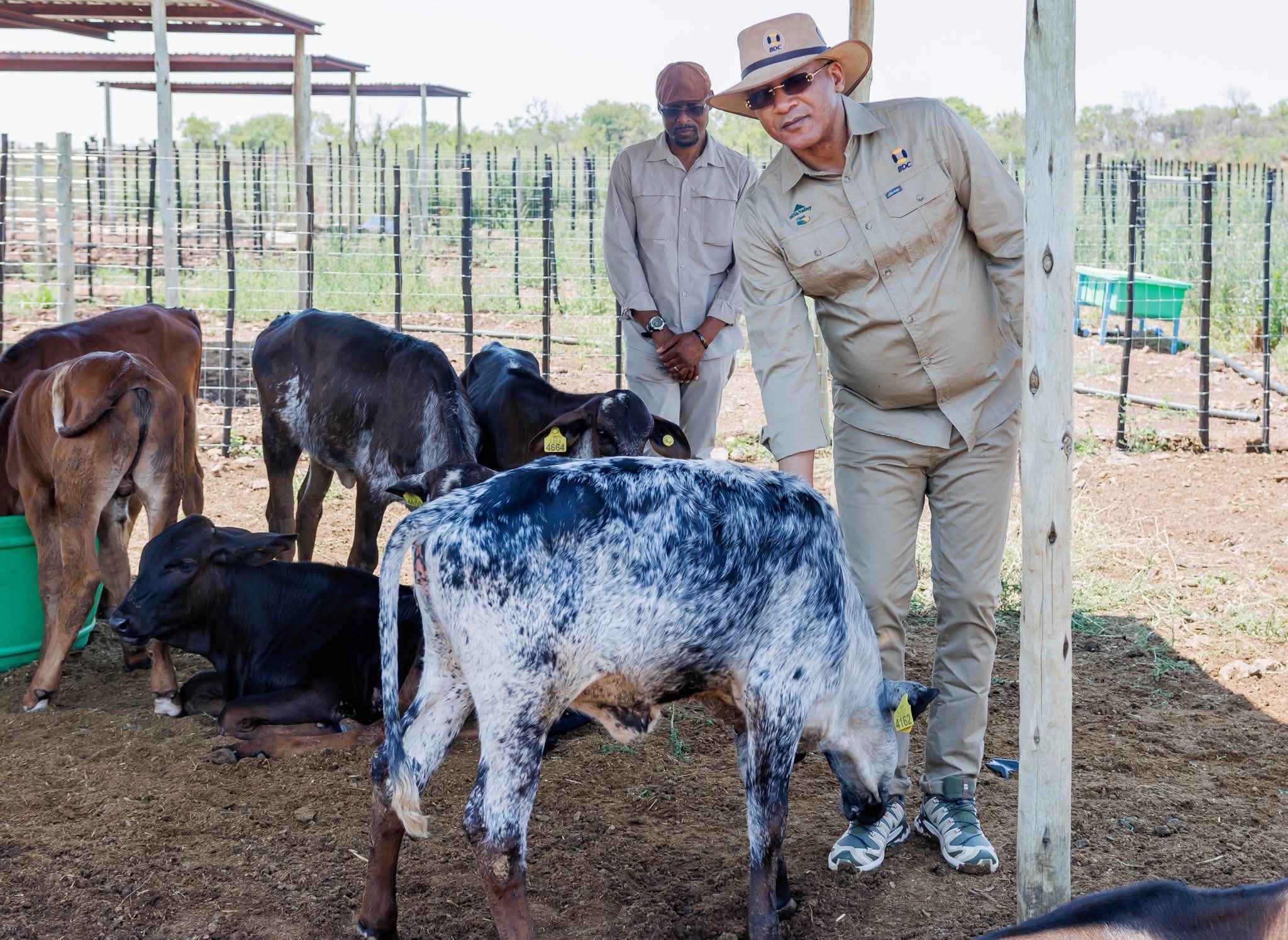
President Duma Boko has visited Milk Valley Farm in Lobatse as the Botswana Development Corporation (BDC) steps up investment in the dairy operation, which is targeting an annual production capacity of 15 million litres of milk.
The expansion is expected to strengthen domestic milk production, reduce Botswana’s dependence on imported dairy products and create opportunities across the agricultural value chain.
The visit comes after the arrival of 600 high-yield dairy cattle imported from Brazil, forming part of the farm’s plan to grow its herd to approximately 3,000 cattle. BDC’s initial investment in the project stands at P91.8 million.
BDC Managing Director Oteng Keabetswe said the investment goes beyond milk production, with the intention of developing a commercially sustainable dairy operation that can support other businesses in the sector.
“ We are investing not only in milk production, but in the foundations of an integrated dairy industry that creates jobs, develops local expertise and retains economic value within Botswana,” said Keabetswe.
The farm currently has 124 calves, with further calving expected during November. Milk production averages approximately 25 litres per cow daily, while its best-performing cows produce up to 45 litres. The operation is already supplying milk to the domestic market.
President Boko said Botswana needed to increase local production of goods that the country currently imports, arguing that investments such as Milk Valley Farm could contribute to food security, employment creation and economic diversification.
“Botswana cannot continue to rely on imports for products we have the potential to produce locally,” he said.
Beyond milk production, the project is expected to create business opportunities in animal feed and fodder production, veterinary services, transport, processing and distribution, while supporting skills development and citizen participation.
The farm operates a 72-point rotary milking parlour, with further investment going towards water and housing infrastructure, breeding technology and animal health systems.
At full capacity, the operation is expected to produce 15 million litres of milk annually, positioning it as a significant contributor to Botswana’s efforts to increase domestic dairy supply.


