


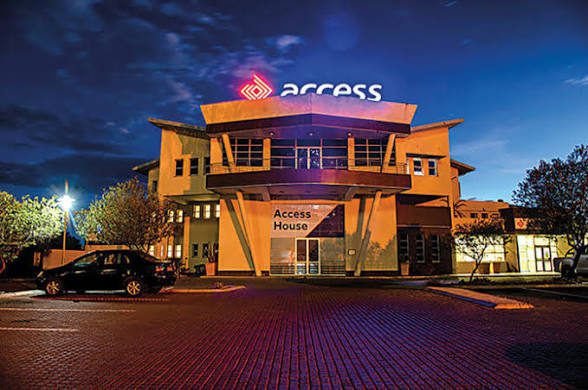
Access Bank Botswana is positioning itself as a gateway for Southern African investors seeking exposure to Aliko Dangote’s Nigerian refinery, leading a depository receipt programme aimed at channeling up to US$500 million into the US$1.6 billion initial public offering (IPO).
The initiative also gives substance to a capital markets commitment the Nigerian banking group made when it entered Botswana five years ago.
Under the programme, Access Bank will issue Botswana Depository Receipts (BDRs) backed by shares in Dangote Petroleum Refinery & Petrochemicals, allowing investors in Botswana and participating Southern African markets to access the Nigerian IPO through local brokers.
The receipts are proposed for exclusive listing on the Botswana Stock Exchange (BSE), with trading expected to begin on December 14, according to the bank’s announcement. Each receipt would represent one refinery share held in Nigeria, with Access Bank Plc acting as custodian.
Speaking at the IPO roadshow in Gaborone, Access Bank Botswana Managing Director Sheperd Aisam linked the initiative to a commitment made when Access acquired control of the former BancABC business in 2021.
He said the regulator had required Access to facilitate the development of Botswana’s capital markets as a condition of the transaction. The Dangote programme, he argued, demonstrated progress towards fulfilling that commitment.
“This is a testimony to that commitment,” Aisam said.
The proposed US$500 million is the maximum investment targeted through the regional programme, rather than capital that Access Bank itself is committing. The programme would facilitate regional participation in the Nigerian IPO, whose base offer comprises 4.1 billion new shares at ₦525 each, raising approximately US$1.6 billion. The amount could increase to about US$2.1 billion if the 30 percent overallotment option is exercised in full.
According to the company, proceeds from the share issue would support plans to double the refinery’s effective processing capacity from about 700,000 barrels a day to 1.4 million by 2029.
Access Bank’s role would extend beyond facilitating subscriptions to administering investors’ holdings and coordinating with market institutions.
“We will work with our exchange and other exchanges. We will work with the central securities depository, the sponsoring broker, the legal advisors, the reporting accountants,” Aisam said.
While Access is opening the route for regional investors to participate in the Dangote IPO, it has not disclosed the fees it expects to earn from the programme.
According to Access, the underlying shares would be held in a segregated account, reconciled daily and ring-fenced from the bank’s own balance sheet. Receipt holders would be entitled to dividends and other corporate benefits attached to the underlying shares, subject to the applicable terms.
Investors would be able to buy and sell the receipts through their local brokers without opening accounts in Nigeria. Their returns would depend on the refinery’s financial performance, movements in its share price and exchange rates.
Echoing Dangote’s description of the public offering as the “people’s IPO”, Aisam said the relatively low individual share price could widen participation in an industrial asset previously beyond the reach of many ordinary investors.
Collen Tapfumaneyi, chairperson of the Committee of SADC Stock Exchanges, said regional exchanges had agreed to concentrate trading in the receipts on the BSE, with participating markets supporting investors through their licensed intermediaries.
The arrangement would channel regional demand through a single trading venue, giving Botswana a central role while allowing investors elsewhere in the region to use familiar market institutions.
Tapfumaneyi said the Nigerian offer had been extended to October 27 following requests for more time, allowing institutional investors to complete their assessments and supporting wider African participation.
He presented the transaction as a potential model for other African businesses seeking to raise capital across borders.
The refinery reported revenue of US$22.48 billion and net income of US$4.73 billion for the nine months ended September 2026, according to its roadshow presentation.
However, the refinery recorded a net loss of US$475.8 million for the full 2025 financial year as operations developed. Dangote said he expected full-year earnings before interest, taxes, depreciation and amortisation(EBITDA) to exceed the company’s US$7.2 billion forecast.
“This IPO is not only for Nigerians, it’s for Africa,” he said.
The base offer would give new IPO investors approximately 3.3 percent ownership of the company, while Dangote Group would retain about 84.4 percent.
Dangote said the company intended to declare dividends in US dollars, subject to applicable rules. However, he cautioned that distributions would depend on available profits, cash requirements and capital expenditure, meaning the refinery’s expansion plans could affect future shareholder returns.


