


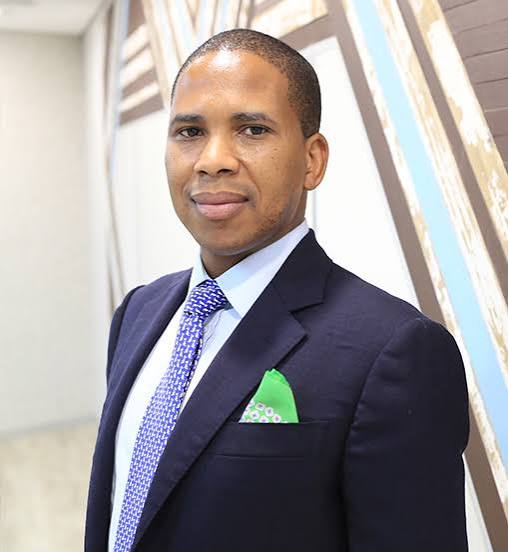
Africa Lighthouse Capital (ALC) is evaluating five investment opportunities worth a combined P1.2 billion as it raises a second private-equity fund designed to pursue larger transactions in Botswana and across Southern Africa.
The potential investments are more than twice the size of the firm’s first P575 million fund and span manufacturing, healthcare, education and financial services.
Two manufacturing businesses alone account for P550 million of the capital required.
The firm is also assessing a private healthcare provider, an education business and a regional financial services company.
ALC described all five opportunities as being at an advanced stage of evaluation during its 2026 Annual Investor Meeting.
Together, the deals require more than double the amount raised from the seven investors that backed Fund I.
The firm says Fund II will target investments of between P100 million and P300 million per company, taking either majority or significant minority stakes.
However, ALC has not yet publicly disclosed the size of Fund II or how much of the P1.2 billion deal pipeline it expects to finance itself.
What a Bigger Fund Would Buy
A larger fund would allow Africa Lighthouse to participate in substantially bigger transactions.
The firm is currently evaluating a P300 million investment in an automotive equipment manufacturer that already exports products across Southern Africa.
A second manufacturing opportunity requires P250 million and involves a business producing heavy equipment for sectors including mining, energy, agriculture and construction.
ALC believes both businesses have considerable potential to expand their footprint elsewhere on the continent.
The healthcare opportunity would require P300 million in investment.
The education business seeks P250 million and operates a private campus where Africa Lighthouse sees opportunities to drive enrolment through feeder-school channels.
The final opportunity is a P100 million investment in a financial services company operating in Botswana and across Southern and Eastern Africa.
ALC founder and chief executive officer Bame Pule told investors that larger companies tend to be more resilient during economic downturns.
“We have to decide which sectors we want more exposure to, which companies we want more exposure to, which companies we see the widest gap between business as usual and full potential,” Pule said.
ALC says it sourced all five opportunities internally and is targeting annualised returns of at least 20 percent on each investment.
One of the attractions of regional investments, Pule said, is the prospect of commanding higher valuation multiples when exiting portfolio companies.
“We believe we can sustainably and repeatedly sell our portfolio companies to South African buyers at a higher multiple,” he said.
Why Fund I Stayed Home
According to ALC Chief Investment Officer Rebaone Molefhi, Fund I had authority to invest outside Botswana.
However, only a portion of the fund could be deployed abroad, leaving insufficient capital to pursue many of the larger regional opportunities the firm identified.
As a result, 93 percent of Fund I’s commitments were ultimately invested in four Botswana businesses.
The first fund has since paid dividends and recently completed its exit from insurance broker Minet.
Pule told investors that pension funds and their advisers had received detailed performance data covering both individual investments and the overall fund.
However, the public investor presentation did not disclose proceeds from the Minet exit or total distributions returned to investors.
Even within Botswana, some investments stretched Fund I’s capacity.
Pule said Africa Lighthouse deliberately pursued a significant stake in funeral services group FSG and required special approval to invest such a large proportion of the fund into a single company.
Securing control also proved more difficult than anticipated.
“We walked away from it quite a few times before we struck the majority deal for the final 37 percent,” he said.
The Time It Takes to Close
While a larger fund would enhance ALC’s ability to pursue bigger opportunities, Pule said some challenges in Botswana’s private-equity market cannot be solved simply by deploying more capital.
According to his experience, transactions that typically take six months to complete in South Africa often require between 15 and 18 months in Botswana.
The timeline is measured from the first introduction to a business through to the final transfer of funds and shares.
Pule attributed part of the delay to weaknesses in company data and reporting systems.
His team still encounters businesses that rely heavily on spreadsheets and struggle to provide meaningful information about the profitability of individual products, regions or business units.
“You can only be as good as your data,” he said.
Another recurring challenge is the shortage of experienced management teams below chief executive level.
“The management strength of Botswana is not where it needs to be,” Pule said.
“We often have a great CEO without the great COO, CFO, head of marketing, head of people, head of technology and all the other functional leadership positions.”
He urged businesses to recruit specialists into key management positions and said FSG had advertised positions over an 18-month period as Africa Lighthouse worked to strengthen leadership capacity following its acquisition of a controlling stake.


