


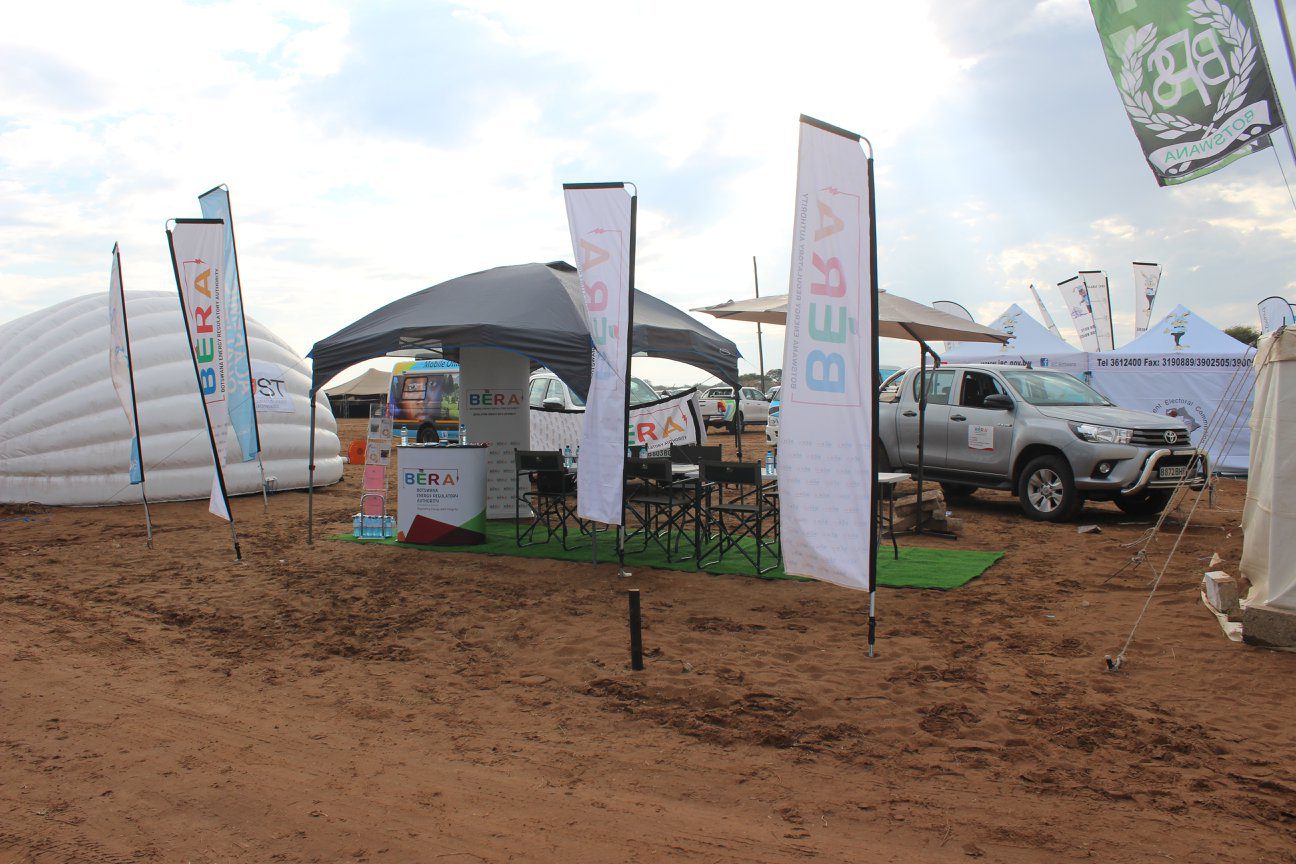
The Botswana Energy Regulatory Authority (BERA) is moving to tighten oversight of Botswana’s liquefied petroleum gas (LPG) market after concluding that the sector has failed to regulate itself, prompting the regulator to develop a national LPG pricing framework.
Although the BERA Act grants the authority powers to regulate LPG prices, the local market currently operates without a formal pricing structure, leaving prices largely determined by market players. BERA said it is now at the procurement stage of developing the framework, with Botswana expected to have a pricing model in place by December 2026.
Botswana’s LPG market has historically operated as a self-regulating system, with businesses independently setting prices and competing in the absence of formal controls. However, BERA says it is increasingly observing signs of market failure, noting that the structure is vulnerable to anti-competitive behaviour.
According to Rankokwane, concerns have emerged around price fixing and possible horizontal agreements, particularly during the winter season when suppliers reportedly raise prices and cite artificial shortages despite sufficient supply. The issue is compounded by high market concentration, with only five companies responsible for LPG imports, increasing the potential for coordinated pricing behaviour.
Botswana operates a downstream LPG market that is relatively small and concentrated, with a limited number of players, predominantly foreign-owned firms, dominating importation and distribution. The country does not produce LPG domestically and relies entirely on imports routed mainly through South Africa, with the product transported into Botswana by road and rail. Annual consumption is estimated at around 21 million kilograms, or 21,000 tonnes, reflecting steady household and commercial demand.
Storage infrastructure remains modest, with total estimated capacity of approximately 851,500 litres at importer level and 607,000 litres among distributors, underscoring the constrained nature of the supply chain. According to the National Energy Use Survey 2022/23, LPG has become the leading household cooking fuel, accounting for 42.7 percent of usage and surpassing electricity and firewood, with adoption concentrated largely in urban and peri-urban centres.
Previous regulatory and competition assessments have also pointed to structural weaknesses in the LPG market. A situational analysis conducted by BERA in 2021 found that Botswana’s LPG sector is oligopolistic in nature, with limited competition at both supply and distribution levels. The study noted that the market is characterised by high concentration, limited citizen participation and structural barriers to entry.
The analysis also found that LPG prices are not uniform across the country and vary depending on location, proximity to supply centres and the number of market players operating in a given area. It further observed the absence of national gas quality standards and reported instances of cross-filling competitor cylinders.
Broader competition assessments have similarly raised concerns. A 2019 market conduct study by the Competition and Consumer Authority (CCA) pointed to high market concentration coupled with excessive pricing. The concentration ratio of 94 percent among the top three firms was found to be significantly above the international threshold of 70 percent for highly concentrated markets.
An Herfindahl-Hirschman Index (HHI) of 4,066 was also recorded, far exceeding the international threshold of 1,800. The HHI is a key measure of market concentration and competition, calculated by squaring the market share of each firm in an industry and summing the results. It ranges from near zero in highly competitive markets to 10,000 in a pure monopoly.
At the time, the CCA found that the two largest importers, Afrox Botswana and EasiGas, dominated the industry with market shares of 45 percent each. Their footprint was evident across the country through the number of distributors they supplied. The other three importers — Quick Gas, Airliquid and Simsa Gas — each held less than five percent market share.
With a small number of firms controlling most of the market and displaying characteristics associated with oligopolistic behaviour, the study flagged possible anti-competitive conduct, including market allocation, excessive pricing and abuse of dominance, particularly through cylinder exchange practices. It also pointed to barriers to entry for new players and limited consumer choice in several parts of the country.
The same assessment found that Botswana’s LPG prices were excessively high compared with regional markets, including Namibia, South Africa, Zimbabwe and Zambia, despite similar supply chain structures and reliance on South African imports.
The structure of the local market is further complicated by Botswana’s heavy reliance on imports, primarily routed through South Africa. While South Africa remains the main supply source, disruptions such as refinery maintenance, logistics constraints or civil unrest occasionally force Botswana to source LPG from international markets, including the United States and Saudi Arabia, with supplies still routed through South African infrastructure. BERA has identified this dependence on a single dominant supply corridor as a vulnerability to consistent supply security.
Botswana also does not maintain strategic LPG reserves. Unlike other fuels supported by storage infrastructure managed through Botswana Oil Limited (BOL), LPG is not currently covered under strategic stockholding arrangements, despite recommendations by the regulator to expand Government Reserve Storage infrastructure to accommodate LPG trading. BERA has previously cautioned that this gap exposes the country to supply shocks, particularly during periods of regional disruption.
BERA has also previously recommended that BOL explore opportunities in the gas market, including developing the competencies needed to trade LPG. At the same time, Botswana Oil has pursued longer-term ambitions under its coal-to-liquids strategy, which includes the potential production of liquid fuels and other products such as LPG using domestic coal resources.
However, the proposal has drawn criticism from some analysts, including economist Keith Jefferis, who warned that the project could become a costly and commercially unviable “white elephant” due to financing constraints, environmental pressures and shifting global energy demand.
According to Rankokwane, the LPG pricing framework is expected to evolve in a similar direction to the existing fuel slate system, which is based on a structured cost-recovery model anchored on import parity pricing.
The fuel slate is determined by taking a benchmark international product price linked to global trading hubs such as the Arabian Gulf and Asia, adjusting it for exchange rate movements, and layering domestic cost components through a regulated slate mechanism that ensures full recovery of importation, logistics and distribution costs. The outcome is a centrally administered price that reflects global market conditions rather than individual market discretion.
Previous analysis by BERA anticipated that the framework would include various cost elements, beginning with the base international price of the product at the export terminal in reference markets such as Saudi Arabia and the United States. This would then be adjusted to reflect full landed costs into Botswana, including freight, insurance, coastal storage, demurrage, cargo dues, stock financing and transport from South Africa, as well as domestic storage and handling fees, wholesale and retail margins, and applicable taxes and levies.
“A framework that is developed for the pricing of LPG should take into consideration the source of origin (reference markets) of the gas, supply routes with their associated costs, and applicable taxes and levies,” the study said.
Regionally, the proposed structure mirrors elements of South Africa’s regulated LPG pricing system, which is anchored on an import parity model through the Maximum Refinery Gate Price (MRGP). In that system, the base price is derived from Saudi Aramco benchmark propane and butane prices — international reference prices published by Saudi Arabia’s national oil company and used as global pricing indicators — before adjustments are made for logistics, financing, storage, insurance and other defined cost components. The price is then capped at the refinery gate as the maximum allowable price.


