


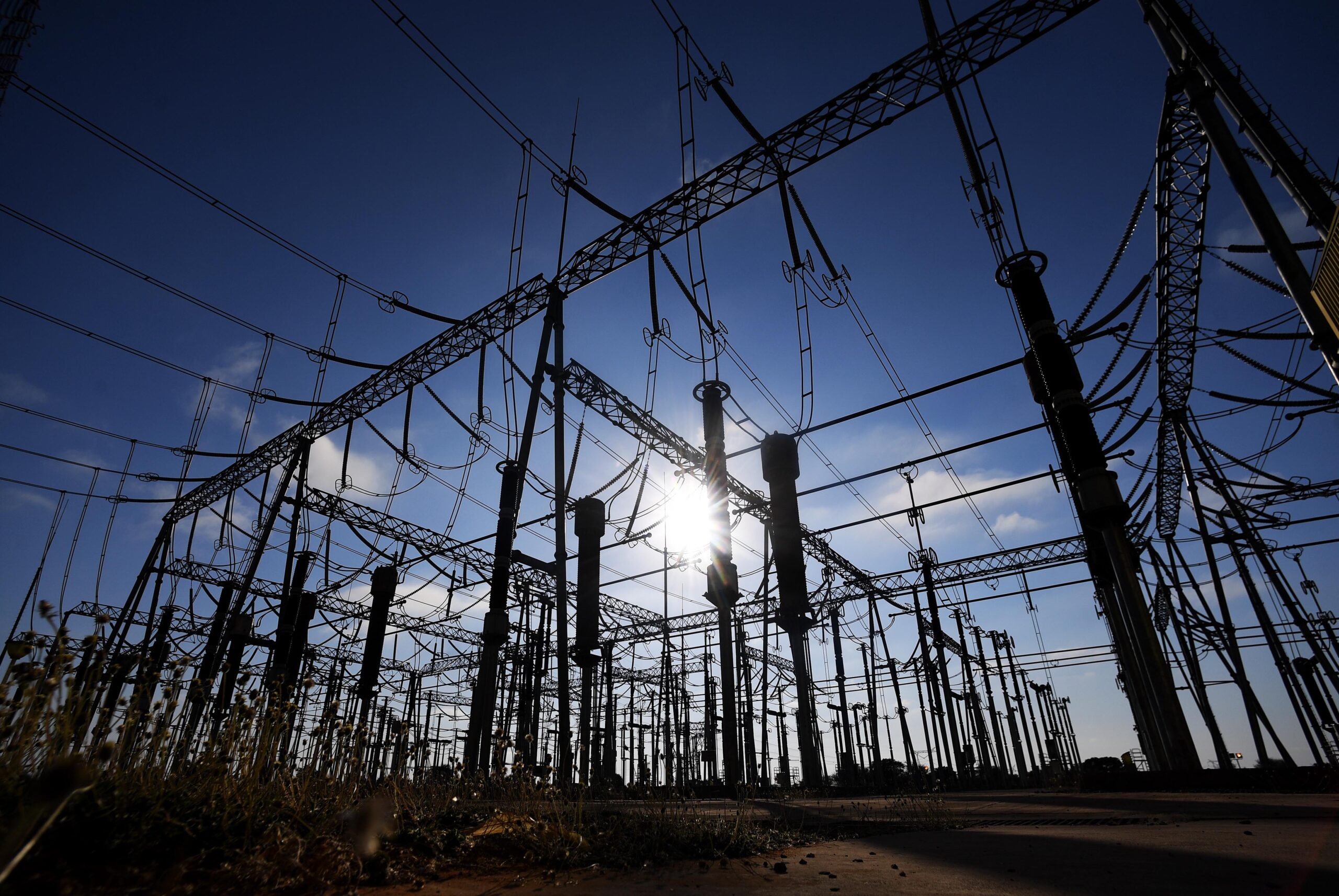
Morupule A is scheduled to retire in December 2029, while Morupule B is expected to remain in operation until December 2046, marking the beginning of a gradual transition away from Botswana’s coal-dominated electricity system.
The retirement dates are contained in Botswana’s latest national power-sector plan, developed by Sustainable Energy for All (SEforALL) in collaboration with the Ministry of Minerals and Energy and released on October 5, 2026.
The Botswana National Renewable Energy Power Sector Plan was signed off by Minister of Minerals and Energy Bogolo Joy Kenewendo and Permanent Secretary Donald Gaetsaloe.
The Plan’s Current Policy Scenario (CPS) reflects existing assets, committed projects and current national policies, including the agreed operating lives of the two Morupule stations.
“Morupule A remains available until December 2029 and Morupule B until December 2046,” the report states.
The two coal-fired stations remain central to Botswana’s electricity system. As of March 2025, the country had approximately 892 MW of installed thermal generation capacity, with the 132 MW Morupule A and 600 MW Morupule B stations accounting for the bulk of domestic generating capacity.
Coal consequently accounted for approximately 97 percent of domestic electricity generation.
The retirement of Morupule B in 2046 is expected to significantly alter Botswana’s fuel mix, with the Plan projecting solar photovoltaic generation, coal-bed methane and energy storage to play increasingly important roles.
“The marked reduction after 2046 reflects the retirement of Morupule B and its replacement by solar PV, coal-bed methane generation, storage and other energy carriers,” the Plan says.
Coal remains dominant for decades
Despite the planned retirements, coal is expected to remain a major component of Botswana’s energy system for decades.
Under the CPS, total fuel consumption is projected to reach approximately 217 petajoules by 2050. Coal remains the largest primary fuel at 99.0 PJ, or more than 45 percent of the total, followed by oil at 42 PJ and coal-bed methane at about 32.5 PJ.
Electricity accounts for 26.4 PJ, while biofuels account for 13.9 PJ and LPG for 3.6 PJ.
The Plan cautions that coal’s large share of primary fuel use partly reflects conversion losses associated with thermal generation and “should not be compared directly with final electricity consumption”.
It also says the coal-bed methane figure is a modelled flexibility option that remains subject to resource confirmation and commercial development.
Electricity generation under the CPS is projected to reach approximately 11.72 TWh by 2050.
Solar PV is projected to become the largest source at about 4.96 TWh, followed by coal-bed methane at around 3.85 TWh and coal at approximately 2.92 TWh.
The renewable share of electricity generation is projected to rise from approximately 5.5 percent in 2030 to 36.7 percent in 2040 and 42.3 percent in 2050 under the CPS.
Under the CPS Export scenario, the renewable share reaches approximately 41.4 percent in 2030, 38.7 percent in 2040 and 49.8 percent in 2050.
The Plan stresses that these are indicative generation outcomes under system constraints and should not be interpreted as a direct restatement of the country’s installed-capacity policy target.
Earlier coal exit could save billions
The Plan also models a more aggressive coal-retirement scenario, under which Morupule A would retire in 2027 and Morupule B in 2030.
The sensitivity produces substantially different results.
“Under the model assumptions, the earlier case lowers cumulative system costs by approximately USD 1.7 billion and avoids about 23.8 Mt CO2 through 2060,” the Plan states.
The scenario, however, does not replace the central retirement dates of 2029 and 2046.
The report says an earlier transition would require “confirmed replacement capacity, network readiness and a managed transition plan”.
Imports set to fall
The transition is also expected to reduce Botswana’s reliance on electricity imports.
Imports are projected to peak at approximately 1.86 TWh in 2025 before becoming negligible around 2028 as committed domestic generation capacity comes online.
By 2050, modelled electricity exports rise to approximately 3.43 TWh.
The Plan cautions, however, that exports will depend on regional demand, interconnector capacity, market prices and commercial arrangements.
The Plan describes itself as an evidence-based framework for long-term energy planning and investment rather than a fixed forecast.
Its objective is to guide Botswana towards a more secure, affordable, diversified and increasingly sustainable energy system while supporting economic diversification.


