


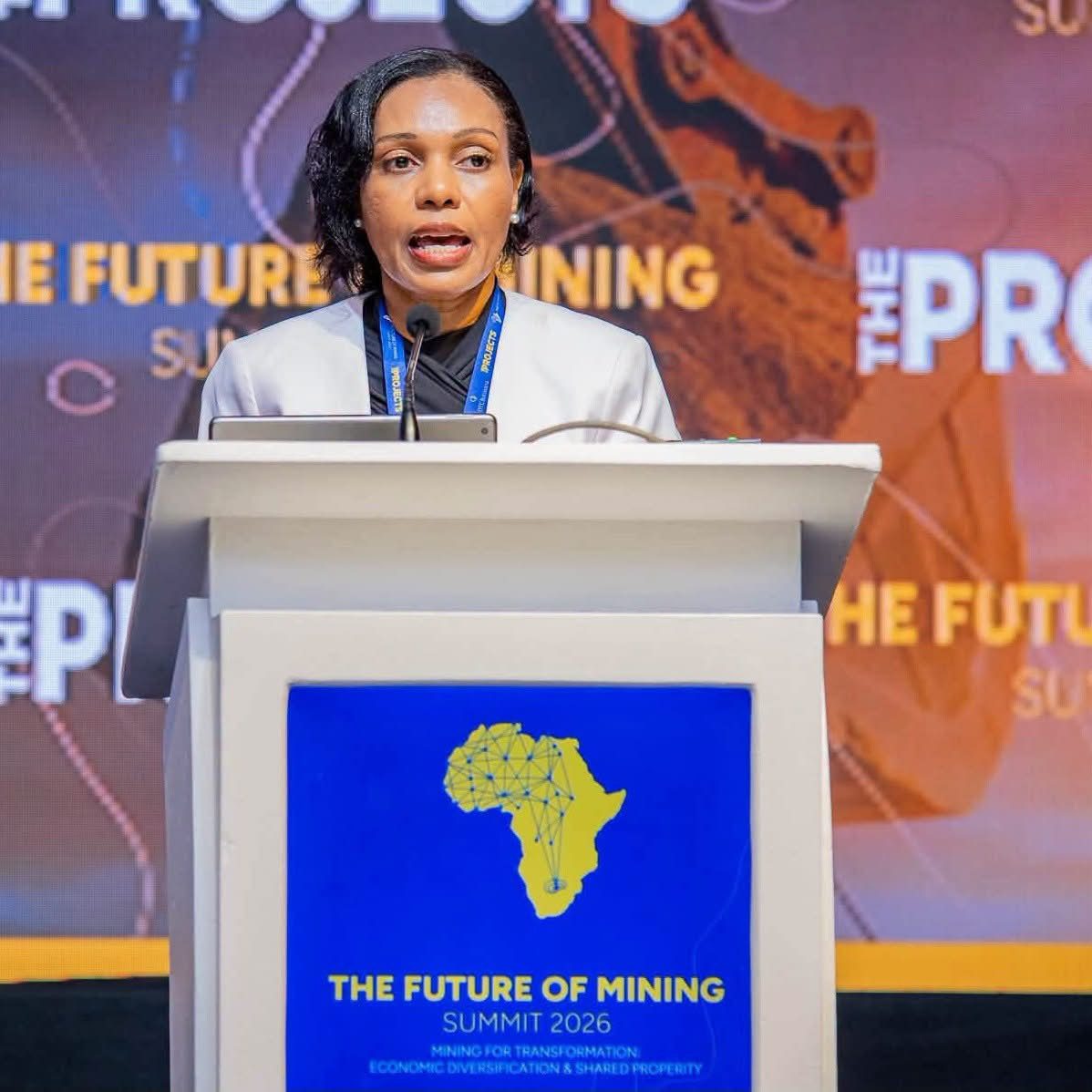
De Beers remains focused on ensuring sustainability with communities at the centre despite headwinds facing the global diamond industry, Group Vice President of Social Impact and Sustainability for Diamond Trading OtsileMabeo has said.
Speaking at the Future of Mining Summit under the topic “Maintaining the Social Licensing to Operate Amidst Industry Headwinds,” Mabeo said sustainability remains core to De Beers Group.
She said investment in social impact programs that align with government socioeconomic development goals and deliver real impact is a business imperative because corporations benefit directly from a conducive environment provided by strong social and economic development.
“It is not only the right thing to do, it is right for business,” she said. “Corporations cannot divorce themselves from the very environment from which they obtain their social license to operate. Particularly now, when consumers are starting to pay closer attention.”
In the current challenging times, Mabeo said corporations must find ways to do more with less by collaborating better on common goals and finding partners who can support in various ways.
She said it is the communities where mining companies operate that grant that license, on the trust that when mining comes to an end, the environment and the people will be in a better place.
She said De Beers, as a mining company, has an obligation to live up to that.
“The repercussions of not having the trust and buy-in of our communities, and not doing the right thing, can be as far-reaching as a major economic downturn,” she said.
Turning to livelihoods, Mabeo said De Beers aims to support four jobs in the community for every one job in its operations by 2030.
She said the key focus is that these jobs will help advance very specific outcomes, including poverty reduction, economic growth and diversification.
Botswana Enterprise Profile
Meanwhile, Mabeo said despite being a middle-income economy, Botswana has the enterprise profile of a low-income economy.
“We have very many microenterprises that operate basically at subsistence level with limited opportunities to grow and scale,” she said. “We have few middle-sized companies, and again a very limited number of large companies.”
She said the enterprise profile of a high-income country, which is Botswana’s aspiration, is very different.
“With high-income economies, you have a small number of micro enterprises, a large number of middle-sized companies that drive growth and job creation, and a small number of large corporations,” she said.


