


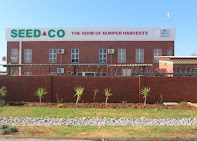
With climate change placing increasing pressure on African food systems, Dutch development bank FMO has committed US$25 million (P353m) to Seed Co International in a deal aimed at strengthening climate resilience, agricultural productivity and food security.
The financing comes as farmers across the continent face mounting pressure from droughts, extreme temperatures and increasingly erratic rainfall patterns, threats that are expected to intensify in parts of Southern Africa during the 2026/27 El Niño season.
The facility, signed on November 16, marks FMO’s first investment in Seed Co and forms part of the development bank’s broader push to finance climate-adaptation solutions in African agriculture.
Structured as an unsecured eight-year facility, the financing consists of an initial committed tranche of US$18 million and an additional uncommitted tranche of US$7 million.
The facility will support investments in seed processing, storage and related infrastructure. It will also help finance productivity-enhancing investments by seed growers, including irrigation systems, mechanisation and seed-drying facilities across selected markets.
A Bet on Climate Adaptation
At the centre of the partnership is a shared view that helping African agriculture adapt to climate change begins with improving the resilience of the seeds farmers plant.
Seed Co operates directly in 13 African countries and serves more than 22 markets across Southern, East, Central and West Africa. That footprint provides a platform for distributing seed varieties tailored to different climatic and growing conditions. The need is becoming increasingly urgent.
Agriculture across Africa faces growing exposure to erratic rainfall, prolonged droughts, rising temperatures and evolving pest and disease threats.
Smallholder farmers, who remain heavily dependent on rain-fed agriculture, are particularly vulnerable to these shocks.
The timing of the investment is notable as Southern Africa faces increased climate risks associated with the 2026/27 El Niño season.
Weather forecasts have pointed to elevated risks of below-average rainfall, higher temperatures and prolonged dry spells in parts of the region, conditions that could adversely affect food production.
Against this backdrop, investment in drought-tolerant seeds, irrigation and other productivity-improving technologies is becoming increasingly important.
Seed Co plays a central role in that effort.
The company develops, breeds and distributes seed varieties specifically adapted to African growing conditions, including drought-tolerant, disease-resistant and early-maturing crops.
With over 85 years of plant-breeding experience and a substantial research and development platform, Seed Co has established a strong presence across African seed markets.
More than 80 percent of its customer base consists of smallholder farmers.
“Strengthening the resilience of Africa’s food systems starts at the very beginning of the value chain,” said Hans Bogaard, Director, Agribusiness, Food & Forestry at FMO.
“By supporting Seed Co’s investment in locally adapted seed varieties and the infrastructure needed to produce and distribute them, FMO can help farmers respond to increasingly challenging growing conditions while supporting agricultural productivity and food security across the region.”
Seed Co has identified climate adaptation and yield improvement as key pillars of its sustainability strategy.
Its breeding programme focuses on developing seed varieties suited to different rainfall patterns, agroecological zones and production environments.
“Our partnership with FMO strengthens our ability to invest further in our seed processing and storage facilities and enhance seed production capacity as climatic conditions evolve,” said Morgan Nzwere, Group Chief Executive Officer of Seed Co.
“Our objective remains to develop and deliver high-performing seed varieties adapted to Africa’s diverse agroecological conditions, enabling farmers to improve productivity while becoming more resilient to climate shocks.”
Strengthening Food Security
The investment also reflects a wider shift within development finance towards climate adaptation.
Historically, much climate finance has focused on reducing greenhouse-gas emissions.
For many African economies, however, adaptation is becoming equally important as climate change increasingly affects agricultural productivity, livelihoods and food security.
For FMO, the Seed Co financing addresses several challenges simultaneously. These include strengthening farmers’ resilience to climate risks; improving agricultural productivity; supporting rural incomes and enhancing long-term food security.
The transaction has been classified as 100 percent Climate Adaptation under FMO’s Green Label framework.
It has also been designated as 100 percent Reducing Inequalities because of its support for least-developed countries and its extensive reach among smallholder farmers.
For both organisations, the investment ultimately reflects a belief that stronger seed systems and agricultural infrastructure will be critical to building more resilient food systems across Africa.


