


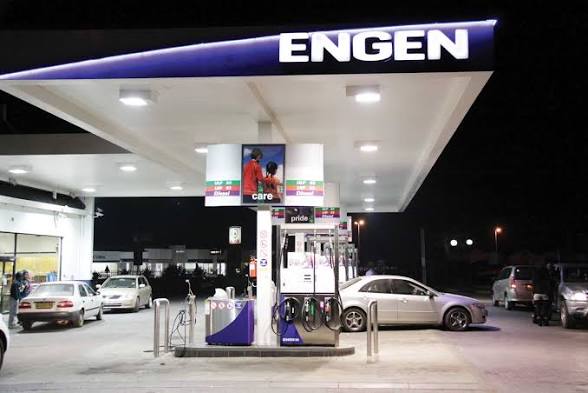
Engen Botswana’s profit before tax rose more than fourfold to P51.8 million in the first half of 2026 despite a 23 percent decline in retail fuel sales, as higher regulated wholesale margins and transport-cost recovery lifted profitability amid weaker consumer demand.
The improvement followed adjustments to Botswana’s regulated fuel pricing system, which increased the margins available to oil marketing companies and revised transport-cost allowances.
Energy analyst Stephen Lecha of Lecha Energy, however, said the changes represented a temporary stabilising factor rather than evidence of an underlying recovery in fuel demand.
“They act as a critical financial cushion but mask a deeper operational crisis,” Lecha said.
In February 2026, the Botswana Energy Regulatory Authority (BERA) raised the fixed per-litre margin allocated to oil marketing companies for wholesaling, storing and distributing fuel. The increase widened the margin earned on fuel sold through Engen’s retail network.
Late last year, the regulator also revised the transport-recovery component of the pricing slate.
Previously, zone differentials intended to compensate oil companies for transporting fuel from regional depots did not fully cover actual haulage costs. The revised pricing schedule increased transport allocations, reducing the extent to which local logistics costs eroded margins.
Historically, Botswana’s wholesale margins were adjusted using the Consumer Price Index rather than a dedicated cost model. BERA had previously acknowledged in a tender invitation that index-based adjustments did not fully reflect industry costs and subsequently engaged consultants to develop a cost-reflective pricing model aimed at balancing industry sustainability with consumer affordability.
The consultant was also tasked with updating the national pricing schedule to account for newly gazetted towns, villages and paved roads, while establishing standardiseddistance and radius formulas to better reflect actual freight costs.
Engen attributed its financial improvement to the regulatory changes, together with disciplined margin management, internal cost controls and improved cash flow.
Retail fuel sales volumes nevertheless fell 23 percent year-on-year in the first half of 2026, which Engen attributed to weaker consumer purchasing power and the closure of three service stations in April.
The decline was partly offset by a 35 percent increase in commercial sales following the acquisition of new customers.
Lecha said the contrasting performance highlighted the pressure facing fuel marketers: Engen was generating more profit per litre even as retail volumes declined.
The company’s commercial volumes had also been affected by changes to fuel imports. In late 2024 and 2025, the government ended private fuel import licences and granted state-owned Botswana Oil Limited (BOL) an exclusive 90 percent import mandate.
Private marketers such as Engen were subsequently required to purchase stock through state channels. Lecha said the changes increased Engen’s costs, reducing its 2025 profit before tax by P83 million and contributing to a 61 percent decline in commercial volumes as major fleet, mining and government customers bought directly from state-backed supply channels.
The regulatory changes to BERA’s pricing slate therefore provide some relief to oil marketers by improving the economics of fuel distribution, but Lecha said they would not necessarily benefit all industry players equally.
Over the next 12 to 24 months, he said, the changes could widen the differences between oil marketing companies with large retail networks and smaller independent wholesalers.
Larger operators with extensive service-station networks can capture the higher regulated wholesale and transport-recovery margins across fuel sold through their retail outlets.
Engen, for example, operates a large network of service stations, while its wholesale arm supplies its branded retail outlets. This allows the group to capture the higher regulated wholesale margin and transport recovery on fuel sold through its own retail network.
Smaller citizen-owned and independent wholesalers that operate primarily under wholesale licences face a different challenge. Without large retail networks, they have fewer outlets through which to absorb fuel volumes when commercial demand weakens.
In the commercial market, where bulk customers can purchase directly from BOL or other state-preferred channels, independent wholesalers may face greater pressure to maintain volumes.
Lecha said this could increase consolidation pressures in the sector, particularly among smaller operators without diversified retail or non-fuel revenue streams.
For Engen, the stronger first-half profit therefore comes against a mixed operating backdrop: margins have improved, but retail volumes remain under pressure and the company’s commercial business continues to adjust to changes in Botswana’s fuel-supply structure.


