


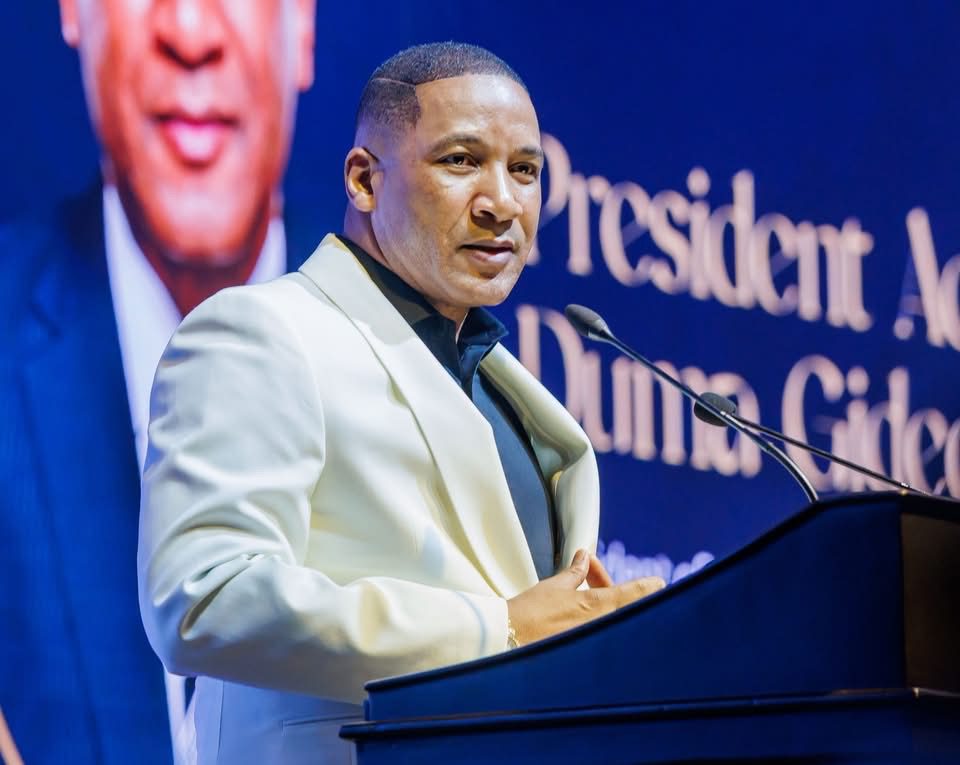
President Duma Boko has described Botswana as the best place to invest, citing its strategic location, political stability, safety and access to a wider regional market, while assuring investors that government is working to remove bureaucratic barriers that have historically slowed business activity.
Delivering the keynote address at the inaugural Botswana Business Awards, Boko said the country offered investors more than its relatively small domestic market, positioning it as a gateway to a much larger Southern African market of approximately 400 million people.
“We are strategically located, and we are the best place, not just location-wise, but people-wise as well,” he said, highlighting Botswana’s central position in the region, its peaceful environment and the safety of both investments and individuals.
He also pointed to Botswana’s democratic credentials, noting that the peaceful transfer of power following the 2024 general elections demonstrated the strength and maturity of its political institutions.
However, Boko acknowledged that attracting investor interest was only part of the task, arguing that government must translate that interest into actual investments, productive enterprises and sustainable economic growth.
He said his administration was working to dismantle what he described as the “frozen crusts” of outdated government processes, excessive bureaucracy and practices that make it difficult for businesses to operate.
The President stressed the need for a simpler regulatory environment, faster decision-making and improved infrastructure, warning that unnecessary delays and complicated procedures could discourage investors and tie up capital.
He further challenged the business community and policymakers to look beyond the traditional reliance on government spending and diamond revenues, arguing that economic diversification required greater private-sector investment and a stronger productive base.
Boko noted that Botswana’s economic performance had exposed the risks of depending heavily on a single market, making diversification an urgent national priority.
He also highlighted opportunities in the energy sector, particularly electricity transmission infrastructure, saying clear regulations and predictable wheeling charges would be necessary to attract private capital into the sector.
Boko assured investors that government was prepared to facilitate their projects and address obstacles as they arise, even offering them a direct line to his office where administrative challenges could not be resolved through normal channels.
“We don’t want investors to be frustrated,” he said, adding that the ultimate measure of investment success should be job creation, improved productivity and opportunities for local businesses and communities.
He also urged companies to pay workers living wages, arguing that better remuneration could improve productivity, reduce staff turnover and ultimately lower business costs.


