


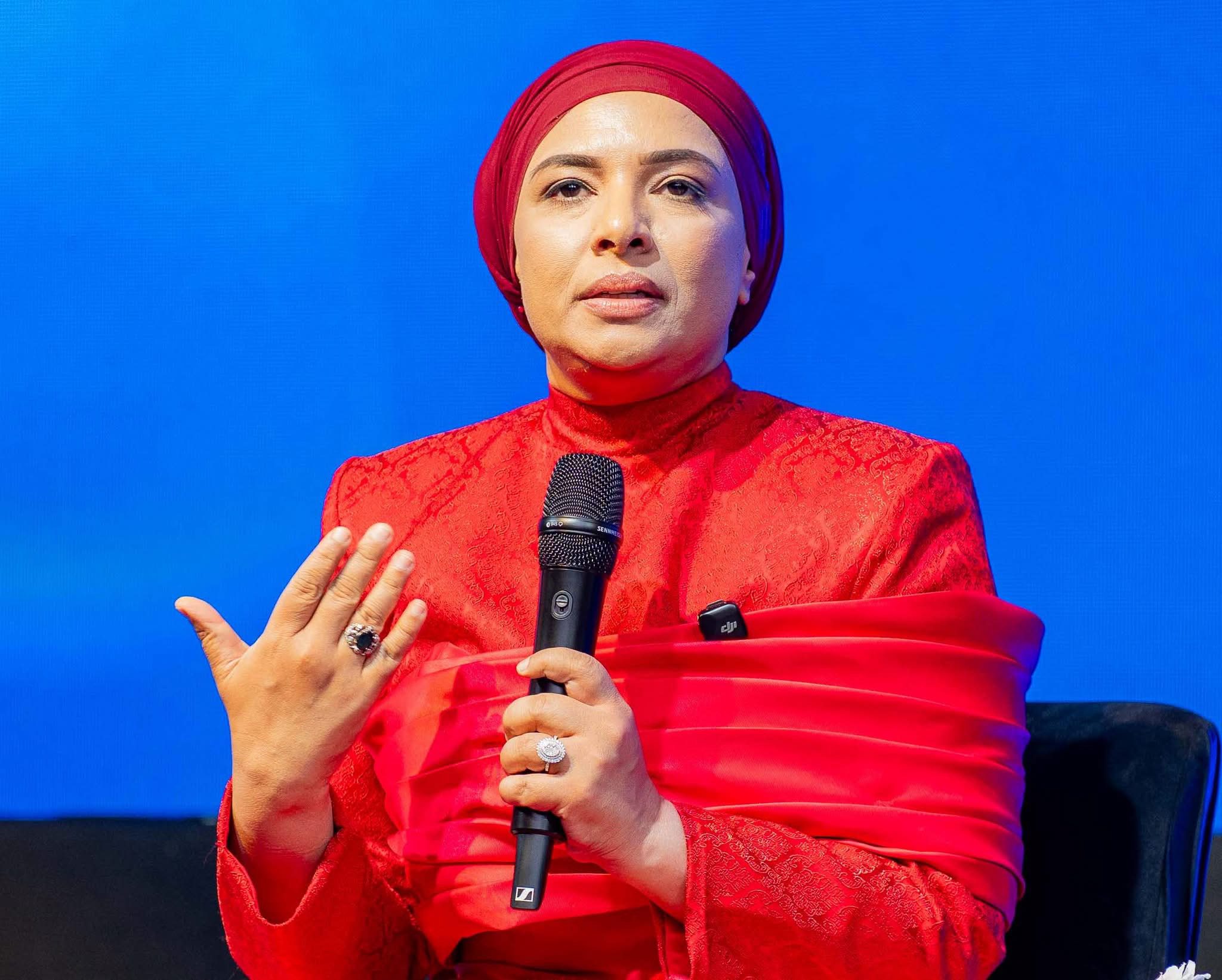
Botswana’s diamond industry needs to move beyond selling its stones primarily as commodities and reposition them as luxury products, supported by a shift in marketing strategies and target markets.
This is according to Lucara Botswana Managing Director Naseem Lahri, who has argued that the traditional approach to diamond marketing has left Botswana competing in a commodity market where pricing remains a key consideration, rather than capitalising on the premium that can be commanded by luxury brands.
Speaking at the inaugural Botswana Investment Forum, she said the industry needed to rethink how it presented and sold its diamonds, drawing a distinction between the purchasing behaviour of commodity consumers and luxury buyers.
“When people buy a commodity, they are price sensitive. When people buy a luxury brand, price is out of the window,” she said.
She argued that high-net-worth consumers represent a different market segment, one whose purchasing power and appetite for luxury products are not constrained by the same price considerations that influence commodity markets.
To illustrate the resilience of luxury consumption, Lahri cited the performance of French luxury conglomerate LVMH during the COVID-19 pandemic, saying the group increased its prices by 20 percent, while its net profits increased by 47 percent.
For Botswana, she said the implication was that the diamond industry needed to move beyond its traditional commodity-selling model and develop a stronger luxury proposition around its stones.
“We have sold a commodity. That’s exactly what we have sold as a country. We have never sold our diamonds as a brand or a luxury brand,” she said.
Lahri said Botswana already had the foundations to build such a proposition, pointing to the country’s diamond legacy, governance standards and reputation in the global industry.
“We have a good story. We have a legacy. We have got everything. We have got strong governance,” she said.
She also called for a shift in target markets, arguing that Botswana should reconsider its reliance on the United States and pursue markets with a stronger appetite for luxury products.
“I do not think we should sell our diamonds to the Americans. It is a cheap market. We do not want to sell our very expensive brand diamonds or luxury brand diamonds to a cheap market,” she said.
Instead, she argued that the industry should target consumers and markets that recognise and are willing to pay for the luxury positioning of Botswana’s diamonds.
“You sell it to a market that’s going to want your diamonds, your luxury brand,” she said.
Lahri’s argument comes against the backdrop of broader structural challenges facing the diamond industry, which she said require operators to reconsider established business models and become more willing to experiment with new approaches.
She cited Lucara’s experience with its diamond recovery technology as an example of the importance of challenging conventional practices.
When the mine initially commenced operations, Lucara adopted technology used elsewhere in the diamond industry but subsequently discovered that the approach was resulting in diamond losses during processing.
“We were using the technology to extract our diamonds initially when we went live as a mine, and very quickly realised that we were losing our diamonds through the process because we copied and pasted,” she said.
The company subsequently reassessed its approach and adopted X-ray Transmission (XRT) technology, which uses differences in material properties to identify and recover diamonds.
Lahri said the technology had initially been used in agro-processing before Lucara adapted it for diamond recovery, demonstrating the potential of transferring technology and expertise across industries.
She said the transition involved considerable operational challenges, but the decision to take the risk ultimately delivered significant value.
Lucara invested approximately $50 million in upgrades to its processing plants, while the Lesedi La Rona diamond sold for $53 million, according to Lahri.
She said the experience demonstrated the importance of being willing to challenge established practices rather than simply replicate models used elsewhere.
“We were bold and fearless,” she said, describing the decision to adopt a different recovery approach.
Beyond diamond marketing and processing, Lahri said Botswana needed to look more closely at opportunities further down the value chain, where greater economic value could be captured.
She argued that the country’s relatively small domestic market meant businesses needed to develop products and services with export markets in mind.
“Downstream is the key. That’s where the money is made,” she said.
She said the principle applied not only to diamonds but also to sectors such as agriculture and agro-processing, where opportunities existed to move beyond primary production into higher-value activities.
Lahri’s broader argument was that Botswana’s economic transformation would require a willingness to challenge conventional thinking, take calculated risks and pursue markets beyond its borders.
For the diamond industry, that means moving beyond the traditional business of selling stones as commodities and developing a stronger luxury identity around Botswana’s diamonds.


