


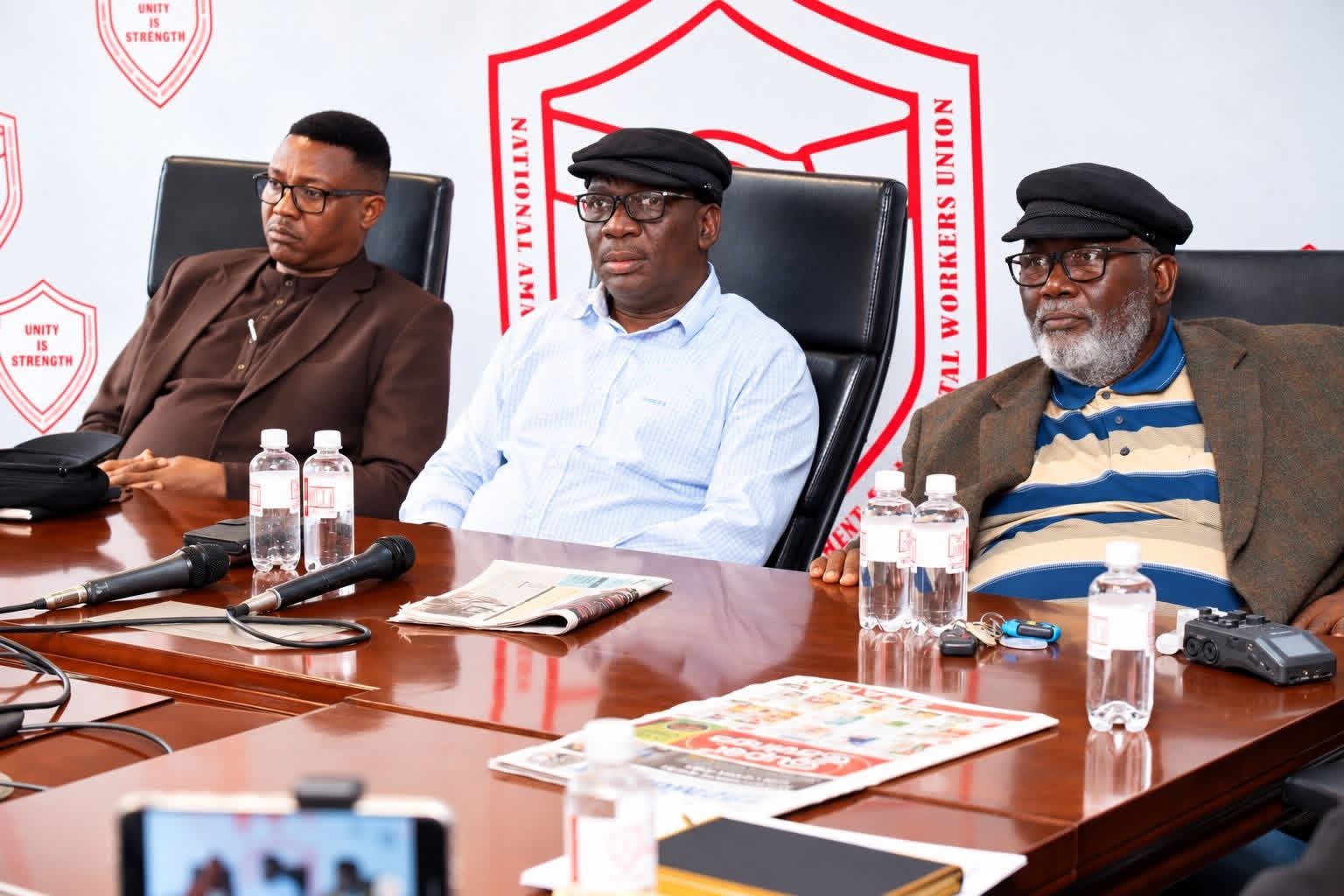
Having lost the battle over membership, the union now wants to blow up the whole house.
The National Amalgamated Local, Central and Parastatal Workers Union, commonly known as the Manual Workers Union, has filed a forceful application for leave to appeal to the Court of Appeal, seeking to overturn Justice Maripe’s High Court judgment that held that signing the PSBC Constitution does not, by itself, confer membership.
The application names the Attorney General, Botswana Teachers Union (BTU), Botswana Public Employees Union (BOPEU), and Botswana Land Boards and Local Authorities Workers Union (BLLAWU) among the respondents.
It is a daring, all-or-nothing appeal. If successful, it could send Botswana’s public service bargaining architecture back to the drawing board. If it fails, the Manual Workers Union risks being left where the High Court placed it: a signatory without membership, and a founder without a seat at the table.
The dispute dates back to January 30, 2026, when the PSBC was supposed to begin operating. At that meeting, the council appointed Andrew Motsamai and Tobokani Rari as secretary and deputy secretary, respectively.
Manual Workers representatives walked out. They refused to vote or sign the resolution and later approached the High Court, seeking to have the meeting declared invalid.
The court dismissed the challenge, not after determining the validity of the meeting on its merits, but on a preliminary question: whether a union that did not belong to the council had standing to challenge its affairs.
Justice Maripe held that, under sections 50(2) and 52 of the Public Service Act, read with clauses 7 and 8 of the PSBC Constitution, membership required admission and proof of a 4,000-member threshold. The Manual Workers Union, the court found, had not demonstrated that it met that threshold.
The union had signed the constitution on May 13, 2025, signed it again on October 17, 2025, and was present when it was registered on November 24, 2025. But the judge ruled that signing the document did not amount to admission as a member.
The union says that reasoning is precisely what is wrong.
The standing trap
In its Court of Appeal papers, the Manual Workers Union argues that the High Court created a circular trap.
The union was a founding member of the Reference Committee, an interim structure agreed upon on December 10, 2025, to give effect to the constitution following its registration. It attended meetings, including the contentious January 30 meeting, participated through its representative, Elsinah Botsalano, in the December 2025 amendment concerning the membership threshold, and signed every version of the constitution.
How, it asks, can the same constitution it signed now be used to deny it the standing to enforce that agreement?
Citing Govender and the contractual principle of pacta sunt servanda — agreements must be kept — the union argues that membership in a voluntary association is governed by its constitution, not by a statutory test imported after the fact.
The respondents, led by the Attorney General, are accused by the union of approbating and reprobating: relying on the constitution to exclude Manual Workers while disregarding its binding force when it comes to the obligations owed to the signatories.
The appeal then turns to what the union describes as a fundamental defect in the council’s structure.
Through S. Thapelo Attorneys, Manual Workers describes the current PSBC as “a world of Humpty Dumpty”, arguing that the council exists on paper but cannot function in practice.
The argument centres on the relationship between the constitution’s membership and appointment provisions. Clause 8.6 requires the secretary to examine membership applications and make recommendations to the council. The examination is to be based on the 4,000-member threshold set out in clauses 8.1 and 8.2.
But clause 19 provides that the secretary is appointed by the Bargaining Council.
The union argues that, without members, there can be no properly constituted council; without a council, there can be no valid appointment of a secretary; and without a secretary, there is no one to examine applications for admission. Without admission, there are no members.
It is a constitutional loop: a council that has yet to establish its membership is expected to admit members through a process overseen by a secretary appointed by that same council.
Manual Workers argues that this is not a minor drafting flaw but a fundamental legal defect that renders the constitution unlawful and unworkable. It says the problem could have been avoided by treating the original signatories as founding members, as it argues is standard practice in founding constitutions. The council could then appoint a secretary under the relevant provisions and proceed to admit other unions.
The appeal also argues that the High Court failed to appreciate the distinction between signing the constitution and automatically becoming a member. It points to the case of the chairman, Lesetedi, who signed the document, arguing that the parties never intended his signature alone to confer membership. For Manual Workers, the point is that a signature signifies agreement to the document but should not, on the other hand, be used to erase the status of a founding signatory.
The Reference Committee dispute
The appeal reserves particular criticism for the Reference Committee, which Manual Workers describes as a “busybody”.
The union argues that the committee is not provided for under the constitution, yet purported to appoint a secretary in breach of the document’s provisions. The constitution, it says, is explicit that only the Bargaining Council can make the appointment.
The Government, as the first respondent, counters that the Reference Committee and the December 2025 amendment were deliberate measures intended to address gaps in the constitution and bring it into operation. It relies on Mhale v Bokoin to support that position.
Manual Workers participated in the process, attended the meetings and was involved in the arrangements. The respondents’ position is that the union is now challenging the outcome because it lost the contest over the secretary’s appointment.
The union’s response is that one illegality cannot cure another. It argues that the body that met on January 30 merely ratified an appointment made unlawfully by an unauthorised committee. In its view, only a lawfully constituted body can ratify such an appointment.
The nuclear option
In Claim B, described during oral argument as the “nuclear option”, the union asks the Court of Appeal to declare the PSBC Constitution incurably defective and therefore null and void.
Justice Maripe had noted the tension between the two claims. If Claim A succeeds — establishing that the constitution is valid and that Manual Workers is a member entitled to enforce it — then Claim B, which seeks to invalidate the constitution, would fall away. The union would effectively be asking to remain a party to a constitution it considers void while exercising rights under it.
Manual Workers embraces that apparent contradiction. It argues that the constitution contains major, irreconcilable inconsistencies that make it incapable of implementation as a whole. It further contends that statutory requirements for establishing the council have not been met and that actions taken under the constitution are consequently invalid.
In essence, Claim A seeks to save the constitution; Claim B seeks to kill it. Manual Workers wants leave to pursue both arguments.
What is at stake
Beyond the legal arguments, the dispute is also about power.
The PSBC determines terms and conditions of service across the public service. Control of its secretariat carries influence over the bargaining agenda, negotiations and engagement with Government.
By holding that membership requires proof of a 4,000-member threshold, the High Court’s interpretation limits entry to unions that meet the requirement, while strengthening the position of larger unions that have been admitted to the council.
The Manual Workers Union, one of Botswana’s oldest blue-collar unions, sees itself as being pushed out of an institution it helped build.
It is asking the Court of Appeal to declare that the constitution signed by the applicant and the first to seventh respondents is incurably defective and null and void.
Alternatively, it wants the January 30, 2026 meeting and the appointments of Motsamai and Rari set aside. It also seeks reinstatement of the stay lifted by Justice Maripe pending the appeal, as well as an award of costs.
The Attorney General and the second to fifth respondents, represented by Salbany and Mokotedi, are expected to oppose the application for leave to appeal. Their position is that the challenge is an afterthought by a union that lost a democratic vote and is now asking the court to impose an arrangement the parties did not agree to. The Court of Appeal must now decide whether Manual Workers will get a second bite at the dispute, or whether the High Court’s ruling will stand.


