


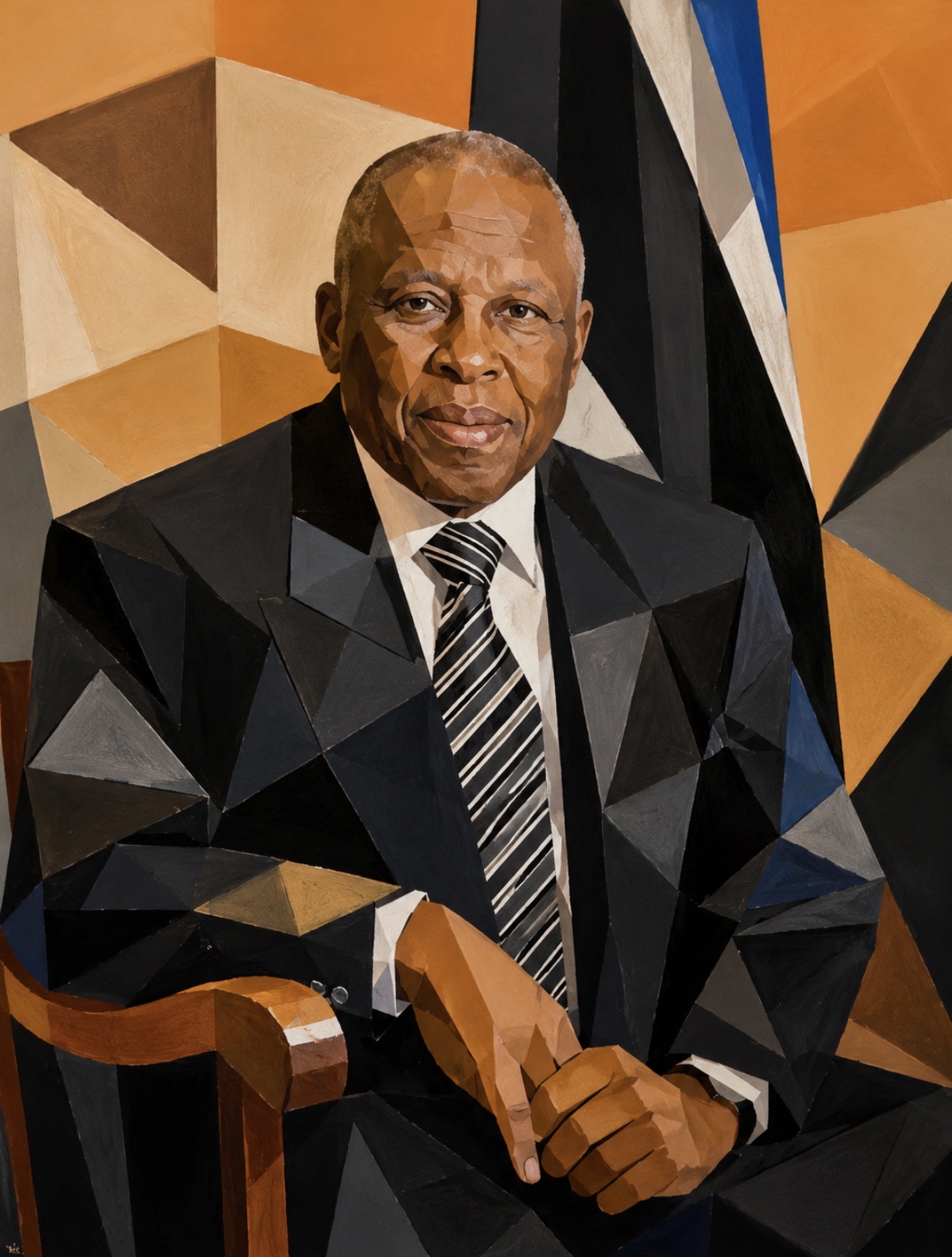
At Ora Loapi, there has been a growing reflection on the kind of leadership and economic thinking required to reposition the arts beyond symbolism and into sustainable national development. In many ways, the work we are doing today around commercialization, institutional strengthening, cultural infrastructure and the positioning of the arts within economic diversification mirrors some of the broader governance philosophies that defined the presidency of Festus Mogae.
One of the most important lessons from Mogae’s leadership is the understanding that sectors do not become economically significant overnight. They require systems, credibility, institutional discipline and long-term thinking. This is particularly relevant for the creative industries in Botswana, where there has historically been immense artistic talent, but limited economic structuring around that talent. At Ora Loapi, there is an increasing recognition that the future of the arts cannot rely solely on grants, passion or ceremonial recognition. It must be supported by sustainable business models, investment frameworks, market creation, intellectual property development and international positioning.
Mogae’s emphasis on economic diversification also offers important lessons for the cultural sector today. Botswana’s dependence on diamonds created vulnerabilities that his administration actively sought to address by encouraging alternative sectors for growth. Similarly, Ora Loapi’s model is increasingly focused on positioning the arts not as an isolated social sector, but as part of Botswana’s broader economic future. This includes developing art as an investment asset class, strengthening curatorial practice, expanding cultural tourism opportunities, building international partnerships and creating commercially viable platforms for artists across the continent.
Another critical lesson from the Mogae era is the importance of credibility and institutional trust. Mogae understood that investor confidence and international respect are built through professionalism, consistency and governance. Ora Loapi is applying similar principles in the cultural space by building structured partnerships with financial institutions, property developers, museums, tourism entities and international organizations. The objective is not simply to showcase art, but to create an ecosystem where the arts can operate with institutional legitimacy and economic seriousness.
Perhaps most importantly, Mogae demonstrated that development requires patience and structural thinking. Many of the reforms associated with his presidency were foundational rather than immediately visible. The same can be said for the work required within Botswana’s creative industries today. Building a sustainable arts economy requires infrastructure, policy reform, audience development, data systems, professionalization and market confidence. These are long-term processes that demand both vision and discipline.
Festus Mogae’s contribution to Botswana’s creative industries was therefore not necessarily through direct cultural policy reform in the way we understand the creative economy today. His presidency was instead deeply influential in creating the economic, institutional and governance conditions that later enabled the arts and culture sector to begin positioning itself as a viable contributor to economic diversification and national development.
Mogae governed Botswana at a critical time when the country was increasingly confronting the long-term risks of overdependence on diamonds. As an economist by training and one of the continent’s most respected fiscal conservatives, his administration focused heavily on macroeconomic stability, institutional discipline, diversification and international credibility. While the creative industries were not yet formally recognized as a strategic economic sector during his tenure, many of the foundations necessary for the sector’s future growth were strengthened under his leadership.
One of the most important shifts during the Mogae administration was the entrenchment of diversification discourse within Botswana’s economic planning. Prior to this period, Botswana’s economy remained overwhelmingly mineral-dependent. Mogae increasingly emphasized the need for alternative sectors capable of creating employment, stimulating entrepreneurship and reducing reliance on extractive industries. Although sectors such as tourism, financial services and manufacturing received more direct attention, this broader diversification agenda unintentionally created policy space for the arts, culture and creative entrepreneurship to later emerge within national economic conversations.
This is important because the modern creative economy does not develop in isolation. It develops where there is institutional stability, investor confidence, infrastructure development and policy predictability. Mogae’s administration strengthened all four. Botswana’s reputation during this period as one of Africa’s most stable, transparent and well-governed democracies elevated the country’s international profile and indirectly strengthened opportunities for cultural partnerships, tourism growth and future investment into creative sectors.
The tourism sector in particular became an important area where Mogae’s influence intersected with culture and heritage. Botswana’s “high value, low volume” tourism strategy matured significantly during his presidency. This model positioned Botswana globally through its identity, conservation ethics, heritage and natural environment. In many ways, this represented an early form of nation branding rooted in culture and place-making. As tourism expanded, so too did opportunities for craftspeople, performers, cultural practitioners and heritage-based enterprises. Traditional crafts, storytelling, indigenous knowledge systems and cultural aesthetics increasingly became part of Botswana’s tourism offering, even if they were not yet formally classified within a creative economy framework.
Mogae’s administration also strengthened institutional governance across government. His emphasis on technocratic administration, planning frameworks and public sector professionalism had long-term implications for how Botswana would later manage arts and culture policy. The eventual development of more structured cultural institutions, grant systems and arts administration frameworks was only possible because Botswana’s state machinery had become more policy-oriented and administratively capable during this era.
However, a balanced assessment must also acknowledge the limitations of the Mogae years regarding the creative industries. Despite strong economic management, there was no comprehensive national creative industries policy during his presidency. Arts and culture largely remained socially respected but economically peripheral within national development planning. The sector lacked structured financing mechanisms, dedicated commercialization policies, export frameworks and formal recognition as a contributor to GDP and employment.
Copyright monetization and intellectual property systems also remained underdeveloped, limiting the ability of artists and creatives to fully participate in wealth creation. Botswana therefore entered the formal creative economy conversation much later than countries such as South Africa, Nigeria and Kenya, all of which had begun institutionalizing aspects of their cultural industries earlier.
Nevertheless, it would be inaccurate to conclude that Mogae had little impact on the sector. His influence was structural rather than performative. He may not have built Botswana’s creative economy directly, but he helped build the governance architecture that made its future development possible. The economic stability, diversification agenda, tourism positioning and institutional discipline consolidated during his administration became foundational conditions upon which later cultural and creative economy policies could emerge.
In many respects, Mogae’s legacy within the creative industries should therefore be understood not through direct arts interventions, but through state-building. He governed Botswana in a manner that strengthened the broader ecosystem required for creative economies to eventually develop. Today’s conversations around commercialization of the arts, cultural entrepreneurship, creative exports and digital cultural economies are occurring within an economic and institutional framework partly shaped during the Mogae era.


