


Under the pale winter light of Gaborone, football’s past will gather again at the National Stadium: not in the urgent present tense of league tables and transfer speculation, but in memory, recognition and perhaps quiet resistance against forgetting.
On June 20, the fourth edition of the Betway Clash of Legends returns with a new format and a sharper emotional pull. Gone is the familiar “nation versus nation” structure that previously brought together former Zebras and Bafana Bafana players. In its place comes something closer to the emotional core of Southern African football itself: club rivalries, inherited loyalties and names that still carry weight decades later in barbershops, taxi ranks and family conversations.
This year’s tournament will feature legends teams from Kaizer Chiefs, Orlando Pirates, Township Rollers and Mochudi Centre Chiefs.
The shift in format is significant. International football often asks supporters to unite. Club football asks them to remember.
Organisers appear keenly aware of that distinction. They understand what happens when old rivalries are reopened and supporters hear names that once defined Saturday afternoons and shaped entire footballing eras. Nostalgia, in football, is rarely passive. It sings, argues and travels across generations.
“What started as a bold vision to celebrate football heritage and reconnect generations through sport has now grown into one of the most anticipated football entertainment events on the local sporting calendar,” said Legends Project coordinator Sekhana Lawrence Koko during the launch in Gaborone.
For Koko, the move toward club football appears deliberate rather than cosmetic. The emotional memory attached to clubs runs deeper and more personal. Supporters remember precisely where they stood when these teams met in their prime.
“Supporters will have the rare opportunity to relive some of the greatest football rivalries and moments that shaped our region’s football culture,” he said.
There is also a certain symbolism in the teams selected. Chiefs versus Pirates remains one of African football’s enduring rivalries, layered with history, class and identity. Rollers and Centre Chiefs carry similar emotional force within Botswana’s domestic game. Bringing all four together creates something between exhibition football and collective memory.
Beneath the celebratory mood, however, sits another reality: retirement can be unforgiving for footballers.
The applause fades quickly. Stadiums move on. Football remembers goals more easily than the people who scored them.
That reality surfaced repeatedly during the launch, with organisers, sponsors and former players framing the tournament not only as entertainment but also as a support mechanism for retired footballers, many of whom face financial and social difficulties after their careers end.
“This is a great initiative,” said former Orlando Pirates defender Happy Jele. “Some of the legends are going through a lot that we never talk about. These kinds of programmes help us as legends feel appreciated.”
His remarks carried weight partly because they arrived without theatrics. Footballers rarely speak openly about vulnerability, particularly in environments where former athletes are expected to remain symbols of strength long after their careers have faded into ordinary life.
The launch itself resembled a reunion. Familiar faces exchanged stories and revisited eras that younger supporters know mostly through YouTube highlights and family debates.
For former Mochudi Centre Chiefs midfielder Michael Mogaladi, the tournament represents restoration as much as celebration.
“I am very happy that this has been created for the legends. We are mostly forgotten, yet we used to dominate the league,” he said.
Then came the names, delivered almost like an invocation: Pontsho Moloi, Dirang Moloi, Given Mpundu and James Kachinga. In football culture, naming matters. It keeps players alive within the public conversation.
Former Kaizer Chiefs midfielder Reneilwe Letsholonyane described the event as both a reunion and a reminder.
“It’s a great initiative for us former players to come together, have fun and entertain the fans,” he said, before adding with a smile: “and show them that we are still alive.”
There was humour in the remark, but also truth. Retirement can render footballers invisible. Once the body slows and the television cameras disappear, many drift quietly from public attention.
Letsholonyane confirmed that former stars, including Josta Dladla, Tefo Mashamaite, Mandla Masango and Morgan Gould, are expected to participate. He also pointed to another dimension of the event: mentorship.
On June 19, ahead of the matches, players will take part in coaching clinics aimed at younger footballers.
“To inspire young people who want to make a life out of football,” Letsholonyane said.
That intergenerational aspect matters. African football has often struggled to preserve institutional memory. Legends are briefly celebrated before being left behind by the machinery of modern sport. Events such as this attempt, however imperfectly, to reconnect the past with the future.
Even the structure of the day appears designed as a football carnival rather than a conventional tournament. Three matches and a final will unfold across the day at the National Stadium, with tickets granting access to the full programme. Organisers have also promised music performances and entertainment alongside the football itself, leaning into spectacle as much as sentiment.
The tournament’s growing significance was perhaps most evident in the institutions increasingly eager to associate themselves with it.
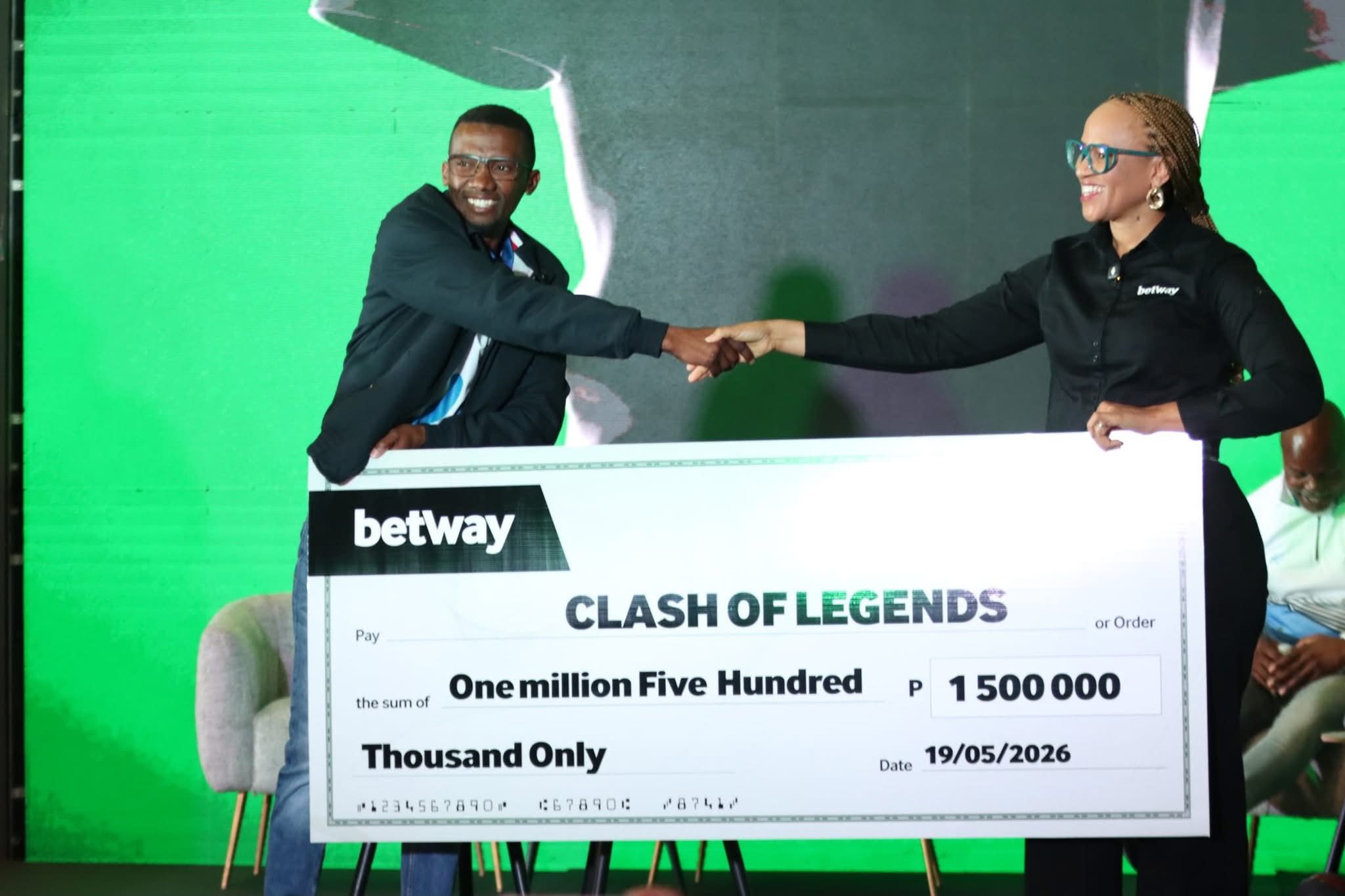
Speaking at the launch, Betway country manager Michelle France-Mabiletsa described the competition as more than a sporting event.
“At its core, the Betway Clash of Legends is a charitable cause,” she said.
Her remarks focused heavily on football’s social responsibility toward former players. “We see you, we remember you, and we will not forget your contribution,” she added.
Meanwhile, the Gambling Authority used the occasion to position sport within a broader national development agenda. Responsible gambling manager Portia Diteko argued that revenue generated through football should cycle back into football communities.
“If Botswana is to have a sustainable ecosystem, we must deliberately invest in, nurture and grow local sporting activities from the grassroots level all the way to our retired icons,” she said.
There is something revealing about the attention surrounding the tournament. Legends football is often dismissed elsewhere as novelty entertainment built around fading fitness and recycled memories. In Botswana and across Southern Africa, however, the event increasingly feels like something more substantial: part celebration, part welfare mechanism and part cultural archive.
Perhaps that is why the shift toward club football feels so significant.
National teams belong to moments. Clubs belong to people’s lives.
Supporters inherit clubs from parents, neighbourhoodsand communities. They build rituals around them and attach entire chapters of their lives to certain players and colours. Long after careers end, those emotional ties remain intact.
So when the old rivals walk out again in June, even briefly, it will not simply be nostalgia. It will be recognition: a reminder that football history does not disappear simply because the cameras move elsewhere.
For one winter evening in Gaborone, the past will return wearing familiar colours.


