


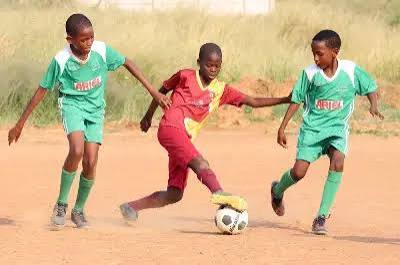
Botswana’s decision to suspend school sport in 2020 exposed a problem that cannot be solved simply by putting competitions back on the calendar: the country has never fully settled where sport belongs within the education system.
For Professor Tshepang Tshube, a sport science expert at the University of Kentucky in Lexington, rebuilding school sport requires more than money. It requires legislation, policy and governance — as well as a system that properly recognises the teachers who coach young athletes.
For years, school sport in Botswana has largely been treated as an extracurricular activity. Tshube argues that this needs to change if the country is to build a sustainable sporting system.
“School sports must and should be recognised as a platform through which it facilitates education,” he says.
That argument takes on greater significance against the background of the 2020 suspension, which exposed the financial and administrative weaknesses of the existing model.
In March 2020, the government suspended school sport amid concerns over its financial sustainability. The Ministry of Basic Education had a sports budget of about P2 million a year, while the cost of running the programme was estimated at about P60 million. The ministry also owed teachers about P32 million for their involvement in sporting activities.
The crisis was therefore about more than sport. It raised a fundamental question: where does school sport belong within the education system?
That question remains relevant as Botswana works to restore school sport.
From law to policy
For Tshube, the starting point should be legislation that formally recognises sport as part of education and acknowledges its wider benefits to children.
Policy should then translate that principle into practice, followed by governance arrangements that define who is responsible for delivering it.
“If there’s no law, as well as policy, that recognises the importance of school sports in facilitating education, as well as health and other factors, then it’s going to be difficult for it to be governed,” he says.
Such an approach would also require policymakers to reconsider the relationship between teaching and coaching.
One possibility is to formally recognise coaching responsibilities in teachers’ contracts.
A teacher who spends a significant proportion of their working time coaching could, for example, teach fewer classes, with a corresponding share of their workload allocated to sport.
Another option would be to treat coaching as an additional responsibility and compensate teachers for the extra time involved.
A third would be to employ specialist coaches.
Tshube sees this as the more difficult option because teachers occupy a unique position. They understand the school environment, know the learners and can connect sporting development with education.
The issue, therefore, is not simply finding people to coach. It is creating a system that recognises the work and gives it an appropriate place within teachers’ professional responsibilities.
Leadership is not control
Tshube also draws a distinction between effective coaching and the exercise of authority.
Leadership, he argues, is not about telling people what to do or demonstrating power. It is about influencing people towards a common objective.
“The textbook definition of leadership, is influencing people to achieve a common goal,” he says.
That principle applies to the relationship between coach and athlete.
A coach should not simply impose instructions. The relationship should involve both coach and athlete working towards a shared objective.
This becomes particularly important when dealing with young athletes.
Tshube argues that effective coaching should not be abusive or based on fear. Athletes need support and a degree of autonomy in their development.
A coach should also have a genuine interest in the athlete’s success beyond the playing field.
That means coaching decisions should have a clear purpose.
If an athlete is required to complete a particular number of training repetitions, for example, the coach should be able to explain why. Is the workload appropriate? Is it sufficient to prepare the athlete for the Olympic Games or a major championship? Could the same objective be achieved with less?
Good coaching, therefore, is not necessarily about doing more.
It is about doing what is necessary — and understanding why.
A chance to rebuild
Botswana’s school sport crisis offers an opportunity to build a different system rather than simply restore the one that existed before 2020.
Government has since sought to restore sport and arts in schools, including introducing sport and arts into the school timetable in 2025. But the return of competitive school sport has continued to face challenges, including questions over teacher participation and coordination between ministries.
A 2021 government task team had already recommended that responsibility for sport development should sit with sports authorities while school sport remained within the education system.
That distinction could become important in designing the next model.
The lesson of the past six years is that school sport cannot depend on goodwill, temporary arrangements or an uncertain budget.
It needs a clearly defined place in the education system.
It needs policies that can be implemented.
And it needs governance structures that recognise teachers not merely as educators who happen to coach, but as contributors to the development of young people through sport.
For Botswana, restoring school sport should therefore mean more than getting competitions back on the calendar.
It should mean deliberately designing a system in which education and sport work together.
That may be the difference between simply reviving school sport and building a sustainable pathway for the next generation of athletes.


