


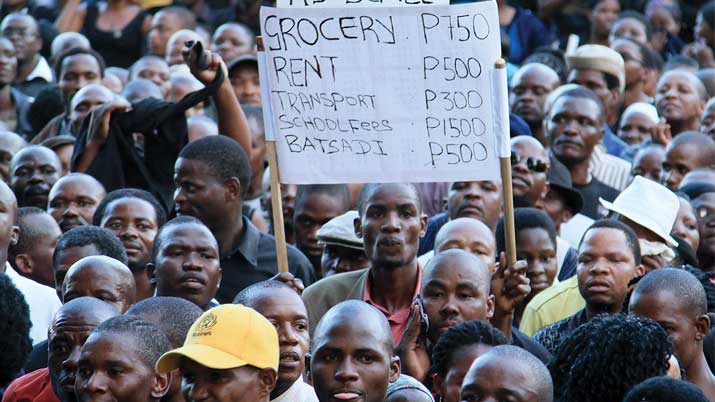
Strikes and lockouts have always raised difficult questions around remuneration, particularly whether workers are entitled to be paid when no work is rendered. The Employment and Labour Relations Act bring long-awaited clarity to this issue by expressly regulating remuneration during industrial action, a matter that was notably absent under the Employment Act. However, this was mentioned in the Code of Good Practice, Model Procedures and Agreements. The law now adopts a more nuanced and humane approach, demonstrating that remuneration during strikes and lockouts is not completely excluded.
The Code of Good Practice, Model Procedures and Agreements
The silence of the Employment Act on this created a grey area for both employers and workers. However, the Code of Good Practice, Model Procedures and Agreements was there to guide by stating that an employer is not obliged to remunerate a worker for services not rendered during a strike or protected lockout. The Code reinforces the “no work, no pay” principle and aligns with the general understanding that strikes and lockouts suspend the normal exchange of labour for wages.
The Employment and Labour Relations Act
The Employment and Labour Relations Act directly addresses remuneration during strikes and lockouts under section 267. Section 267(3) provides that an employer is not obliged to remunerate a worker for services not rendered during a strike or lockout that is conducted in compliance with the Act. This affirms the general principle of “no work, no pay,” which is a common feature of labour law in many jurisdictions. The Act goes further by introducing an important qualification. Where a worker’s remuneration includes payment in kind, specifically accommodation, food, or other basic amenities of life, the employer is expressly prohibited from discontinuing such benefits during the strike or lockout.
This provision recognises that while wages may be suspended, basic living conditions should not be withdrawn as a punitive measure. The law therefore, draws a clear distinction between monetary remuneration and essential livelihood support.
Why Remuneration Is Not Completely Off the Table
The introduction of section 267 under the Employment and Labour Relations Act signals an important shift. While the principle of no remuneration for unrendered work remains intact, the law now recognises that certain forms of remuneration, particularly those tied to basic human needs, must be preserved. This makes it clear that remuneration during strikes and lockouts is not an all-or-nothing matter.
By protecting payment in kind, the Act discourages extreme employer responses that could undermine workers’ welfare and escalate labour disputes. At the same time, it maintains fairness by relieving employers of the obligation to pay wages where no work is performed.
Conclusion
The Employment and Labour Relations Act fill a critical gap left by the Employment Act and builds upon the Code of Good Practice by providing clearer, more balanced rules on remuneration during strikes and lockouts. While wages may lawfully be withheld, basic amenities must not be withdrawn. This approach underscores a modern labour relations framework that values fairness, dignity, and stability, confirming that remuneration during industrial action is not completely off the table, but carefully regulated.
Contacts
If you want to join our free HR WhatsApp group or to consult, contact us on:
Gaborone: +267 75 546 784, +267 393 9435 or info@aupracontax.co.bw
Maun: +267 74 037 833, +267 686 0117 or tax5@aupracontax.co.bw


