


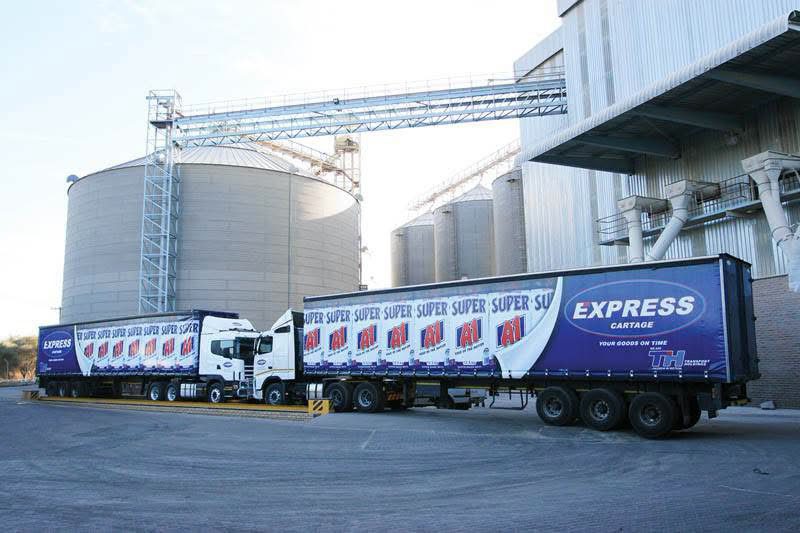
Members of the media on Friday toured one of Botswana’s largest and most technologically advanced food manufacturing facilities after the Maize and Wheat Millers Association (MWMA) hosted an exclusive visit to the Bolux plant in Ramotswa.
The tour provided journalists with a firsthand look at the scale of investment, advanced manufacturing technology and operational expertise underpinning Botswana’s food production capacity and food security. Backed by an investment of more than P800 million, the facility employs over 750 Batswana, supporting jobs across engineering, manufacturing, quality assurance, logistics and food production while contributing to the development of specialised technical skills.
The tour offered a comprehensive insight into the transformation of raw grain into staple food products consumed in households, restaurants and retail outlets across Botswana. Journalists observed the production processes behind flour, maize meal, instant porridge, specialised baking flours for a range of baked goods, yeast and other food products manufactured at the facility. The plant also supplies major food service brands, including KFC, Nando’s, Chicken Licken and Pedros, as well as numerous local retailers, underscoring its critical role in Botswana’s food value chain.
The delegation was taken through Bolux’s stringent quality assurance and food safety systems by Head of Risk and Compliance, Ofentse Ngwebula, who demonstrated the rigorous controls that govern every stage of production. Journalists witnessed the strict hygiene protocols observed throughout the facility, including mandatory hourly handwashing by employees working in production areas, reinforcing the company’s commitment to producing safe, high-quality food.
Ngwebula also highlighted that the facility operates under internationally recognised certification systems audited by German certification bodies, ensuring compliance with global food manufacturing standards and positioning Bolux to export products to markets across Europe, North America, Asia and beyond.
Speaking during the tour, Bolux Managing Director Melinda Jacobs said maintaining world-class standards is fundamental to preserving the trust that generations of Batswana have placed in the company over the past 41 years.
“Quality is not something we inspect at the end of the process—it is embedded in every stage of our operation. Every loaf of bread, every bag of flour and every product carrying the Bolux name reflects our commitment to excellence, consistency and the confidence that Botswana families have placed in us for more than four decades.”
Jacobs said while the impressive machinery often captures visitors’ attention, it is the people behind the operation who remain the company’s greatest strength.
“During our 40th anniversary celebrations last year, many of our founding and retired employees returned to this facility. Their stories reminded us that Bolux has done far more than manufacture food. It has helped families educate their children, build homes, raise grandchildren and create opportunities for future generations. Today, some of those children proudly work alongside us, continuing a legacy built over decades.”
The company continues to invest in Botswana’s manufacturing capability, with a further P60 million investment in new production is expected to create an additional 28 jobs for Batswana, while strengthening Botswana’s self-sufficiency and reducing dependence on imported products.
Jacobs said the investment reflects Bolux’s long-term confidence in Botswana and its ambition to continue growing both locally and across the region.
“Every investment we make is an investment in Botswana’s future. By expanding our capabilities, creating new jobs and producing more products locally, we are strengthening national food security while positioning Botswana as a competitive manufacturing hub capable of serving regional and international markets.”
The media tour forms part of MWMA’s ongoing programme to deepen public understanding of the milling industry’s contribution to Botswana’s food security, economic development, citizen empowerment and industrial growth.


