


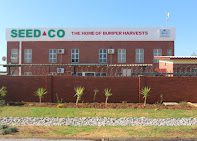
Seed Co International is stepping up its push into Tanzania and Kenya as it looks to deepen its regional footprint, with management saying further expansion will require greater access to trade finance, bank guarantees and foreign-exchange support.
Speaking at an Absa Corporate and Investment Banking client engagement, Seed Co Head of Treasury and Seed Co Botswana Managing Director Samson Ruwisi said Tanzania offered significant room for growth, while Kenya remained another market the group was seeking to build out.
He, however, emphasised that expansion into newer African markets needed stronger banking support to finance distributors, manage currency risk and support cross-border trade.
The remarks come on the back of mixed performances across Seed Co’s markets for the year ended March 2026, with Tanzania revenue rising 27 percent to $44.5 million, while Kenya revenue declined 11 percent to $12.5 million.
Locally, Seed Co Botswana’s revenue fell 44 percent to $3.1 million, a decline the group linked to weaker public-sector demand as lower diamond receipts weighed on the broader economy. The pressure also fed through to earnings, with profit after tax dropping 73 percent to $0.2 million.
“Upside is very big in Tanzania,” Ruwisi said, adding that Kenya is another market Seed Co is looking to grow as the company expands its distribution footprint across the continent.
He said entering new African markets often means working with distributors with whom Seed Co has little or no trading history, increasing the importance of trade-finance facilities and bank guarantees.
According to Ruwisi, such guarantees could allow banks to finance distributors purchasing seed from Seed Co, helping the company grow sales while reducing some of the credit risk that comes with entering unfamiliar markets.
The strategy comes as Seed Co increasingly derives its scale from operations outside Botswana. It generated $59.9 million in revenue in Zambia during the year, while Tanzania brought in $44.5 million and Malawi $43.8 million.
Seed Co’s annual report identifies Tanzania as one of its strongest-performing markets, where growth, as per the company, was reinforced by a government subsidy programme covering both seed and fertiliser. This supported demand alongside its own agronomic and market-development efforts.
Despite Ruwisi identifying Kenya as a key market for expansion, the country remains a more challenging growth story. Seed Co has said erratic rainfall weighed on seed demand for the period ended March 2026, pushing revenue down 11 percent and profit after tax 61 percent to $0.4 million.
Beyond trade finance, foreign currency availability is another challenge. Ruwisi said Botswana remains relatively stable compared with several African markets, particularly when it comes to policy consistency, currency predictability and exchange controls.
“Botswana is a very good, stable market compared to most African countries,” he said.
In some markets, however, foreign-currency shortages can make it difficult to repatriate dividends and settle cross-border obligations, increasing Seed Co’s need for liquidity-management and currency-risk solutions from banks.
Seed Co has already been adjusting its funding model to reduce that exposure, with group CEO Morgan Nzwere noting in the annual report that stronger cash generation, improved working-capital management and a strategy of borrowing in local currencies helped reduce finance costs during the year.


