


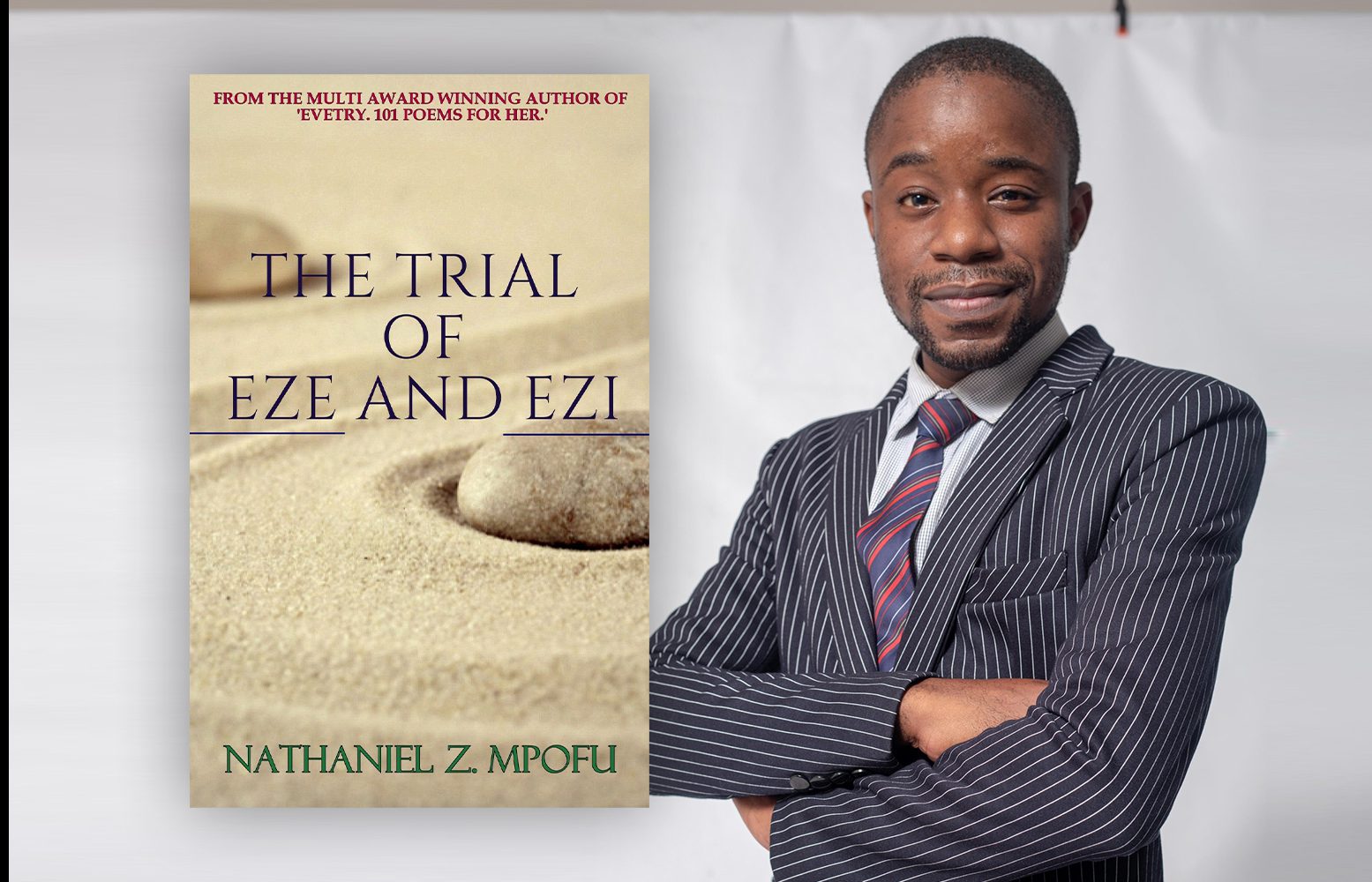
Book Review | The Trial of Eze and Ezi by Nathaniel Z. Mpofu
Nathaniel Z. Mpofu’s The Trial of Eze and Ezi is not a book that seeks the reader’s comfort. It demands attention, provokes discomfort, and at times confronts the limits of what poetry, confession, and literary expression are allowed to carry. This is a work driven less by plot than by emotional velocity, a long-form poetic reckoning with love, loss, betrayal, masculinity, memory, and self-indictment.
Structured as a fragmented sequence of poems, monologues, letters, and reflections, the book reads like a trial in the truest sense: evidence is presented, accusations are hurled, witnesses speak, and the accused, often the author himself, stands exposed. The “trial” is not confined to Eze and Ezi as characters, but expands to interrogate intimacy, patriarchy, artistic ego, and emotional violence.
Mpofu’s language is unmistakably maximalist. He draws heavily from biblical references, classical tragedy, Shakespearean echoes, pop culture, African spirituality, and confessional poetry. At its strongest, this intertextual density gives the book an epic quality, positioning private heartbreak within a grand moral and philosophical framework. Love is rendered as sacred and destructive in equal measure; memory becomes both refuge and weapon.
However, The Trial of Eze and Ezi is also deliberately excessive. The book refuses restraint, and that refusal is both its power and its greatest risk. The emotional rawness often tips into verbal aggression, and the reader is forced to navigate passages of rage, bitterness, and explicit invective. These moments will undoubtedly divide opinion: some will read them as unfiltered honesty, others as indulgent or ethically troubling. What is clear is that Mpofu is not interested in sanitising pain for literary palatability.
The work’s most compelling tension lies in its self-awareness. Even as the narrator lashes out, there is an undercurrent of self-reproach and recognition of failure as a lover, a partner, and a man attempting to reconcile creativity with responsibility. The recurring question is not simply who is guilty, but whether love itself can survive unresolved trauma and unequal expectations.
Notably, the book also gestures beyond personal turmoil. Embedded within the text are reflections on literacy, storytelling, language, and African authorship, reinforcing Mpofu’s belief in writing as both cultural duty and personal salvation. These sections provide moments of grounding, reminding the reader that the author is as concerned with legacy and voice as he is with heartbreak.
The Trial of Eze and Ezi is not an easy read, nor does it pretend to be. It is abrasive, lyrical, uneven, courageous, and deeply human. It will resonate most with readers who appreciate experimental poetry, confessional literature, and works that challenge moral and emotional comfort zones. For others, its lack of moderation may prove alienating.
Ultimately, Mpofu has produced a book that insists on being felt rather than neatly judged. Like a real trial, it offers no simple verdict, only testimony, contradiction, and the unsettling truth that love, when put on the stand, rarely leaves anyone innocent.


