


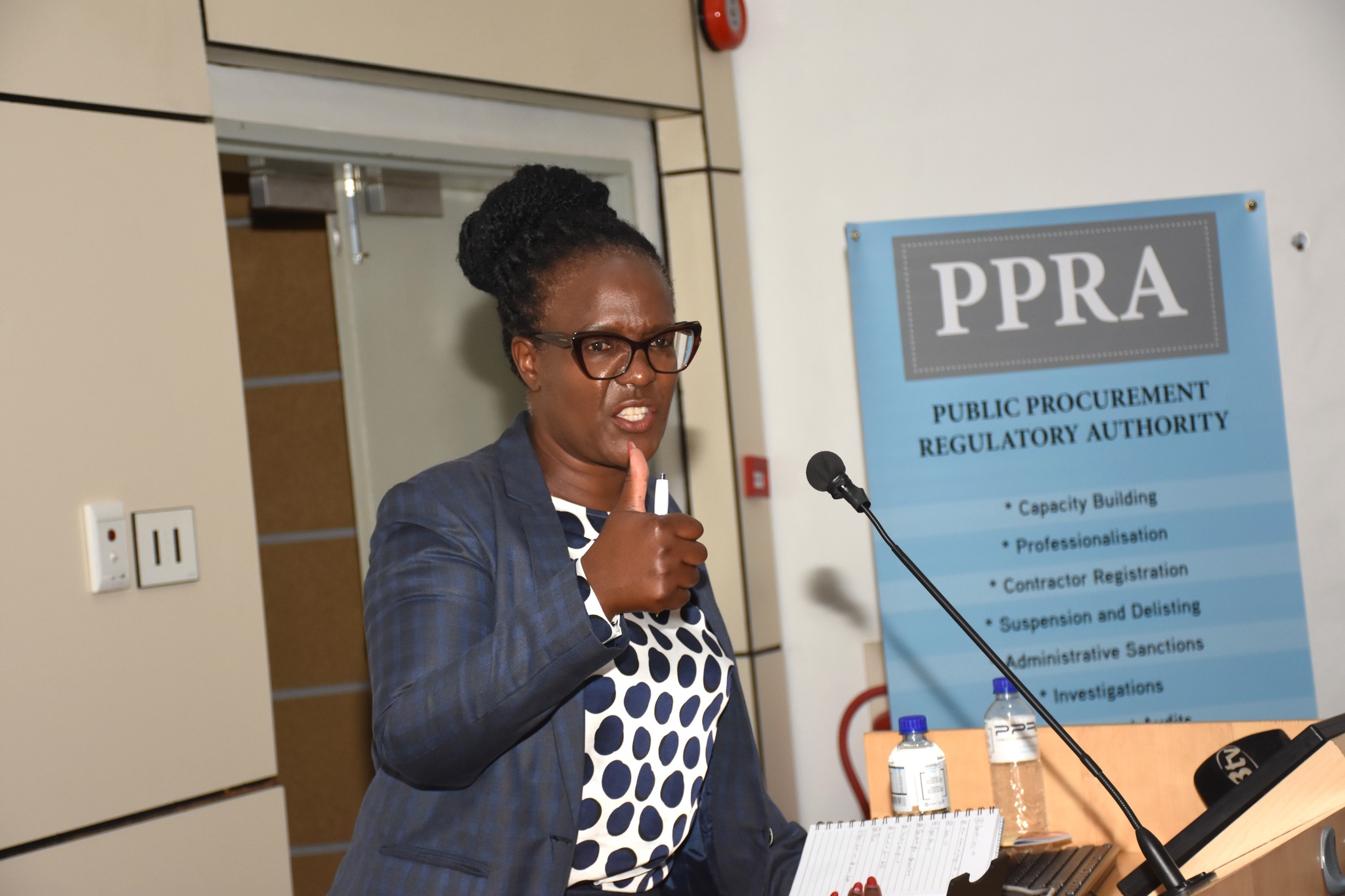
Citizen-owned contractors are increasingly excluded from high-value public contracts that, according to Public Procurement Regulatory Authority (PPRA) Chief Executive Officer Tumelo Motsomi, are effectively reserved for foreign businesses.
While citizens dominate tender volumes—winning roughly 74 percent of all awards—their share collapses when measured in pula terms. In the 2024/2025 financial year, citizen companies secured only 38 percent of the total procurement value.
Motsomi told the media recently that of the 78,800 procurement awards captured, 58,154 went to citizen-owned companies. Yet of the P32 billion disbursed through public procurement, only P12 billion accrued to these firms. The rest went mostly to non-citizen companies, driven by a handful of mega projects whose high value eclipses thousands of smaller awards given to local contractors.
She explained that this “relatively low share in value is primarily due to the awarding of a few high-value contracts to non-citizen companies, which significantly skews the distribution despite higher participation from citizen entities.”
Motsomi attributed the situation to limited technical and financial capacity among citizen contractors, which restricts their ability to compete for complex or capital-intensive projects.
She also highlighted a troubling trend in how Procuring Entities (PEs) are managing tendering. Despite legal requirements for all projects above P300,000 to go through open competitive bidding, only 21 percent were processed through this method in 2024/2025. This low uptake, she said, weakens the transparency, competition and value-for-money principles the open-bidding system is intended to protect.
“Due to poor planning and execution of the plan, most formal procurements (79 percent) are administered through other methods and not open bidding,” she said, citing direct procurement, selective tendering, emergency awards, and frequent use of waivers and exemptions.
She noted that inadequate planning, capacity shortages within PEs, and a tendency to rely on exemptions rather than competitive procedures are driving the trend.
Although formal procurement still dominates by value—accounting for 75 percent or roughly P24 billion—Motsomi pointed to another concern: the heavy reliance on micro procurement. Micro-level awards amounted to P8 billion, representing 25 percent of all procurement value, an unusually high proportion for what is meant to be a low-value, SME-support mechanism.
This pattern, she said, suggests PEs are spending excessive time on small, repetitive transactions instead of focusing on strategic, high-impact procurements. It also raises concerns about tender splitting, where large procurements are broken into smaller packages to avoid formal procedures and transparency safeguards.
“There is a risk of misuse, such as splitting of tenders, to avoid formal procurement procedures,” she warned, calling for stronger oversight.
Taken together—underuse of open bidding and the high share of micro procurement—these patterns signal the need for deeper regulatory intervention. Motsomi stressed the importance of strengthening compliance to ensure fair competition and protect the integrity of the procurement system.
She noted that the national procurement landscape continues to face serious challenges, including corruption risks, inefficiencies, poor planning, weak contract management, inflated prices and the ongoing reliance on manual systems.
These weaknesses, she warned, have far-reaching implications for national development. They slow economic growth, delay project implementation, and contribute to cost and time overruns that result in substandard infrastructure and services. The public feels the impact directly through shortages of essential goods—such as medicines, school textbooks and furniture—and poorly maintained infrastructure.
Motsomi said such failures frustrate government development efforts, limit job creation, widen inequality, erode public confidence in the procurement system, and ultimately fuel widespread public dissatisfaction.


