


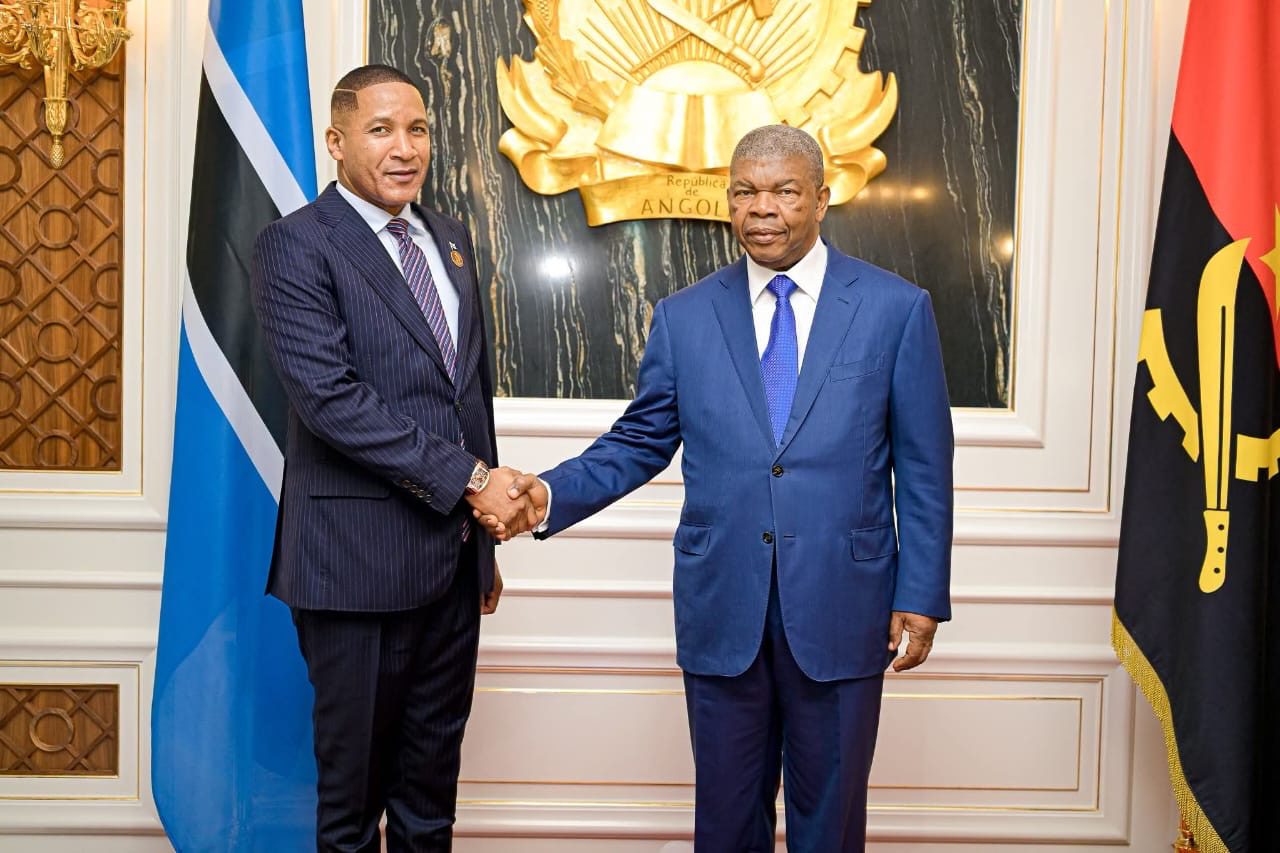
Botswana is in negotiations to acquire up to a 30% interest in Angola’s 200,000-barrel-per-day Lobito refinery, a move that would mark the country’s largest downstream energy investment and significantly reshape its fuel security strategy.
The development emerged from the first session of the Botswana-Angola Joint Permanent Commission for Cooperation (JPCC) held in Luanda last week — the first such commission since diplomatic relations were established in 1976.
President Duma Boko, speaking on the margins of the Commission, confirmed the offer is on the table. “The relation to Lobito and the stake, Angolan government has 30% and it’s for Botswana to decide how much of that or the whole of it takes. And those conversations are on the table as ongoing,” Boko said.
The Lobito refinery, being developed by state-owned Sonangol, is central to Angola’s strategy to become a refined products exporter. Zambia has 26% stake, with Angola retaining a controlling interest.
For Botswana, the rationale is clear. The economy remains structurally exposed to external fuel supply shocks. According to World Trade Organization data, South Africa accounted for 60.7% of Botswana’s merchandise imports in 2024, with petroleum oils and related products among the largest import categories. The country is entirely dependent on imported refined fuel.
A direct equity stake in Lobito would provide Botswana with guaranteed offtake rights, price visibility, and a buffer against regional logistical disruptions, a vulnerability that has triggered periodic shortages in recent years.
Analysts view the move as a pivot from a purely trading relationship to asset ownership within the regional energy value chain.
The JPCC went well beyond oil. Both governments identified energy, mineral resources, transport and infrastructure as priority pillars for cooperation and adopted an implementation matrix to track commitments.
Two new frameworks were agreed: the elevation of the JPCC to a Bi-National Commission (BNC) at Head of State level, with its inaugural session scheduled for Botswana in 2027, and a formal agreement on regular political consultations between the two foreign ministries. A second agreement will allow dependents of diplomatic, administrative and technical staff to seek employment in the host country.
Transport was a key focus. Both sides underscored the potential of the Lobito Corridor, the 1,300km rail line linking Angola’s Atlantic port of Lobito to the DRC and Zambia, to give landlocked Botswana alternative access to global markets.
In mining, cooperation is deepening between two of the world’s leading diamond producers. The two governments agreed to collaborate on exploration, cutting and polishing, and joint marketing. It builds on recent engagements between Debswana and Endiama as both countries seek greater downstream value retention.
Current bilateral trade remains negligible, highlighting the scale of untapped potential. According to UN Comtrade, Angola exported just $19.25 million worth of goods to Botswana in 2024 — $19.22 million of which was diamonds, while importing $4.57 million from Botswana.


