


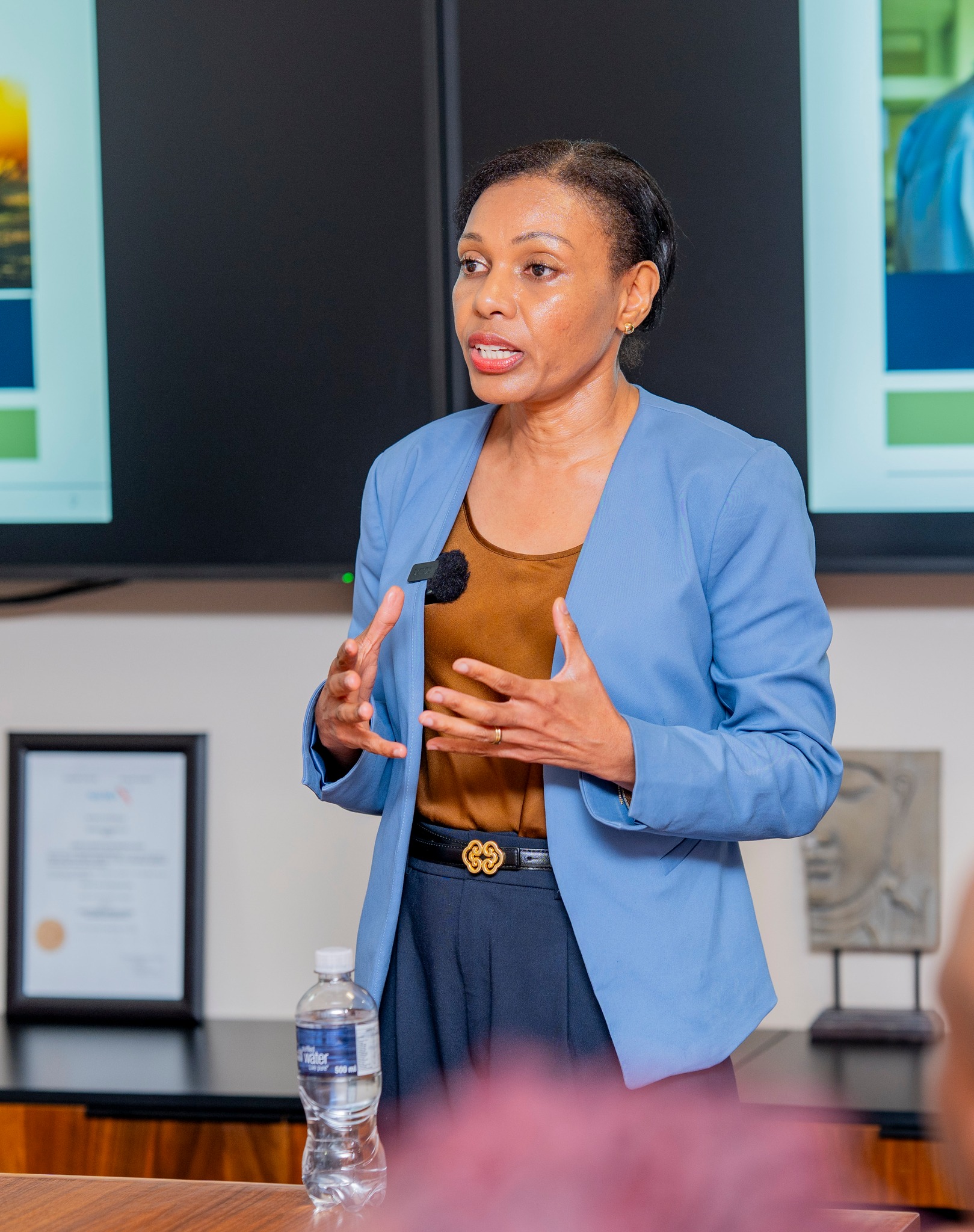
De Beers Group recently collaborated with Botswana Development Corporation (BDC) to give the Stanford Seed Transformational Programme cohort of 2027 a practical understanding of what the programme offers.
De Beers Group Social Impact and Sustainability Diamond Trading Vice President, Otsile Mabeo, said the group recognises that while a diamond is forever, diamond mines are not.
“We have a very robust sustainability programme that looks at how to ensure that once the diamonds run out, which we know they will, we still have economies that can thrive, grow into the future, and deliver continued economic growth for our producer countries,” Mabeo said.
“And we came up with a very robust sustainability programme called Building Forever.”
She said the programme focuses on how De Beers supports its producer countries in key areas, enabling those economies to sustain themselves well into the future.
De Beers has identified three focus areas under the programme.
The first is livelihoods, which aims to ensure people can create sustainable livelihoods for themselves. The other two are climate and nature.
Mabeo said livelihoods are a key focus for De Beers in Botswana and across southern African communities.
“We want to ensure that we partner with the right people and work with entrepreneurs so that our businesses can grow into the future,” she said.
“And not only grow, but expand regionally, diversify product offerings and become globally competitive. This is absolutely key when we talk about the resilience of our economies.”
Mabeo said the country is in a difficult position because of challenges in the diamond industry.
“It is absolutely critical that we have companies that can grow and scale, and collectively match the size of the diamond industry in the future,” she said.
“We can only do that if we ensure that we all have the right tools to grow our businesses, expand and compete on a global scale.”
Mabeo described the Stanford Seed Transformational Programme as a world-class initiative designed to equip participants with the tools and networks needed to grow their businesses.
“The economy needs to transform for us to move beyond the challenges we see today and diversify,” she said.
“Stanford University will provide world-class tools to examine your business, assess your plans and ambitions, and put in place the building blocks to realise those ambitions.”
Beyond the classroom, she said, participants will benefit from networks with global business leaders through the programme.
For De Beers, Mabeo said the goal is to ensure the group’s legacy extends beyond diamond production.
“The legacy is that it has been a successful industry, successful in driving economic growth in Botswana and developing the country. But can it do more than that?” she said.
“Can it go beyond the diamond industry and beyond the country to support entrepreneurs and create a robust private sector that can develop each of those countries?”
BDC Head of Corporate Affairs, Boitshwarelo Lebang-Kgetse, said the programme, delivered in collaboration with the Stanford Graduate School of Business, has already demonstrated its impact across multiple markets by helping business leaders rethink strategy, define execution and unlock new growth pathways.
“It is, at its core, a programme designed to transform not only businesses, but how they are led,” Lebang-Kgetse said.
“For Botswana, and for the region, programmes of this nature are critical. They contribute meaningfully to the development of competitive enterprises and the strengthening of value chains.”
Giving testimony, Shyam Harith, CEO and founder of Masterprint, said one of the key lessons he gained from the Stanford Seed Transformational Programme was ensuring the business can continue operating in his absence.
He credited the programme for Masterprint’s growth and success, as well as the opportunities it has created.


