


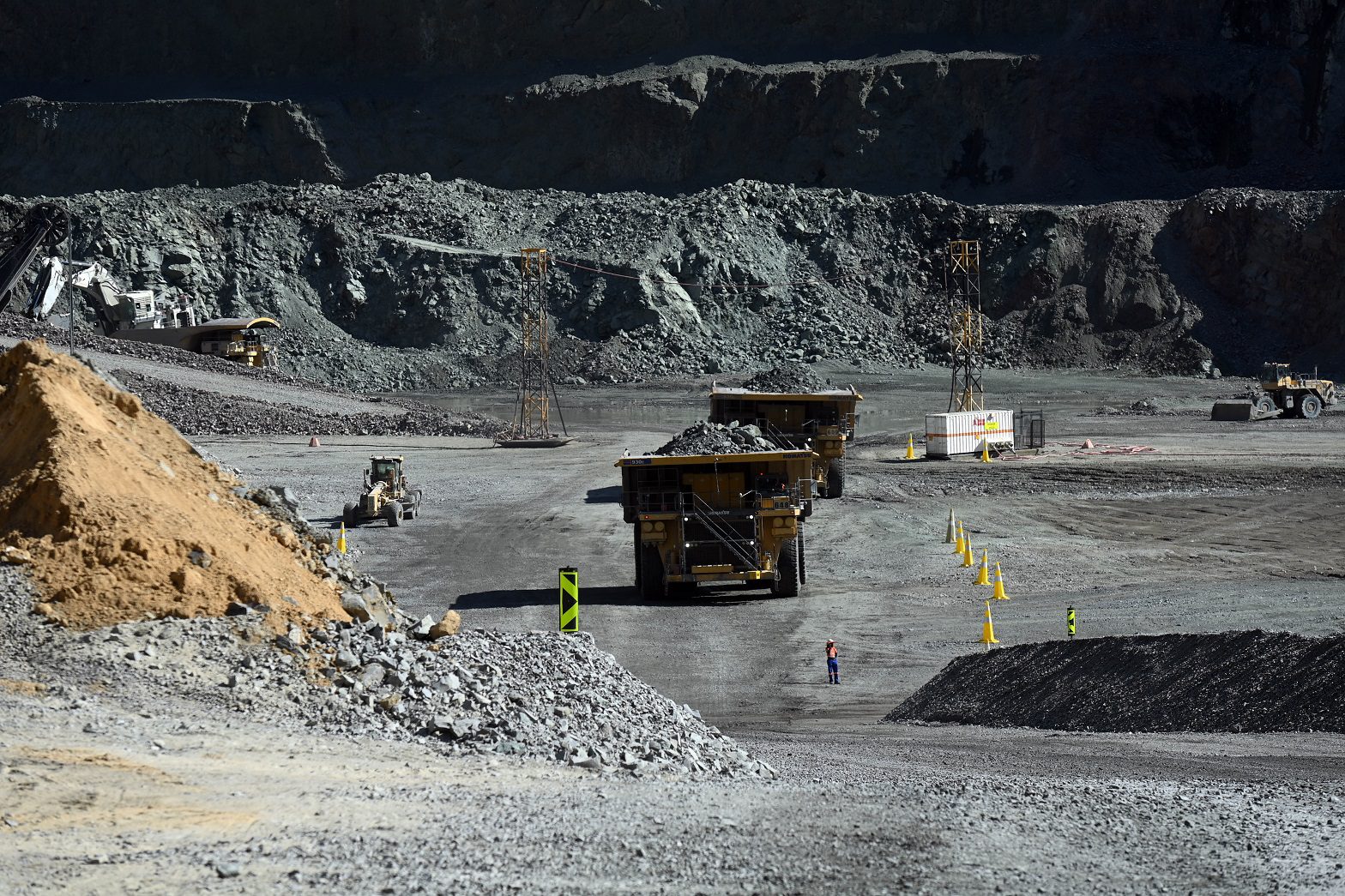
Debswana Diamond Company plans to commercialize its nearly six decades of mining expertise by selling consultancy services built around its world-class safety record, open-pit mining capabilities and industrial infrastructure, as part of a strategy to reduce its dependence on diamond production.
The initiative forms part of the company’s five-year transformation strategy, Ya Masa, covering 2025 to 2029.
Speaking to the Business Weekly and Review on the sidelines of the Future of Mining Summit, Senior Transformation Manager Unami Habana said Debswana wants to turn capabilities developed over 57 years of mining into businesses that can generate new revenue from clients in Botswana, the region and eventually global markets.
Habana said Debswana consistently ranks among the world’s leading mining companies in safety performance but has never packaged that expertise into a commercial product.
“We come up as number one in the world,” she said, adding that the company is now exploring how its safety systems can be developed into a global mining consultancy offering.
She said the same thinking applies to Debswana’s open-pit mining expertise, where the company believes it has built capabilities that could be sold to mining operations beyond Botswana.
“We’ve got the expertise. We’ve got the capability. How do we package it and sell it outside for mines that are opening up?” she said.
The strategy extends beyond knowledge-based services. Debswana is also evaluating how infrastructure built over decades, including engineering workshops, hospitals, schools and other facilities, could be commercialisedthrough new business models or strategic partnerships.
Habana said the company’s engineering workshops, which currently manufacture components primarily for internal use, could be expanded into standalone manufacturing operations supplying the wider mining industry, while other long-established assets are being assessed for opportunities to generate commercial returns.
Although the consultancy business is expected to expand from domestic customers into regional and international markets, Habana said the company is still evaluating which opportunities offer the greatest commercial potential.
Alongside diversification, Debswana is pursuing an aggressive cost transformation programme aimed at reducing operating costs to 6 billion pula and sustaining business costs to 1.2 billion pula by 2028.
Habana said an internal review found that more than 90 percent of the company’s expenditure is concentrated in four areas: labour, equipment maintenance, fuel and outsourced services, including contract mining and consultancy.
To lower those costs, Debswana is exploring greater use of renewable energy to reduce fuel consumption, increased automation and technology to improve productivity, and expanded in-house manufacturing of mining components to reduce dependence on external suppliers.
Habana described cost optimisation as the most difficult part of the strategy, saying its success depends less on budget reductions than on changing the way the organisation operates.
“It’s about changing the mindset. It’s about changing the way we do things,” she said.
While 2029 is the target for establishing meaningful non-diamond income, Habana said the company hopes to begin generating returns much earlier.
“Even though we are pegging it at 2029 to start realisingthe non-diamond revenue, we want it to come as soon as possible,” she said.
Habana described the current period as Debswana’s “1969 moment,” a reference to the creation of the company, which helped transform Botswana from one of the world’s poorest countries into an upper-middle-income economy.
She said the responsibility facing the current generation is to create the next chapter of that transformation.
“Doing anything less is really criminal, to be honest,” she said, arguing that Debswana must create new sources of economic opportunity that will outlive Botswana’s diamond resources.


