


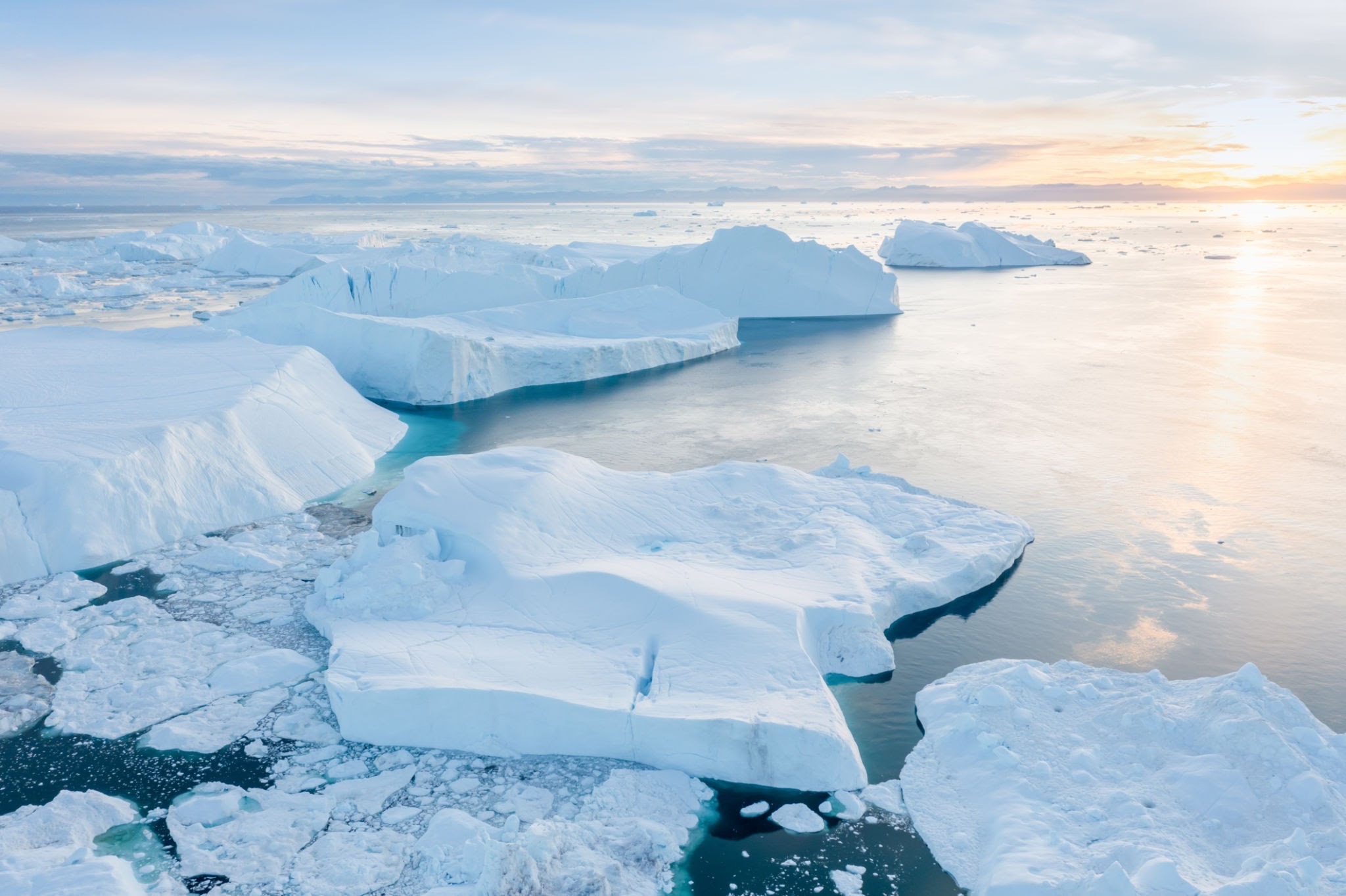
At the northernmost reaches of our planet, the rapid retreat of Arctic ice caps stands as one of the most alarming physical indicators of a planet in crisis, new research finds. The Arctic is currently warming at more than three times the global average rate, a phenomenon known as Arctic amplification. As vast expanses of sea ice and thick ice sheets melt away, the bright white surfaces that once reflected solar heat back into space – akin to Ngamiland sands and the Makgadikgadi salt pans – are replaced by dark ocean waters. This shift absorbs radiant energy rather than repelling it, creating a self-reinforcing feedback loop that accelerates global climate disruption. What occurs in this fragile, frozen realm is far from an isolated geographical event; it is a profound transformation that alters global weather dynamics, ocean currents, and human security in continents far afield.
The environmental effects of this thermal shift are severe. Studies show that multi-year ice, which has survived multiple summer melts and provides structural stability to the polar cryosphere – areas where water exists in solid form – has largely been replaced by thinner, highly vulnerable seasonal ice. Processes such as Atlantification, wherein warm, salty ocean water from the Atlantic intrudes into northern seas, are preventing winter ice recovery. A recent report by the United Kingdom’s Met Office states that “Arctic sea ice extent on 8th July was 9.07 million sq. km according to the OSI SAF Sea Ice Index… 1.42 million sq. km below the 1981-2010 average, and the 5th lowest extent for this date in the satellite record (since 1979)”. Beyond the immediate destruction of polar ecosystems and the loss of habitat for endemic species, the loss of Arctic sea ice destabilises the global climate machinery.
Crucially, the ramifications of Arctic ice melt extend directly to the African continent. The massive discharge of cold freshwater from melting Arctic ice into the North Atlantic alters global thermohaline circulation, specifically slowing the Atlantic Meridional Overturning Circulation. This oceanic conveyor belt dictates global precipitation patterns and climate zones. A deceleration in this system directly disrupts monsoon cycles across West and East Africa, intensifying drought conditions in the semi-arid Sahel and altering agricultural productivity for millions who rely on rain-fed farming. Furthermore, as land-based ice sheets melt into the ocean, thermal expansion and rising global sea levels threaten vulnerable African coastal megacities, including Lagos, Alexandria, and Dakar, exposing critical infrastructure to storm surges and saltwater intrusion.
This interconnectedness highlights the urgent investment necessity of climate crisis preparedness for developing states. Developing nations, particularly across Africa, contribute a negligible fraction of historical greenhouse gas emissions, yet they bear the disproportionate burden of climate-induced shocks. A team of researchers from the African Climate and Development Initiative and the Energy Systems Research Group at the University of Cape Town determined that South Africa needs investments worth ZAR 250 billion (USD 15.64 billion) over the next 10 years to get the country to just a minimal level of climate change adaptation. Without substantial financial allocation toward adaptation, resilient infrastructure, early warning systems, and agricultural innovation, the compounding impacts of global warming risk reversing decades of socio-economic progress. Investing in preparedness is not merely an act of emergency management; it is an indispensable economic strategy to prevent catastrophic loss of life and livelihoods.
To effectively combat these cascading disasters, the international community must honour commitments established in multilateral environmental treaties. 2015’s Paris Agreement provides an imperative legal framework for global action. In its preamble, the text emphasizes that “climate change is a common concern of humankind, Parties should, when taking action to address climate change, respect, promote and consider their respective obligations on human rights, the right to health, the rights of indigenous peoples, local communities, migrants, children, persons with disabilities and people in vulnerable situations”. Furthermore, Article 7, Paragraph 5 explicitly states that adaptation action “should be based on and guided by the best available science and, as appropriate, traditional knowledge, knowledge of indigenous peoples and local knowledge systems, with a view to integrating adaptation into relevant socio-ecological and economic policies.” As a state feeling the impacts of climate change at agricultural and infrastructural levels, and having ratified the Agreement on the 11th of November 2016, Botswana is hard-pressed to view climate action as a development and health priority.
These treaty provisions acknowledge that modern industrial paradigms alone are insufficient to address the climate crisis. Traditional knowledge systems, cultivated by Indigenous peoples and local communities over centuries of close observation, offer crucial insights into sustainable resource management, ecological equilibrium, and adaptive resilience. From Arctic Inuvialuit communities tracking ice stability to pastoralist groups in the Horn of Africa managing water scarcity through traditional governance, these systems emphasise harmonious co-existence with natural boundaries rather than relentless resource extraction.
Integrating traditional knowledge systems with circular economy principles provides a powerful blueprint for meeting international treaty mandates. A circular economy fundamentally replaces the linear model of industrial production – characterised by raw material extraction, usage, and disposal – with a closed-loop framework focused on reduction, reuse, recycling, and regenerative design. By eliminating waste, keeping materials in productive use, and regenerating natural ecosystems, circular models substantially reduce global carbon emissions and curb the demand for raw material extraction that drives environmental degradation in sensitive regions like the Arctic.
When governments align circular economic strategies with the ancestral wisdom of Indigenous communities, they create an actionable path toward climate stabilisation. Honouring international climate commitments requires moving beyond token acknowledgements of traditional practices toward embedding these principles directly into national adaptation plans and economic policies. 2025’s Botswana Economic Transformation Plan’s focus on attracting private financing is a sign that delivering on green growth that is focused on sustainability at national and household levels is a priority. Still, developing states must be supported through robust climate finance, technology transfer, and institutional capacity building to implement these holistic models effectively.
The melting of the Arctic ice caps serves as a stark warning that planetary boundaries are being pushed to their limits. The ecological consequences felt from the high latitudes of the frozen north to the equatorial landscapes of Africa underline the unified nature of Earth’s climate system. By marrying modern circular economic frameworks with traditional knowledge systems, and by directing necessary investment toward climate preparedness in developing nations, the international community can fulfil the true spirit of treaties like the Paris Agreement. In doing so, humanity can build a resilient, equitable, and sustainable global future before the melting ice brings irreversible consequences for all.


