


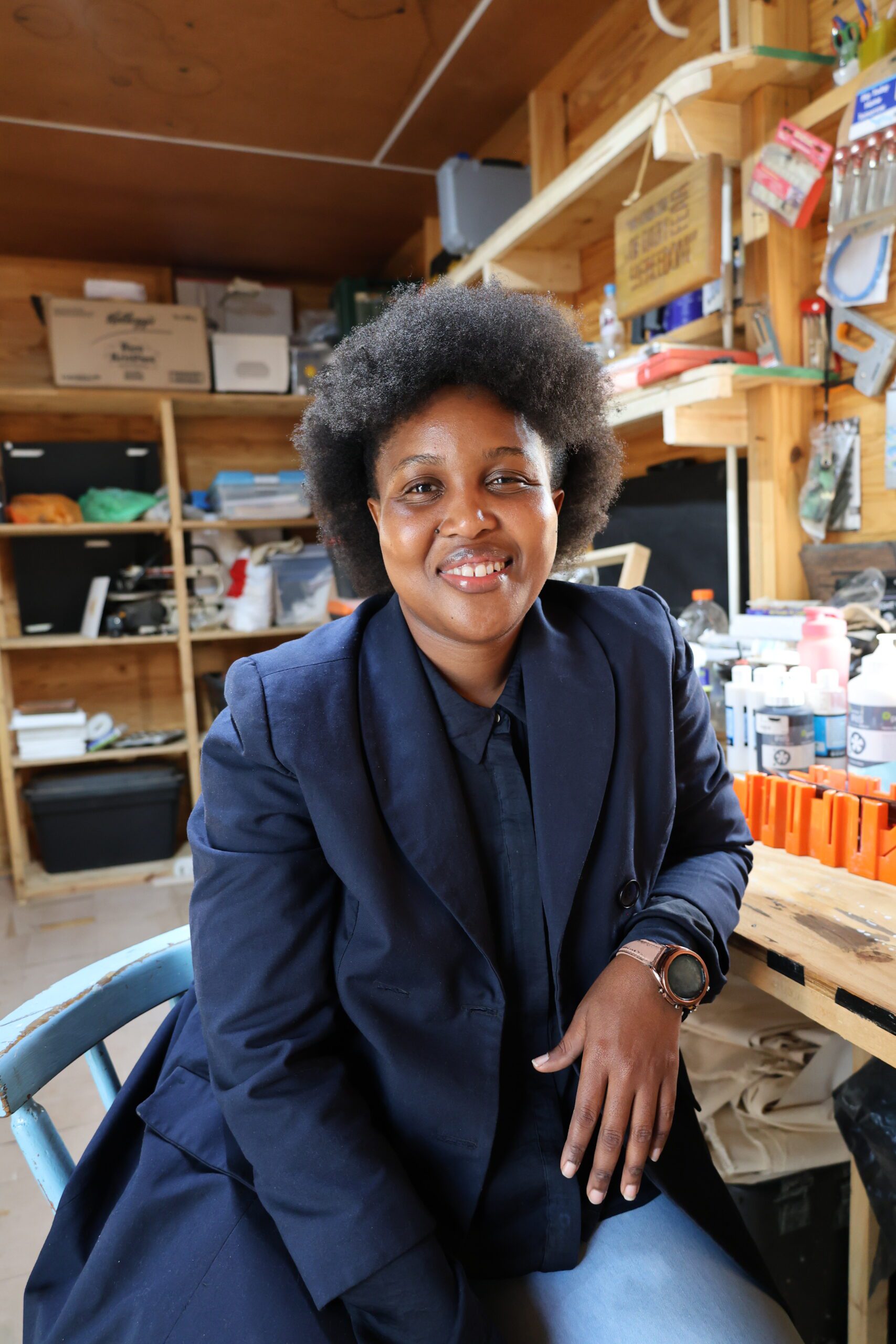
The much-loved musician and philanthropist Dolly Parton once said, “find out who you are and do it on purpose”. This sentiment not only speaks to intentionality, but also tasks people with distancing sentimentality from the very real work of being alive. Cultures are living and evolutionary things, built from experiences shared over time. In exploring who she is, Kelebogile Marope’s time to have that applauded came in the form of being named the 2026 FNB Art Prize winner – making her the first Motswana to receive the coveted recognition.
The Ramotswa native is a sculptor and multidisciplinary artist whose practice has developed over more than a decade through a rigorous investigation of memory, domesticity, material, repetition and the emotional histories embedded within ordinary objects and spaces. In her award-winning collection titled Archeologies of Use, Marope says she wanted to give audiences the recognition that “when home spaces have been ignored that means there are parts of our personal histories that gets ignored.”
Similarly, in a previous work titled Road Surface Markings: An Ode to My Father, she drew upon where the mundane merges with the wonder of shared existence, foregrounding memories of the journeys her father made with Marope and her sisters throughout their lives – driving them to school, shops, appointments and the ordinary destinations around which family life is constructed.
Marope’s father passed away during the COVID-19 pandemic, and in her search for life’s newer meanings, the lines, edges, directions and thresholds that animated their shared journeys became abstracted memorial devices: symbols of movement, guidance, constancy and absence.
Archeologies of Use is a celebration of her skills as an observant sculptor. Through ceramics, she juxtaposes familiar sights – like ironing boards, heat plates and bathroom drains – with a medium that demands close attention to detail. The poetry of seeing marks and other impressions that come from regular domestic use, quite literally set in stone, elevates the archaeological symbolism that inspired the creations.
Commenting on how Marope’s work serves as a call to introspection, Art curator and Writer Mpumi Mayisa remarked that “there are so many rituals that we have in our lives that seem really simple but make up very big parts of our lives”.
Marope’s father’s energy and legacy is also captured in the winning collection through her incorporation of repurposed irons the diligent blue-collar worker once used to press his work clothes.
Speaking to Ora Loapi founder Lerato Motshwarakgole, she affirms that Marope’s win is much bigger than one award for Botswana.
“It demonstrates that our artists can compete at the highest level of the contemporary African art ecosystem” she says, continuing “We have always had the talent. What has been missing is sufficient infrastructure around that talent – representation, scholarship, documentation, market development, institutional relationships and sustained access to international platforms”.
Now in their sixth year of showcasing at the FNB Joburg Art Fair, Ora Loapi has been at the forefront of advocating for the representation and acknowledgement of visual artists from Botswana for years.
“We want Botswana artists circulating. We want their work entering important private and institutional collections. We want them represented in critical writing, exhibitions, fairs, biennales and museums” shares Motshwarakgole, adding “We want collectors outside Botswana to understand that this country is producing serious contemporary artistic practices worthy of sustained attention”.
In being named this year’s winner, Marope now enters what she has recognised as an investment partnership. “it’s like an older brother holding your hand and saying ‘I believe in you, you’ve got this!’” that will see her work towards an exhibition at the 2027 fair.
With a solid background as an educator, she also savours the opportunity to serve as a beacon of inspiration to her students and peers that one should never give up on their aspirations: “you can achieve it, you can live your dreams”.
A purposeful and deliberate artist has placed Botswana in the history books of one of Africa’s most sought-after contemporary art prizes by simply tapping into the essence of her lived experience and her lineage, making the mundane magical.


