


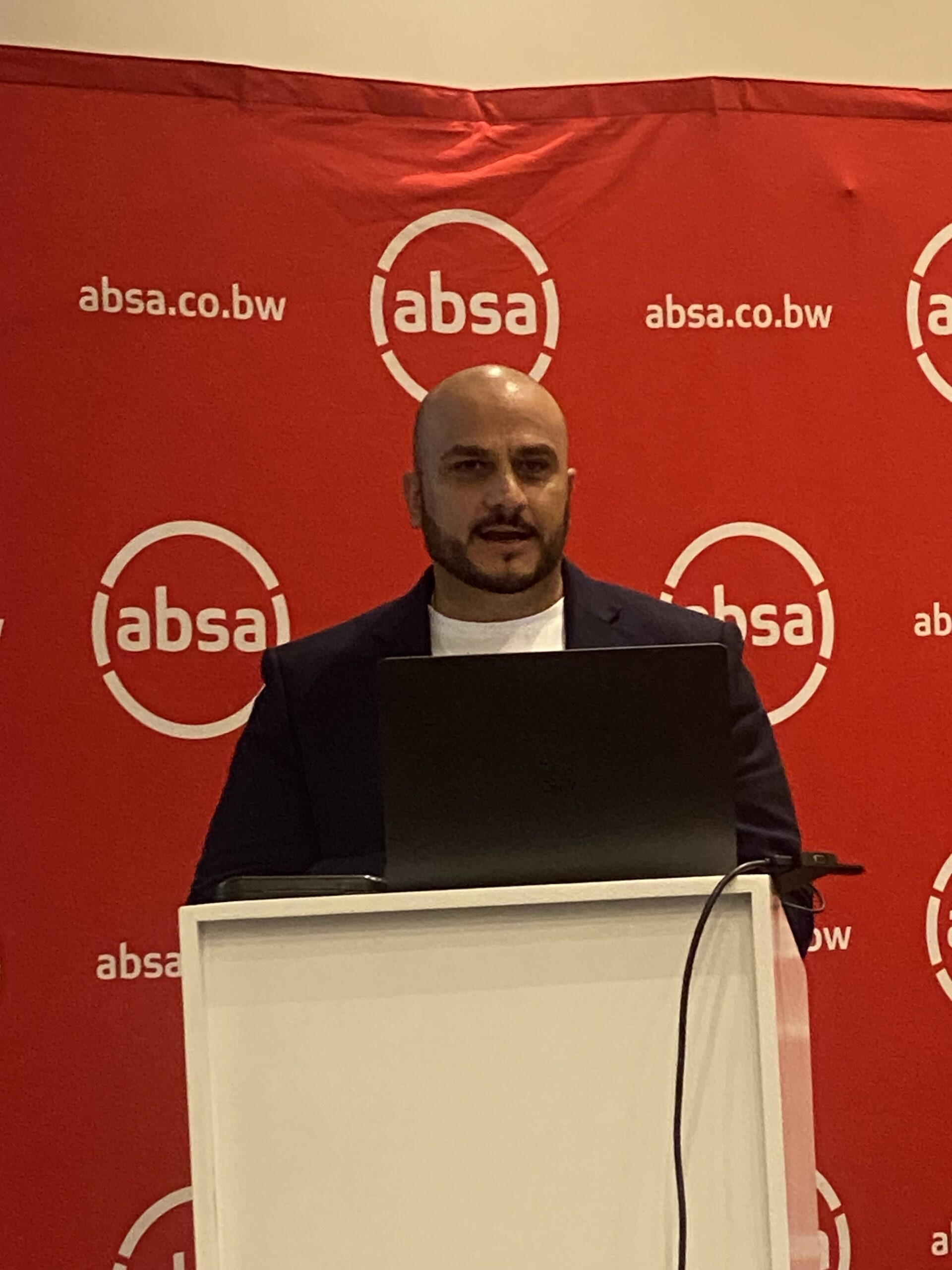
Botswana’s banks, regulators and cybersecurity experts are calling for a coordinated national response to rising cyber threats, warning that online fraud, ransomware and artificial intelligence-driven scams are becoming a growing risk to the country’s digital economy.
The warning came at Absa Botswana’s Cybersecurity Thought Leadership Session in Gaborone, where industry leaders said cybersecurity can no longer be treated as a technology issue confined to information technology departments, but as a business, economic and national security priority.
Held under the theme “Strengthening Botswana’s Cyber Resilience Through Collaboration, Awareness and Shared Responsibility,” the session brought together representatives from financial institutions, government, regulators and cybersecurity specialists to discuss the growing threat landscape.
Opening the event, Absa Botswana Chief Credit Officer Maungo Mokotedi said Botswana’s rapid digital transformation had made cyber resilience critical to maintaining public trust and supporting financial inclusion.
He said confidence in digital platforms was the foundation for innovation and sustainable economic growth, but warned that this depended on citizens and businesses feeling secure when using online services.
Mokotedi said no single institution could tackle cybercrime alone, calling for stronger partnerships, improved information sharing and greater public awareness.
Absa Chief Information Security Officer Mafoko Lebogang said cybercriminals had evolved into highly organised networks that collaborate, share tools and continuously adapt their methods.
He said financial institutions, regulators and other stakeholders must respond in the same way by strengthening cooperation across sectors.
Lebogang also urged the media to play a bigger role in public education, arguing that many cyberattacks succeed because criminals exploit human behaviour rather than weaknesses in technology.
He said awareness campaigns must move beyond occasional messages and become continuous efforts aimed at helping customers and employees identify and respond to threats.
Guest speaker Antonios Christodoulou, CEO of Cyber Xtent, said more than 90 percent of data breaches begin with phishing attacks or other forms of social engineering.
He warned that artificial intelligence has made cybercrime more sophisticated, allowing criminals to use deepfakes, voice cloning and other tools to impersonate trusted individuals and organisations.
Christodoulou said organisations must move beyond traditional cybersecurity awareness programmes and focus on changing behaviour.
He said developing a culture of verification and healthy scepticism was essential to creating a “human firewall” capable of stopping cyber threats before they cause damage.
Providing a national perspective, Botswana Cybersecurity Incident Response Team (BWCSIRT) head Emmanuel Thekiso said the country continues to experience increasing incidents involving malware, ransomware and social engineering attacks.
He encouraged organisations to register critical systems, report incidents quickly and share threat intelligence to strengthen Botswana’s collective defence against cyber threats.
Although Botswana ranks among the leading countries in SADC in cybersecurity preparedness, Thekiso warned that vulnerabilities remain.
He identified outdated systems, poor software maintenance and failure to adopt basic security measures as some of the key weaknesses exposing organisations to attacks.
The speakers agreed that Botswana’s ability to benefit from digital transformation will depend on whether government, businesses and citizens can build a stronger culture of cybersecurity awareness and cooperation.


