


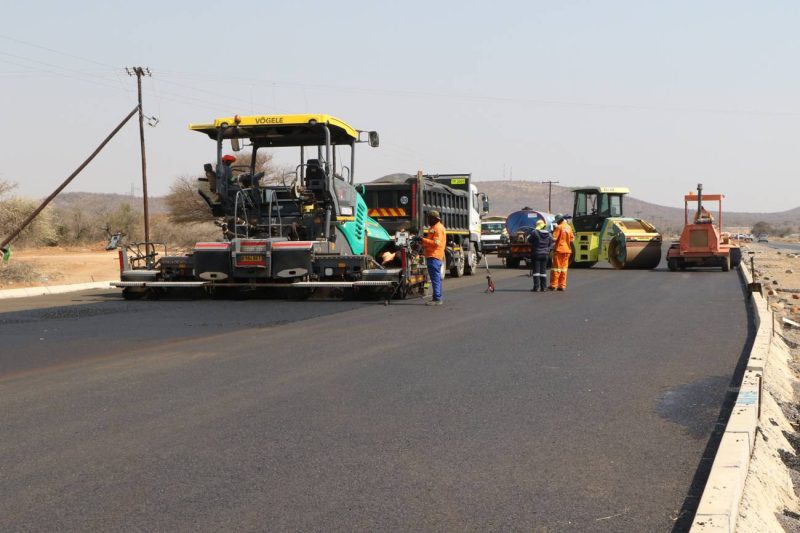
As the High Court of Botswana prepares to deliver judgment on January 09 2026, contractual documents, contemporaneous correspondence, site records, and payment schedules examined by The Business Weekly & Review reveal a sequence of events that sharply contradicts Tau Grading & Building Construction’s claim that it neither abandoned the Modipane–Mabalane road project nor unlawfully suspended works.
Pro – Serve Consulting engaged Tau Grading in October 2024 for the discharge of works on the road project.
Rather than a sudden or unlawful termination by Pro Serve Consulting Botswana, the records point to a progressive breakdown triggered by Tau Grading’s unilateral suspension of works, followed by sustained non-compliance with contractual notices and unauthorised demobilisation of equipment — a conduct that ultimately led to termination in accordance with the contract.
A Payment System Repeatedly Acknowledged
Project documents show that since the commencement of the contract on October 1, 2024, payments followed a consistent and undisputed process. Interim Payment Certificates (IPCs) were payable only after Pro Serve received funds from the Ministry of Transport and Public Works. Nine IPCs were processed on this basis without recorded objection.
On August 29, 2025, Tau Grading submitted IPC 10. Pro Serve acknowledged receipt and initiated the valuation process with Ministry representatives. Site records confirm that the valuation was conducted on September 16, 2025. Nothing in the payment trail reviewed by this publication suggests a departure from the established process.
Unexplained Suspension of Works
Site diaries and incident logs dated September 2, 2025, record an abrupt halt to construction activities. Trucks were instructed to return to camp, and work ceased without prior notice or written communication, contrary to contractual requirements. Internal site reports indicate that the instruction to stop work originated from Tau Grading’s senior management.
The contract reviewed by this publication requires 21 days’ written notice for any suspension — a requirement that was not met. On September 3, 2025, Tau Grading attempted to retrospectively justify the stoppage by issuing a letter declaring a suspension of works and demanding payment within five days of invoice submission. No such payment term appears in the contract documentation examined.
Formal Warnings and Contractual Non-Response
Pro Serve’s response dated September 4, 2025, rejected the suspension as invalid and reaffirmed the agreed payment mechanism. The correspondence also noted that government valuation had not yet taken place, meaning payment could not have fallen due. Subsequent records show no resumption of work.
On September 9, 2025, Pro Serve issued a Notice to Correct, formally identifying the suspension as a breach of contract and instructing Tau Grading to resume works by September 16, 2025. The notice warned that failure to comply could lead to termination. No response was received.
Demobilisation Without Authorisation
Inspection records and photographic evidence dated September 12, 2025, show equipment and machinery being removed from the site. Pro Serve documented these actions in a further letter, describing them as unauthorised demobilisation in breach of contract. Again, no written response or corrective action followed. The removal of equipment, combined with the continued suspension of works, materially undermined Tau Grading’s later assertion that it had remained in possession of the site.
Termination Followed Contract Prescripts
On September 16, 2025, Pro Serve issued a Notice to Terminate the Contractor, granting Tau Grading 14 days — from September 17 to September 30 — to vacate the site. Correspondence shows that the notice was grounded in Tau Grading’s failure to comply with the Notice to Correct and its continued abandonment of works.
Further letters dated September 26, 2025, confirm that Pro Serve accepted Tau Grading’s repudiation of the contract and cancelled it with immediate effect. On October 1, 2025, following the lapse of the notice period, the termination was confirmed.
Financial records reviewed by this publication indicate that no payment breach existed at the time of termination. They further show that Tau Grading had previously received a P10 million advance payment, extended to facilitate cash flow and accelerate construction. Tau Grading did not vacate the site as directed.
Shift from Contract to Court
Rather than immediately activating contractual dispute mechanisms, Tau Grading approached the High Court on November 11, 2025, on an urgent and ex parte basis, alleging outstanding payments exceeding P10.8 million. The application was made without prior service on the respondents. The interim interdict granted prevented Pro Serve from performing its duties on the site, effectively freezing the project.
Procedural Delays Dominate Proceedings
Court records examined by this publication show that since the interim order was granted, the matter has been postponed three times, each postponement arising from applications or objections raised by Tau Grading. These include technical objections to affidavits, the introduction of a contempt application on the scheduled hearing date, and a further application dismissed by the court.
Ultimately, Tau Grading proposed that the matter be decided on written submissions alone. The court has ruled that judgment will be delivered on December 22, 2025.
Deterioration of Works
Site condition reports show that since early September 2025, completed works have been left exposed to seasonal rains. Drainage channels have deteriorated, earthworks have eroded, and partially completed sections have suffered damage. Despite obtaining an interdict restraining Pro Serve from accessing the site, Tau Grading has taken no documented steps to protect the works or mitigate deterioration. Estimates reviewed by this publication indicate that remedial costs may run into millions of pula.
A Documentary Trail at Odds with the Public Narrative
Tau Grading has maintained that it never demobilised or abandoned the project. However, the documentary trail —independent of court pleadings — shows an unlawful suspension, ignored contractual notices, and physical withdrawal of equipment from the site.
As judgment approaches, the dispute appears less about disputed invoices and more about whether documented conduct aligns with contractual obligations. The High Court’s ruling on December 22 will determine the legal outcome. But the records examined tell a clear story of how the Modipane–Mabalane road project reached its current standstill — one driven not by sudden termination, but by a sequence of actions carefully captured in documents, dates, and site records.


